
IRS Dispute Lawyers in Lincoln
Resolving an IRS tax controversy in Lincoln requires assertive legal advocacy to protect your bank accounts, wages, and property from federal collection actions. Experienced tax controversy attorneys negotiate Offers in Compromise, release federal tax levies, and represent taxpayers before the U.S. Tax Court. Browse our verified directory below to consult an experienced IRS dispute lawyer today.
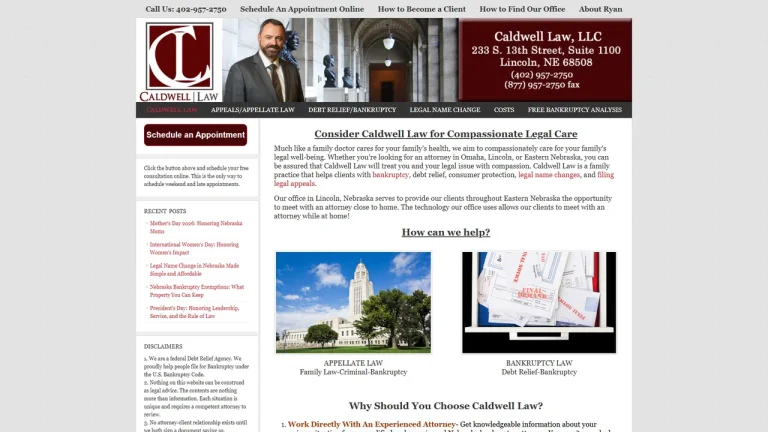
Caldwell Law, LLC, Lincoln, NE

The Law Office of Paul W. Rea - Lincoln, NE

Federal Tax Controversy and IRS Defense in Lincoln
Receiving a notice from the Internal Revenue Service creates immediate financial anxiety for Lincoln residents, independent professionals, and commercial business owners across Lancaster County. Federal tax controversies involve complex administrative procedural rules and aggressive statutory collection mechanisms, including federal tax liens, wage garnishments, and bank account seizures.
Tax disputes frequently escalate from routine audits conducted by IRS field personnel into formal administrative appeals before the IRS Independent Office of Appeals. When disputes cannot be resolved administratively, Lincoln taxpayers have the legal right to litigate assessments before the United States Tax Court or the U.S. District Court for the District of Nebraska, situated at the Robert V. Denney Federal Building on Centennial Mall North in Lincoln.
Hiring a licensed Lincoln IRS dispute attorney establishes an official buffer between you and federal collection agents. Your lawyer files Form 2848 Power of Attorney to halt direct IRS communication, ensures compliance with strict federal appeal deadlines, and structures viable tax resolution options.
Legal Fee Structures for Lincoln IRS Tax Dispute Counsel
IRS dispute attorneys in Lincoln represent taxpayers through flat fees for specific collection resolutions or hourly retainers for complex audits and federal court litigation.
| Case Scenario | Fee Structure | Estimated Cost (USD) | Key Cost Determinants |
|---|---|---|---|
| IRS Audit Defense & Substantiation | Hourly / Retainer | $2,000 - $5,000 | Number of tax years audited, business expense documentation, and revenue agent negotiations. |
| Collection Due Process (CDP) & Levy Release | Flat Fee | $1,500 - $3,800 | Form 12153 filing timeliness, bank account levy urgency, and installment agreement structuring. |
| Offer in Compromise (OIC) Settlement | Flat Fee / Blended | $3,000 - $7,500 | Reasonable Collection Potential (RCP) calculations, asset valuation, and financial disclosure depth. |
| U.S. Tax Court Petition & Litigation | Hourly Retainer | $350 - $600/hr | 90-day statutory notice compliance, expert witness testimony, and trial proceedings in federal court. |
Critical Legal Deadlines & Statutes in Federal Tax Law
Federal tax litigation and administrative disputes are bound by strict statutory deadlines codified in Title 26 of the United States Code:
- Statutory Notice of Deficiency (90-Day Letter): Under 26 U.S. Code § 6213(a), a taxpayer has exactly 90 days from the date of the Notice of Deficiency to file a petition with the U.S. Tax Court; this deadline is strictly jurisdictional and cannot be extended.
- Collection Due Process (CDP) Hearing Deadline: Pursuant to 26 U.S. Code § 6330, you must request a CDP hearing within 30 days of receiving a Final Notice of Intent to Levy to preserve your right to challenge collection before the U.S. Tax Court.
- Statutory Authority for Compromise: The IRS is authorized to settle tax liabilities for less than the full amount owed under 26 U.S. Code § 7122 based on doubt as to collectibility, doubt as to liability, or effective tax administration.
- 10-Year Collection Statute of Limitations: Under 26 U.S. Code § 6502, the IRS generally has 10 years from the date of tax assessment to collect unpaid federal taxes before the statute expires.
- Innocent Spouse Relief Protections: Spouses seeking relief from joint tax liabilities resulting from an erroneous item of the other spouse must request relief under 26 U.S. Code § 6015 within statutory time limits.
Direct Negotiations vs. Professional IRS Dispute Counsel
Under Neb. Rev. Stat. § 25-2802, the Nebraska Small Claims Division is capped at $3,900 and has zero jurisdiction over federal tax controversies. Taxpayers who attempt to negotiate directly with IRS revenue officers frequently provide financial information that exposes their liquid bank accounts and real estate assets to immediate seizure.
IRS agents are tasked with maximizing tax collection, not protecting your constitutional rights. Misinterpreting procedural forms or failing to file a timely Collection Due Process request waives judicial review rights. An experienced IRS dispute lawyer in Lincoln conducts an objective analysis of your Reasonable Collection Potential, prevents aggressive enforcement action, and represents you vigorously before IRS Appeals or the U.S. Tax Court.
Red Flags When Hiring an IRS Tax Resolution Lawyer
Protecting your assets requires retaining a qualified attorney rather than falling victim to misleading advertising. Watch for these common red flags:
- National "Pennies on the Dollar" Marketing Mills: Be cautious of out-of-state call centers promising dramatic debt reductions without first conducting a detailed financial analysis of your assets and income.
- Non-Attorney Representation: Ensure your advocate is a licensed attorney admitted to practice before the U.S. Tax Court, rather than a non-lawyer salesperson who cannot file legal petitions.
- Lack of Written Retainer Agreements: Ethical attorneys provide transparent contracts detailing billing increments, retainer amounts, and specific administrative milestones.
- Guaranteed Audit Results: Professional ethics rules strictly forbid attorneys from guaranteeing specific settlement figures or audit dismissals from the IRS.
Frequently Asked Questions
What happens if I miss the 90-day deadline on an IRS Notice of Deficiency?
Under 26 U.S. Code § 6213(a), the 90-day deadline to file a petition with the U.S. Tax Court is jurisdictional and cannot be extended by a judge. Missing it means you forfeit the right to dispute the tax without first paying the full liability and suing for a refund.
How does an Offer in Compromise work in Nebraska?
Pursuant to 26 U.S. Code § 7122, an Offer in Compromise allows qualifying taxpayers to settle their federal tax liabilities for less than the balance owed if they prove their Reasonable Collection Potential is insufficient to satisfy the debt.
Can an attorney stop an IRS wage garnishment or bank levy immediately?
Yes. By filing Form 12153 to request a timely Collection Due Process hearing under 26 U.S. Code § 6330, an attorney can place an immediate administrative hold on levy actions while alternative payment terms are negotiated.
How long does the IRS have to collect unpaid taxes?
Under 26 U.S. Code § 6502, the Collection Statute Expiration Date (CSED) is generally 10 years from the date the tax was formally assessed, after which the IRS is legally barred from continuing collection actions.
Where are federal tax lawsuits heard for Lincoln residents?
U.S. Tax Court trials for Nebraska residents are assigned to regular regional trial sessions, while federal refund lawsuits are filed with the U.S. District Court for the District of Nebraska, located at 100 Centennial Mall North in Lincoln.