
Trusts Lawyers in Omaha
Find experienced trusts lawyers in Omaha, NE. Establish living trusts, safeguard family wealth, and bypass probate under the Nebraska Uniform Trust Code. Skilled estate planning attorneys help business owners, landowners, and families structure asset protection trusts and administer fiduciary responsibilities smoothly. Explore our verified directory below to schedule an estate review with local counsel.

Kennedy Law Firm - Omaha, NE

Hochstein Strategic Legal Planning - Omaha, NE

Elder Law and Life Care Planning Center - Omaha, NE

ALH Law Group - Omaha, NE

Pansing Hogan Ernst & Buser LLP - Omaha, NE

Badura & Wintz Law - Omaha, NE

Carlson & Blakeman, LLP - Omaha, NE
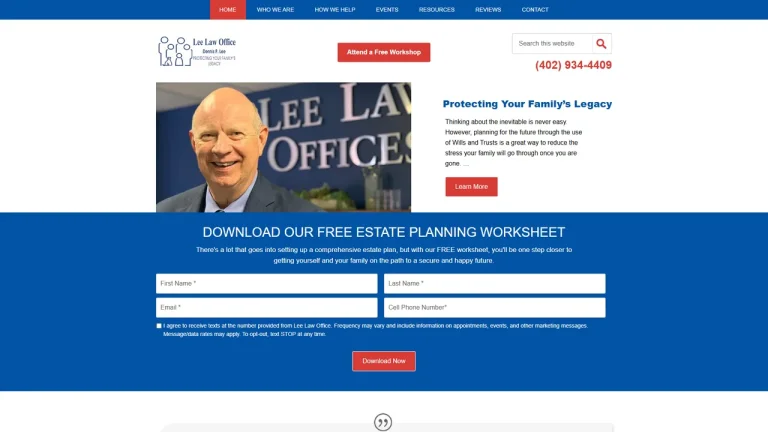
Lee Law Office - Omaha, NE

Whitmore Law Office, LLC - Omaha, NE

Legacy Design Strategies - Omaha, NE

Elder Law of Omaha, P.C., L.L.O. - Omaha, NE

Kairos Law Group - Omaha, NE

Massih Law, LLC - Omaha, NE

Boyum Law Firm - Omaha, NE

LeRoy Peterson Law - Omaha, NE

Peatrowsky Law - Omaha, NE
Comprehensive Trust Structuring and Administration in Omaha
Establishing a comprehensive trust structure is one of the most effective ways for individuals and families in Omaha to protect assets, preserve family privacy, and avoid public probate proceedings. Trusts allow individuals to manage property during their lifetime and establish clear instructions for the distribution of assets upon death or incapacity. Retaining an experienced trusts attorney ensures your instruments conform to Nebraska statutory standards and protect your beneficiaries.
Trust administration, modifications, and fiduciary disputes in Omaha fall under the jurisdiction of the Douglas County Court, located at 1701 Farnam Street in Downtown Omaha. The court exercises judicial oversight when beneficiaries or trustees request court construction of trust terms, seek trustee removal, or litigate claims of fiduciary breach.
In Douglas County, trust planning often involves diverse assets, including residential real estate, commercial entities, investment portfolios, and regional business interests. Local practitioners understand the provisions of the Nebraska Uniform Trust Code, ensuring trusts are funded properly with recorded deeds and retitled financial accounts to provide maximum legal protection.
Fee Structures and Estimates for Trust Planning & Administration
| Case Scenario | Fee Structure | Estimated Cost (USD) | Key Cost Determinants |
|---|---|---|---|
| Revocable Living Trust Comprehensive Package | Flat Fee Agreement | $1,800 - $4,800 | Includes trust agreement, pour-over wills, durable powers of attorney, healthcare directives, and primary deed conveyance. |
| Irrevocable Asset Protection & Business Succession Trust | Flat Fee or Hourly | $3,800 - $9,000 | Corporate entity transfers, multi-generational wealth preservation, and Medicaid asset protection terms. |
| Post-Death Trust Settlement & County Inheritance Tax | Hourly Retainer Agreement | $2,500 - $6,500 | Identifying trust assets, statutory trustee notifications, and preparing Nebraska county inheritance tax returns. |
| Breach of Fiduciary Duty / Trust Removal Litigation | Hourly Litigation Retainer | $6,000 - $22,000 | Forensic accounting audits, trustee removal petitions, and trial in Douglas County Court. |
Critical Legal Deadlines & Statutes in Nebraska
Trust creation, interpretation, and administration in Omaha are governed by the Nebraska Uniform Trust Code, codified at Neb. Rev. Stat. § 30-3801. For revocable living trusts, the settlor retains the authority to modify or revoke the trust during their lifetime under Neb. Rev. Stat. § 30-3853. Upon the settlor's passing, the trust becomes irrevocable, triggering specific statutory administration rules.
Challenging the validity of a revocable trust is subject to tight statutory deadlines under Neb. Rev. Stat. § 30-3856. A contest must be commenced within the earlier of one year following the settlor's death or 60 days after the trustee sends the beneficiary a formal notice containing trust details and notice of the time allowed for commencing a proceeding. Trustees are subject to strict fiduciary standards, including the duty of loyalty under Neb. Rev. Stat. § 30-3867 and the duty of prudent administration under Neb. Rev. Stat. § 30-3869.
Trustees must provide regular accounting to qualified beneficiaries pursuant to Neb. Rev. Stat. § 30-3878. Under Neb. Rev. Stat. § 30-3894, a beneficiary's claim against a trustee for breach of trust is barred after one year if the trustee issued a report disclosing the matter; if no report was delivered, a four-year limitations period applies. Furthermore, Nebraska county inheritance taxes must be paid within 12 months of the decedent's passing under Neb. Rev. Stat. § 77-2010 to prevent interest penalties.
Small Claims Limitations vs. Douglas County Court Trust Jurisdiction
Under Neb. Rev. Stat. § 25-2802, the Small Claims Division of Douglas County Court operates with a statutory limit and has no legal authority to interpret trust documents, resolve fiduciary accountings, or order asset distributions. Trust supervision and litigation reside within the probate and equity jurisdiction of the Douglas County Court pursuant to Neb. Rev. Stat. § 24-517.
Drafting a trust requires experienced legal counsel to ensure the vehicle is properly funded. An unfunded trust fails to bypass probate, leaving real estate and accounts subject to court delays. Legal counsel prepares deeds for Douglas County real estate, guides the transfer of financial holdings, drafts spendthrift provisions to protect beneficiaries from future creditors, and ensures compliance with Nebraska inheritance tax filings.
Red Flags to Avoid When Selecting a Trusts Lawyer
- Failure to guide trust funding: Avoid estate planners who prepare trust agreements without assisting you in transferring real estate deeds and retitling bank accounts into the trust.
- One-size-fits-all living trust packages: Steer clear of high-pressure seminars selling standardized living trusts that fail to consider Douglas County commercial assets or family dynamics.
- Ignoring trustee disclosure mandates: Reject attorneys who advise trustees to withhold financial reports from beneficiaries, violating statutory disclosure rules under Neb. Rev. Stat. § 30-3878.
- Overlooking county inheritance tax deadlines: Choose counsel who actively calculate and file Nebraska county inheritance tax returns within the mandatory 12-month statutory deadline.
Frequently Asked Questions
What is the deadline to contest a revocable trust in Omaha, NE?
Under Neb. Rev. Stat. § 30-3856, a contest must be filed within one year of the settlor's death, or within 60 days if the trustee delivered a formal notice regarding the trust's existence and terms.
Does a revocable living trust avoid Nebraska inheritance tax?
No. While a funded revocable living trust avoids Douglas County probate court, trust assets remain subject to Nebraska county inheritance tax assessed under Neb. Rev. Stat. § 77-2001 based on the beneficiary's relationship to the decedent.
What is trust funding and why is it essential?
Trust funding is the formal legal process of re-titling assets, such as real estate deeds and brokerage accounts, into the name of the trust. If assets remain in your individual name, they may still require probate administration upon death.
Are trustees required to provide accountings to beneficiaries in Nebraska?
Yes. Under Neb. Rev. Stat. § 30-3878, a trustee must keep qualified beneficiaries reasonably informed about trust administration and promptly furnish a report of trust property, receipts, and disbursements at least annually.
Which court handles trust administration disputes in Omaha?
Trust disputes, construction petitions, and fiduciary litigation are handled by the Douglas County Court, located in the Douglas County Hall of Justice at 1701 Farnam Street in Downtown Omaha.