
Violent Crime Defense Lawyers in Omaha
Find experienced violent crime defense lawyers in Omaha, NE. Defend against assault, weapon enhancements, and domestic violence in Douglas County courts. Seasoned trial attorneys investigate self-defense claims, cross-examine prosecution witnesses, and contest forensic evidence to protect your constitutional rights. Explore our directory below to consult an aggressive local criminal defense lawyer.

Williams Law, LLC - Omaha, NE

Berry Law - Omaha, NE

Latino Law Center - Omaha, NE

Banwo and Igbokwe Law Firm - Omaha, NE

Dornan Law Team - Omaha, NE
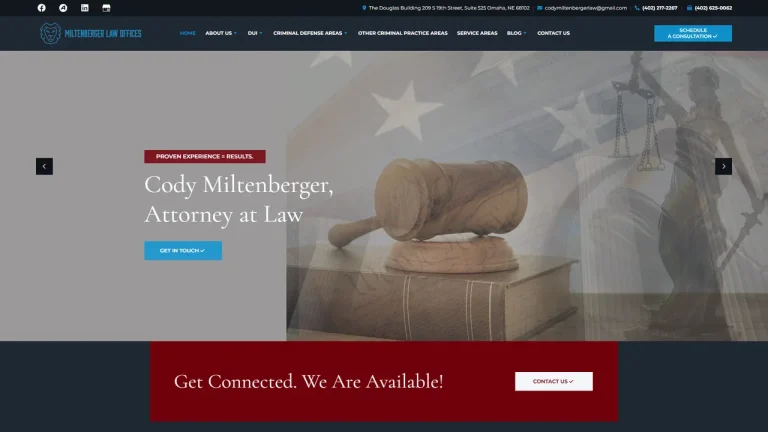
Miltenberger Law Offices - Omaha, NE

Kendall, Crawford & Reeker PC LLO - Omaha, NE

Public Defender - Omaha, NE
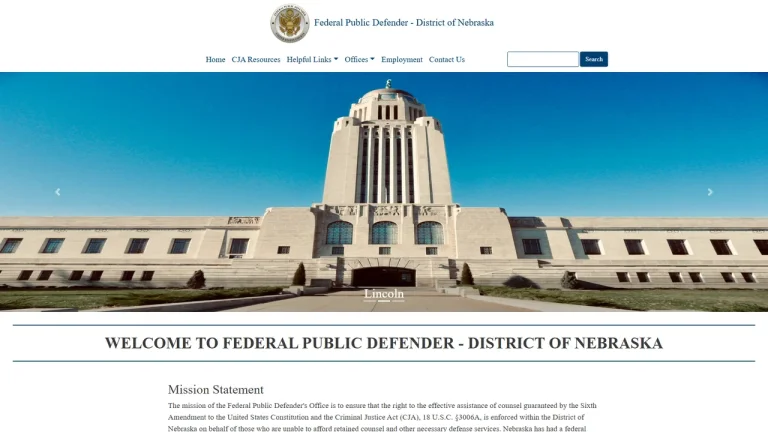
Federal Public Defender - Omaha, NE

Greg Nelson Attorney at Law - Omaha, NE
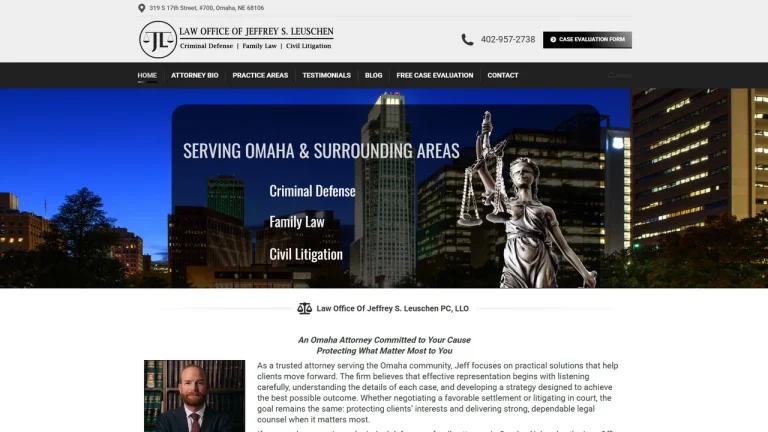
Law Office of Jeffrey S. Leuschen - Omaha, NE
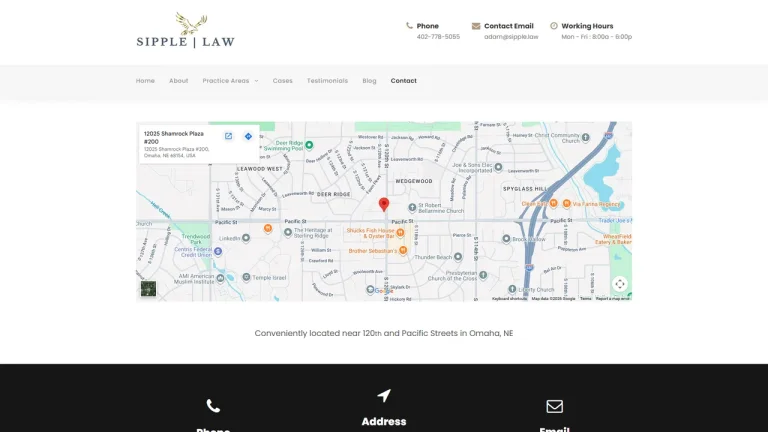
Sipple Law - Omaha, NE

MeliaLaw, LLC - Omaha, NE

Fitzpatrick Law LLC - Omaha, NE

Poepsel Michael J - Omaha, NE

Petersen Criminal Defense Law - Omaha, NE

Fowler & Kelly Law, LLP - Omaha, NE

Ekeh Law Office, L.L.C. - Omaha, NE

Natvig Jon S - Omaha, NE

Hug and Jacobs LLC - Omaha, NE

Hicks Law, P.C., LLO - Omaha, NE
McGoughLaw P.C. L.L.O. - Omaha, NE
Aggressive Violent Crime Defense Across Douglas County
Facing violent crime allegations in Omaha places your personal liberty, reputation, and future under immediate threat. Prosecutors in Douglas County aggressively pursue allegations of physical violence, frequently adding weapon enhancements, seeking elevated cash bail, and pursuing lengthy prison terms. Retaining seasoned criminal defense counsel ensures that witness statements are thoroughly cross-examined and constitutional defenses are presented in court.
Violent offense prosecutions in Omaha fall under the jurisdiction of the Douglas County Court for initial appearances, bail reviews, and preliminary hearings. Felony jury trials proceed in the Douglas County District Court within the 4th Judicial District of Nebraska, located in the Douglas County Hall of Justice at 1701 Farnam Street in Downtown Omaha.
Arrestees taken into custody by the Omaha Police Department or the Douglas County Sheriff's Office are transported to the Douglas County Correctional Center on South 17th Street. Skilled defense attorneys intervene immediately to advocate for reasonable bail conditions, address no-contact orders, examine police body-worn camera footage, and prepare statutory self-defense protections under Nebraska law.
Fee Structures and Expenses for Violent Offense Defense
| Case Scenario | Fee Structure | Estimated Cost (USD) | Key Cost Determinants |
|---|---|---|---|
| Domestic Assault (Third Degree / Misdemeanor) | Flat Fee Retainer | $2,500 - $5,500 | Reviewing 911 audio recordings, negotiating no-contact order modifications, and victim reconciliation interviews. |
| Felony Strangulation or Second-Degree Assault | Structured Flat Fee | $5,500 - $12,500 | Preliminary hearing cross-examination, examining emergency room records, and affirmative defense drafting. |
| First-Degree Assault with Deadly Weapon Enhancement | Hourly or Tiered Retainer | $10,000 - $28,000 | Ballistic evaluations, medical expert testimony on serious bodily injury, and district court jury trial preparation. |
| Pre-Trial Self-Defense Justification Motion | Hourly Litigation Retainer | $4,500 - $9,000 | Witness depositions, scene reconstruction, and preparing statutory justification briefs under state law. |
Critical Legal Deadlines & Statutes in Nebraska
Violent offenses in Nebraska carry severe statutory penalties that vary based on physical injury and weapon involvement. Under Neb. Rev. Stat. § 28-308, first-degree assault involves intentionally causing serious bodily injury and is categorized as a Class II felony. Second-degree assault is defined under Neb. Rev. Stat. § 28-309, while third-degree assault is classified under Neb. Rev. Stat. § 28-310. Domestic assault carries escalating penalties under Neb. Rev. Stat. § 28-323, and intentional strangulation is charged as a felony under Neb. Rev. Stat. § 28-310.01.
When an offense involves a firearm or knife, prosecutors frequently add charges under Neb. Rev. Stat. § 28-1205 for using a deadly weapon to commit a felony. This statute mandates consecutive prison terms that cannot run concurrently with the underlying offense. Self-defense and justification defenses are governed by Neb. Rev. Stat. § 28-1409, which outlines when physical force is legally permissible to protect against unlawful force.
Procedural timelines require prompt strategic action. Under the Nebraska Speedy Trial Act, codified at Neb. Rev. Stat. § 29-1207, the state must bring the accused to trial within six months, subject to statutory exclusions. Furthermore, under Neb. Rev. Stat. § 29-110, felony offenses generally carry a three-year statute of limitations, while misdemeanor assaults must be prosecuted within 18 months.
Self-Representation Hazards vs. Professional Criminal Defense
The Small Claims Division of Douglas County Court under Neb. Rev. Stat. § 25-2802 has zero authority over criminal prosecutions. Violent crime charges must be defended in the formal criminal court system.
Attempting to resolve violent crime charges pro se creates immense risks. Untrained statements to law enforcement can compromise valid self-defense claims and waive statutory rights. Retaining a skilled defense lawyer is critical to subpoena emergency room records, review 911 dispatch calls, cross-examine state witnesses, and present clear self-defense justification evidence to juries in the Douglas County District Court.
Red Flags to Avoid When Selecting a Violent Crime Lawyer
- Promising outcomes without reviewing evidence: Avoid attorneys who promise specific trial outcomes before reviewing police bodycam recordings, medical reports, and witness statements.
- Advising immediate guilty pleas: Steer clear of lawyers who push early plea deals without investigating self-defense arguments under state justification statutes.
- Overlooking mandatory weapon enhancements: Reject counsel unfamiliar with mandatory consecutive sentencing rules under state deadly weapon statutes.
- Lack of felony trial readiness: Ensure your defense lawyer has extensive experience trying serious felony cases before juries in the 4th Judicial District Court.
Frequently Asked Questions
What is the difference between first and second-degree assault in Nebraska?
Under Neb. Rev. Stat. § 28-308, first-degree assault requires causing serious bodily injury and is a Class II felony. Second-degree assault under Neb. Rev. Stat. § 28-309 involves causing bodily injury with a dangerous instrument or recklessly causing serious bodily injury.
How does self-defense work under Nebraska statutory law?
Under Neb. Rev. Stat. § 28-1409, the use of force is justifiable when the actor believes such force is immediately necessary to protect against unlawful force by another person, subject to statutory limits on deadly force.
Can a domestic assault charge be dropped if the victim wants to dismiss it?
No. In Douglas County, criminal charges are prosecuted by the State of Nebraska, not the victim. Prosecutors may continue prosecuting domestic assault charges under Neb. Rev. Stat. § 28-323 even if the reporting party requests dismissal.
What is the speedy trial deadline for violent felonies in Omaha?
Under Neb. Rev. Stat. § 29-1207, the prosecution must bring the defendant to trial within six months from the date the information is filed, excluding delays resulting from pre-trial motions or continuances.
Where are felony violent crime trials held in Omaha, NE?
Felony trials are conducted in the Douglas County District Court within the 4th Judicial District of Nebraska, located in the Douglas County Hall of Justice at 1701 Farnam Street in Omaha.