
Wrongful Death Lawyers in Omaha
Retaining an experienced Omaha wrongful death lawyer ensures your family's statutory rights and financial future are protected following a fatal tragedy. Dedicated legal counsel navigates probate estate appointments, complex liability investigations, and settlement approval hearings in Douglas County. Explore our directory below to consult verified local wrongful death attorneys.
Steffens Law Accident Injury Lawyers - Omaha, NE
Sibbernsen Law Firm P.C. - Omaha, NE

Shefren Law Office - Omaha, NE
Garland MedMal, LLC - Omaha, NE

Knowles Law Firm - Omaha, NE

Rensch and Rensch Lawyers - Omaha, NE
Putnam Law, PC, LLO - Omaha, NE
Mueller Schmidt Mulholland and Cooling, PLLC - Omaha, NE
Sipple Law - Omaha, NE

Inserra | Kelley | Cooper | Sewell - Omaha, NE

Bottlinger Law L.L.C. - Omaha, NE
Abboud Law Firm - Omaha, NE

Ausman Law Firm Personal Injury Lawyers P.C., L.L.O. - Omaha, NE

Welsh & Welsh PC LLO - Omaha, NE

Cullan & Cullan LLC - Omaha, NE
Inkelaar Law - Omaha, NE
The Advocates Injury Attorneys - Omaha, NE

Domina Law Group pc llo - Omaha, NE

Hauptman, O'Brien Personal Injury Lawyers - Omaha, NE
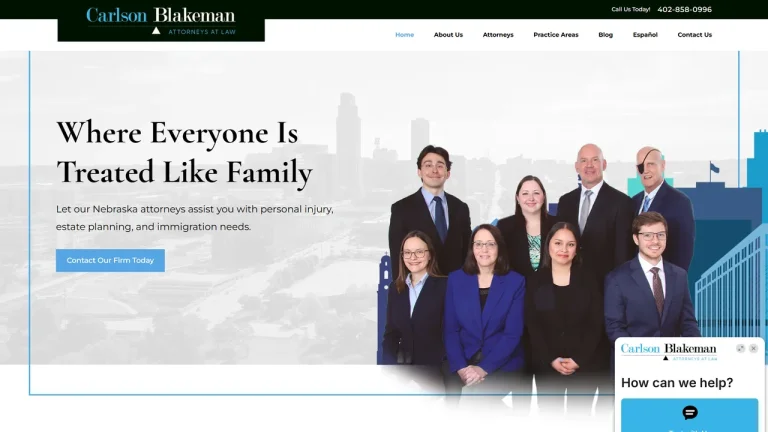
Carlson & Blakeman, LLP - Omaha, NE

Demerath Law Office - Omaha, NE

Buford Law Office - Omaha, NE
Theis Law Offices, LLC - Omaha, NE
Wrongful Death Claims and Court Jurisdiction in Douglas County
Fatal occurrences across Omaha encompass catastrophic commercial trucking collisions along Interstate 80 and Interstate 680, industrial catastrophes in manufacturing centers, construction site accidents, fatal multi-vehicle crashes on West Dodge Road, and medical errors at major regional medical centers like Nebraska Medicine or CHI Health Creighton University Medical Center Bergan Mercy. When the wrongful act or neglect of an individual or corporation causes a loss of life, Nebraska statutes provide a structured legal avenue for financial recovery.
Wrongful death litigation in Omaha is filed in the Douglas County District Court, representing the 4th Judicial District of Nebraska, located at the Douglas County Courthouse on Farnam Street. In parallel, the estate must be opened through the Douglas County Court to appoint an official personal representative. Nebraska law explicitly restricts the right to initiate a wrongful death action to the court-appointed personal representative of the decedent's estate, who brings the suit for the exclusive benefit of the surviving spouse and next of kin.
Local wrongful death attorneys understand the intersection of Nebraska probate administration and civil trial practice. Experienced counsel collaborates with forensic economists, accident reconstruction specialists, and medical examiners to quantify economic loss, evaluate pre-death pain and suffering, and navigate statutory approval hearings before Douglas County district judges.
Omaha Wrongful Death Fee Structures and Case Scenarios
| Case Scenario | Fee Structure | Estimated Cost (USD) | Key Cost Determinants |
|---|---|---|---|
| Commercial Fleet / Trucking Fatal Collision | Contingency Fee | 33.3% of settlement ($0 upfront) | Electronic logging device data, commercial policy limit tenders, clear liability findings, prompt settlement negotiation. |
| Contested Multi-Defendant Liability Litigation | Contingency Fee (Pre-Trial / Trial) | 33.3% to 40% of recovery | Accident reconstruction engineering, comparative fault challenges, witness depositions, formal trial preparation in 4th District Court. |
| Fatal Healthcare Negligence or Corporate Tort | Contingency Fee + Advanced Litigation Costs | 33.3% to 40% + court costs | Medical expert review panels, hospital electronic health record audits, loss of consortium economic modeling. |
| Probate Appointment & Heir Distribution Hearing | Contingency or Structured Rate | 33.3% or $300 - $500 per hour | Douglas County probate petition, resolving competing beneficiary interests, court-supervised minor child trusts. |
Critical Legal Deadlines & Statutes in Nebraska Wrongful Death
Civil wrongful death actions are governed by the Nebraska Wrongful Death Act, codified at Neb. Rev. Stat. § 30-809 and Neb. Rev. Stat. § 30-810. Unlike standard personal injury claims that carry a four-year window, Nebraska enforces a strict two-year statute of limitations under Neb. Rev. Stat. § 30-810, requiring every wrongful death action to be brought within two years from the date of the deceased person's death.
Nebraska also permits a separate survival action under Neb. Rev. Stat. § 25-1401. This statute allows the estate to recover damages for the conscious physical pain and mental suffering endured by the decedent between the initial injury and death, alongside pre-death medical expenses incurred at Omaha healthcare facilities.
Any settlement or verdict obtained in a wrongful death claim cannot be disbursed privately. Under Neb. Rev. Stat. § 30-810, the district court must conduct a formal approval hearing to review the settlement terms, pay allowable medical and funeral expenses, and distribute the net proceeds among the surviving spouse and next of kin in proportion to their pecuniary losses.
Small Claims Limitations vs. District Court Wrongful Death Litigation
The Small Claims Division of Douglas County Court is restricted to civil monetary disputes not exceeding $7,500 under Neb. Rev. Stat. § 25-2802, and attorneys are barred from participating under Neb. Rev. Stat. § 25-2803. Small claims courts have zero legal jurisdiction over wrongful death lawsuits or probate matters.
Wrongful death claims demand comprehensive litigation in the Douglas County District Court. Calculating pecuniary loss involves complex financial projections, including lost lifetime earnings, lost pension and healthcare benefits, value of lost household services, and loss of parental guidance and spousal companionship.
Navigating these claims requires managing complex statutory liens asserted by healthcare networks, Medicare, or Nebraska Medicaid. A dedicated wrongful death attorney coordinates probate filings, retains expert economists, and negotiates statutory lien reductions to ensure maximum net recovery for surviving family members.
Red Flags When Hiring an Omaha Wrongful Death Attorney
- Law firms or marketers sending unsolicited direct mail or placing calls to grieving relatives shortly after a fatal accident or obituary notice.
- Attorneys who fail to explain that an estate personal representative must be appointed in Douglas County Court prior to filing a lawsuit.
- Lawyers demanding upfront cash retainers for litigation or expert witness expenses on contingency wrongful death claims.
- Firms lacking trial experience before the bench of the 4th Judicial District Court or lacking the resources to finance extensive accident reconstruction.
Frequently Asked Questions
Who has the legal right to file a wrongful death lawsuit in Omaha?
Under Neb. Rev. Stat. § 30-810, only the court-appointed personal representative of the deceased person's estate has the legal authority to file a wrongful death lawsuit. The action is brought for the benefit of the surviving spouse and next of kin.
What is the deadline for filing a wrongful death claim in Douglas County?
Under Neb. Rev. Stat. § 30-810, a wrongful death lawsuit must be formally filed within strictly two years from the date of the person's death. Failing to file within this period permanently bars the estate from recovering compensation.
What types of damages can surviving family members recover?
Recoverable damages under Nebraska law include pecuniary losses such as lost financial support, lost inheritance, loss of household services, and loss of companionship, comfort, and guidance, alongside funeral and burial expenses.
Does a wrongful death settlement require court approval in Omaha?
Yes. Under Neb. Rev. Stat. § 30-810, any wrongful death settlement must be approved by the Douglas County District Court following a formal hearing to ensure fair apportionment among eligible beneficiaries.
How are wrongful death attorneys paid in Omaha?
Wrongful death lawyers represent families on a contingency fee basis. There are no upfront legal fees, and the attorney is paid an agreed-upon percentage of the recovery only if they successfully secure a settlement or jury verdict.