
Probate Lawyers in Nebraska
Retaining an experienced Nebraska probate lawyer protects estate assets, ensures accurate county inheritance tax assessments, and resolves heir disputes smoothly. Dedicated legal counsel navigates county court filings to settle creditor claims and transfer titles without unnecessary court delays. Explore our verified statewide directory below to connect with qualified probate attorneys across Nebraska.
Gnuse Law Office, P.C. - Omaha, NE

Burnett Legal Group - Omaha, NE

Nebraska Wills & Probate - Omaha, NE
James Polack P.C. Law Office - Omaha, NE

Endacott Timmer Law Firm - Lincoln, NE
Jim R. Titus, Attorney - Lincoln, NE

Mary Kay Hansen Law & Mediation, PC LLO - LINCOLN, NE
Morrow Poppe Law Firm - Lincoln, NE

Woods | Aitken LLP - Lincoln, NE

Mark John Malousek Law Office - Omaha, NE

Paul Seyler Attorney - Omaha, NE
Johnson Flodman Guenzel and Wasserburger Law Firm Lincoln, NE

The Law Offices of Glen D. Witte, PC, LLO - Lincoln, NE

Mark C. Brown Attorney At Law - Lincoln, NE

Kellogg & Palzer, P.C. - Omaha, NE

Boyum Law Firm - Omaha, NE
Law Offices of Barry S. Grossman - Omaha, NE
David R Webb, Attorney at Law - Lincoln, NE

Pansing Hogan Ernst & Buser LLP - Omaha, NE

Ellick, Jones, Buelt, Blazek & Longo, LLP - Omaha, NE
The Law Center - Omaha, NE
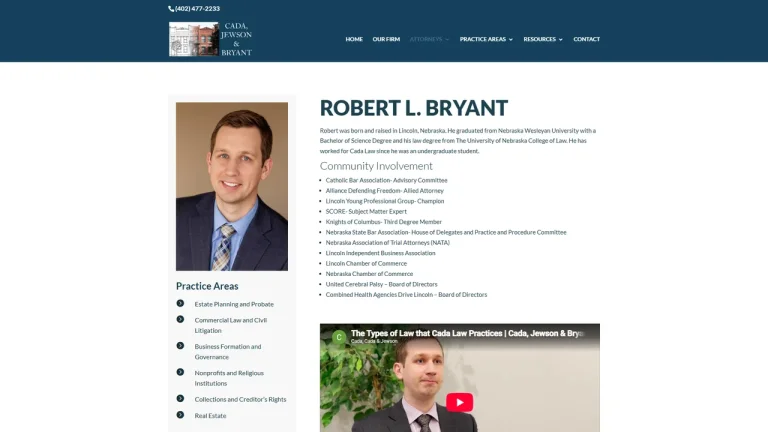
Robert L. Bryant - Attorney - Lincoln, NE
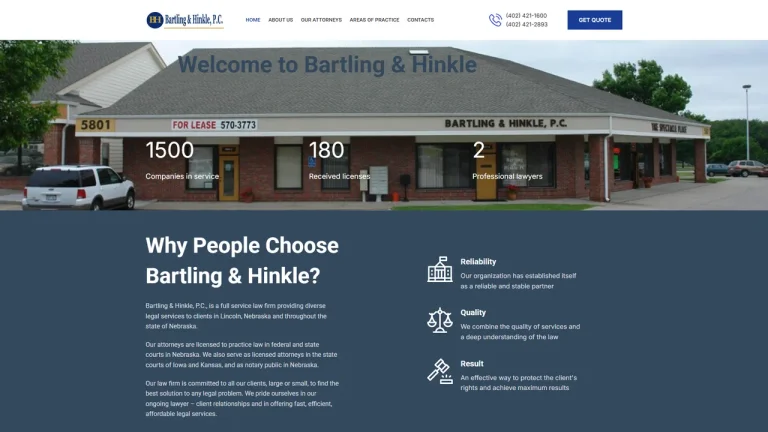
Bartling & Hinkle, PC, Lincoln, NE
Probate Administration and County Court Jurisdiction in Nebraska
Administering a decedent's estate in Nebraska requires strict adherence to the Nebraska Uniform Probate Code, with exclusive original jurisdiction vested in Nebraska County Courts under Neb. Rev. Stat. § 24-517. Whether probating an estate in Douglas County (Omaha), Lancaster County (Lincoln), Sarpy County (Papillion), or Hall County (Grand Island), proceedings must be initiated in the county where the deceased resided or owned real property.
Probate attorneys throughout the state must maintain an active license in good standing with the Nebraska State Bar Association, operating under the regulatory supervision of the Nebraska Supreme Court in Lincoln. Local practitioners regularly manage electronic filings through the Nebraska court system's JUSTICE platform, coordinating inventory reports, heir notifications, and estate accountings according to statutory standards.
Retaining local legal counsel is particularly vital in Nebraska due to the state's unique county-level inheritance tax system. A knowledgeable probate lawyer accurately calculates county inheritance tax schedules, handles the publication of creditor notices, resolves claims, and represents the personal representative in informal or formal proceedings, shielding the estate fiduciary from personal liability.
Nebraska Probate Fee Structures and Administration Scenarios
| Case Scenario | Fee Structure | Estimated Cost (USD) | Key Cost Determinants |
|---|---|---|---|
| Informal Probate Administration (Uncontested) | Standard Flat Fee or Hourly ($250 - $450/hr) | $2,000 - $4,500 | Clarity of original will, number of statutory heirs, and county inheritance tax calculation complexity. |
| Formal Probate & Contested Will Litigation | Retainer plus Hourly ($300 - $550/hr) | $5,000 - $15,000+ | Testamentary capacity challenges, undue influence claims, and County Court evidentiary hearings. |
| Small Estate Affidavit & Summary Transfer | Flat Legal Fee | $750 - $1,800 | Asset valuation under statutory caps, debt reconciliation, and successor affidavit execution. |
| Agricultural Land & Multi-Parcel Estate Succession | Staged Retainer or Hourly | $6,000 - $20,000+ | Farmland appraisals, water irrigation rights transfers, deed drafting, and multi-county tax filings. |
Critical Deadlines and Nebraska Probate Statutes
Nebraska probate administration is governed by non-negotiable statutory deadlines codified in the Nebraska Revised Statutes. Following the appointment of a personal representative, notice to creditors must be published in a legal county newspaper, requiring creditors to file claims within two months of first publication pursuant to Neb. Rev. Stat. § 30-2485. If no notice is published, an absolute bar on all creditor claims takes effect three years after the decedent's death. Surviving spouses seeking an elective share of the augmented estate must file a petition in County Court within nine months after the date of death or within six months after the probate of the will under Neb. Rev. Stat. § 30-2317.
Nebraska maintains a county-specific inheritance tax assessed under Neb. Rev. Stat. § 77-2001, which applies to beneficiaries based on their familial relationship to the decedent. Pursuant to Neb. Rev. Stat. § 77-2010, inheritance tax is due and payable precisely twelve months after the date of death; failure to pay or secure an approved extension triggers statutory interest. For small estates with personal property not exceeding $100,000, successors can bypass formal administration using a small estate affidavit under Neb. Rev. Stat. § 30-24,125 after waiting at least thirty days post-death. A similar thirty-day waiting period and $100,000 valuation ceiling apply to succession to real property by affidavit under Neb. Rev. Stat. § 30-24,129.
Small Estate Affidavits vs. Formal County Court Probate
While Nebraska Small Claims Courts handle general civil controversies up to $7,500 under Neb. Rev. Stat. § 25-2802 with a strict statutory bar against attorney representation pursuant to Neb. Rev. Stat. § 25-2803, probate matters cannot be brought in small claims divisions. All estate administration is heard within the probate division of the Nebraska County Court.
Although successors may utilize small estate affidavits for modest estates under $100,000, attempting to manage larger estates pro se creates severe financial risks. Personal representatives are held to strict fiduciary standards under Nebraska law. An unrepresented fiduciary who miscalculates county inheritance taxes, pays lower-priority debts ahead of administrative expenses, or distributes funds without properly resolving creditor claims can be held personally liable for estate losses. Retaining a probate lawyer ensures that all statutory notices are served, real estate titles are cleanly transferred, and court approval is secured to release the fiduciary from liability.
Red Flags When Hiring a Nebraska Probate Lawyer
- Attorneys who attempt to bill percentage-based fees on the gross value of the estate rather than offering transparent hourly rates or reasonable flat-fee arrangements.
- Firms that fail to demonstrate direct experience calculating Nebraska's county inheritance tax and drafting inheritance tax worksheets for county court approval.
- Lawyers lacking routine practice before the probate judges and court clerks in your specific Nebraska county.
- Practitioners unfamiliar with agricultural land valuations, farm equipment transfers, or irrigation water rights associated with rural estates.
Frequently Asked Questions
What is Nebraska's county inheritance tax and who pays it?
Nebraska imposes a county-level inheritance tax on beneficiaries receiving property from a decedent's estate. The tax rate and exemption amounts depend on the beneficiary's relationship to the deceased, with immediate relatives receiving higher exemptions and lower tax rates than remote relatives or non-relatives.
When is the inheritance tax due in Nebraska?
Inheritance tax is due twelve months from the date of the decedent's death. If the tax is not determined and paid to the county treasurer within this one-year period, statutory interest begins to accrue on the outstanding balance.
What is the financial threshold for a small estate affidavit in Nebraska?
A small estate affidavit may be used if the total value of the decedent's personal property, less liens and encumbrances, does not exceed $100,000, and at least thirty days have passed since the date of death without a petition for personal representative pending.
What is the difference between informal and formal probate in Nebraska?
Informal probate is an administrative proceeding conducted through the county court clerk when there are no disputes and the will is unchallenged. Formal probate requires judicial hearings before a county judge to resolve disputes, validate a contested will, or appoint a disputed personal representative.
Can a personal representative be held personally liable for estate debts?
A personal representative is generally not liable for estate debts from their own funds, but they can be held personally liable if they mismanage estate assets, fail to pay required taxes, or distribute property to heirs before satisfying valid creditor claims.