
Violent Crime Defense Lawyers in Nebraska
Retaining a Nebraska violent crime defense lawyer protects your liberty and rights when facing serious felony assault, domestic violence, or robbery charges. Dedicated trial counsel investigates witness statements, asserts statutory self-defense justification, and challenges prosecutor overreach before trial. Browse our verified Nebraska directory below to consult an aggressive criminal defense attorney in your jurisdiction.

Lancaster County Public Defender - Lincoln, NE

Preston Mostek Attorney at Law LLC Lincoln, NE
Berry Law Firm - Lincoln, NE

Williams Law, LLC - Omaha, NE
Berry Law - Omaha, NE

Liberty Law Group - Lincoln, NE
Sipple Law - Omaha, NE

Hicks Law, P.C., LLO - Omaha, NE

Natvig Jon S - Omaha, NE

Sopinski Law Office - LINCOLN, NE
Federal Public Defender - Omaha, NE

Latino Law Center - Omaha, NE

Kendall, Crawford & Reeker PC LLO - Omaha, NE

Monzón, Guerra & Chipman, Attorneys At Law - LINCOLN, NE
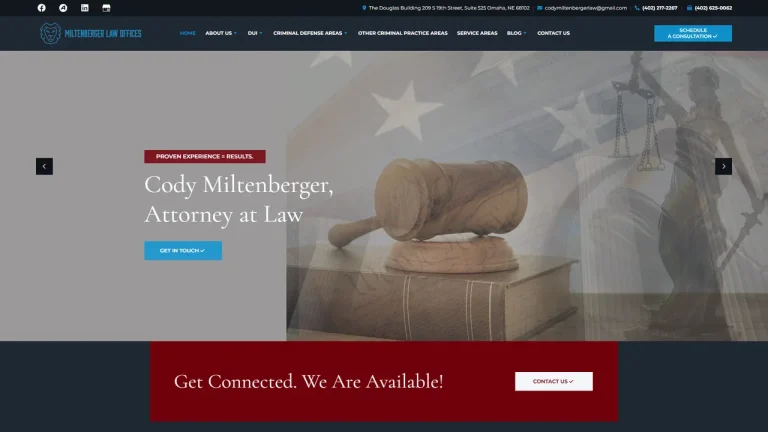
Miltenberger Law Offices - Omaha, NE

Fitzpatrick Law LLC - Omaha, NE

Parsley Law Office - Lincoln, NE

Petersen Criminal Defense Law - Omaha, NE
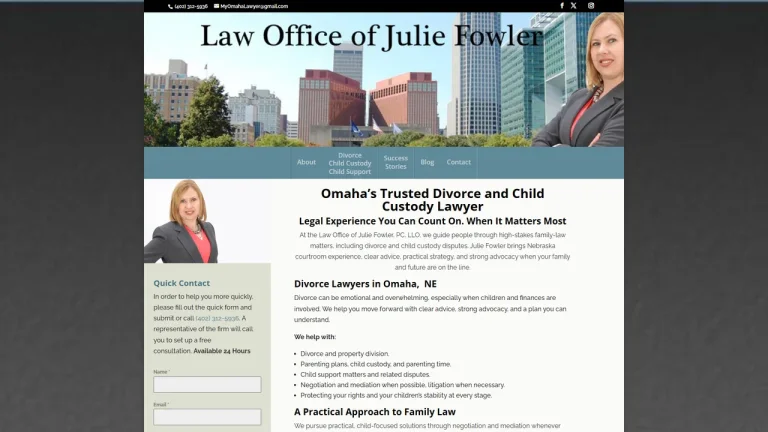
Fowler & Kelly Law, LLP - Omaha, NE

Ekeh Law Office, L.L.C. - Omaha, NE
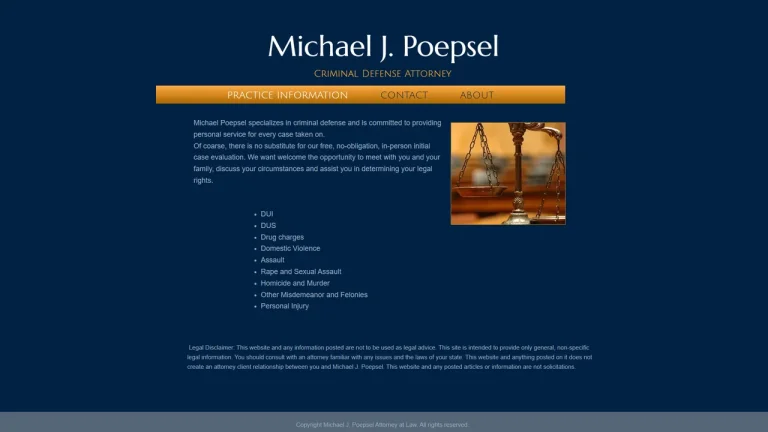
Poepsel Michael J - Omaha, NE

Preble Law Firm, PC, LLO, Lincoln, NE

Pollack & Ball LLC - Lincoln, NE
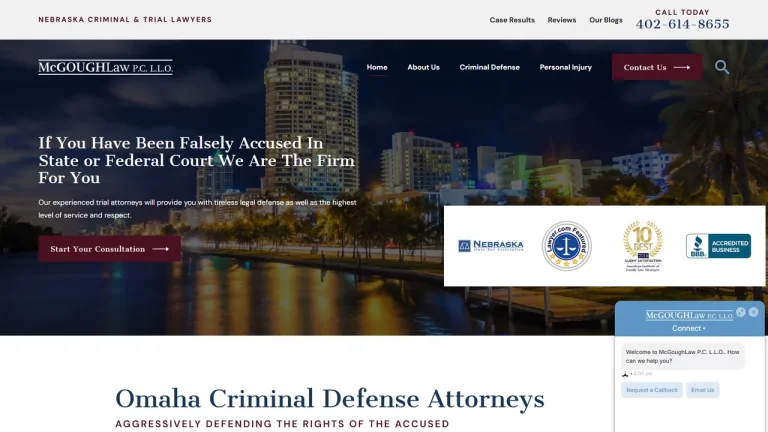
Defending Violent Offense Charges in Nebraska Courts
Accusations of violent criminal conduct carry the most severe penalties under Nebraska criminal law. Whether facing domestic assault charges in Omaha or Lincoln or responding to felony assault or robbery allegations in Sarpy, Hall, or Buffalo counties, state prosecutors aggressively seek maximum incarceration. A skilled Nebraska violent crime defense lawyer constructs comprehensive defense strategies that challenge state witness credibility, preserve exculpatory physical evidence, and protect your constitutional liberty.
Violent crime prosecutions originate in local Nebraska County Courts for initial appearances, bail reviews, and preliminary examinations. When felony charges are bound over, trials take place before District Court judges and juries-such as in the 4th Judicial District in Douglas County or the 3rd Judicial District in Lancaster County. Convictions for violent felonies can lead to decades in the Nebraska Department of Correctional Services and long-term supervision.
Nebraska defines violent crimes through strict statutory classifications. Offenses range from third-degree assault under Neb. Rev. Stat. § 28-310 and domestic assault under Neb. Rev. Stat. § 28-323 to first-degree assault under Neb. Rev. Stat. § 28-308 and robbery under Neb. Rev. Stat. § 28-324. If an alleged weapon was present, prosecutors routinely add charges under Neb. Rev. Stat. § 28-1205, which mandates consecutive sentencing. Counsel admitted to the Nebraska State Bar Association rigorously evaluates self-defense justifications under Neb. Rev. Stat. § 28-1409 to establish legal justification for the use of defensive force.
Typical Fee Structures for Nebraska Violent Crime Defense
| Case Scenario | Fee Structure | Estimated Cost (USD) | Key Cost Determinants |
|---|---|---|---|
| Misdemeanor Third-Degree or Domestic Assault | Flat Fee | $2,000 - $5,000 | No-contact order modifications, witness statements, and diversion eligibility. |
| Felony Second-Degree Assault (Dangerous Weapon) | Staged Retainer / Fixed | $5,000 - $15,000 | Medical record subpoenas, forensic injury analysis, and preliminary hearing advocacy. |
| First-Degree Assault & Armed Robbery Defense | Retainer + Hourly ($300 - $550/hr) | $12,000 - $35,000+ | Expert witness testimonies, extensive jury trial preparation, and weapon enhancements. |
| Homicide & Capital Murder Defense | Comprehensive Defense Retainer | $35,000 - $100,000+ | Ballistics testing, DNA forensics, mitigation investigators, and multi-week trial duration. |
Critical Legal Deadlines & Statutes in Nebraska Violent Crime Defense
Navigating violent offense charges requires meticulous compliance with Nebraska statutory rules and speedy trial deadlines:
- First-Degree Assault Penalties: Intentionally or knowingly causing serious bodily injury to another constitutes first-degree assault, a Class II felony carrying up to fifty years imprisonment under Neb. Rev. Stat. § 28-308.
- Mandatory Consecutive Weapons Sentencing: Under Neb. Rev. Stat. § 28-1205, using a deadly weapon to commit any felony is a distinct Class II felony whose sentence must be served consecutively to the underlying conviction.
- Statutory Justification of Self-Defense: The use of force upon another person is justifiable when the actor believes such force is immediately necessary to protect against unlawful force under Neb. Rev. Stat. § 28-1409.
- Nebraska Six-Month Speedy Trial Rule: Under Neb. Rev. Stat. § 29-1207, the state must bring the accused to trial within six months after the information is filed, excluding defense-requested continuances.
- Statute of Limitations on Criminal Offenses: While general felonies must be prosecuted within three years under Neb. Rev. Stat. § 29-110, there is no statute of limitations for Class I or Class IA violent felonies involving murder.
Small Claims Limitations vs. Professional Representation
Nebraska Small Claims Courts handle civil monetary disputes up to $3,900 pursuant to Neb. Rev. Stat. § 25-2802. While an alleged victim might pursue compensation for medical bills or property damage in a small claims action, these divisions have zero jurisdiction over criminal filings, grand juries, or felony trials.
Violent crime charges place your physical liberty at risk in Nebraska District Courts. Self-representation is hazardous; failing to assert affirmative defenses like self-defense or defense of others under Neb. Rev. Stat. § 28-1409 before trial can waive crucial legal rights. Private criminal defense counsel retains independent forensic specialists, investigates witness credibility, and demands preliminary hearings to dismantle the state's evidence before trial.
Red Flags When Hiring a Nebraska Violent Crime Defense Lawyer
- Attorneys Without District Court Trial Experience: Ensure your attorney has demonstrated experience trying violent felony cases before District Court juries in Nebraska.
- Unrealistic Promises of Immediate Bond or Dismissal: Ethical lawyers will not promise immediate bail release or charge dismissal before reviewing state evidence and police reports.
- Failure to Investigate Self-Defense Claims: Your defense team must conduct comprehensive scene reconstructions and interview witnesses rather than relying solely on police narratives.
- Ignoring Consecutive Sentencing Risks: Beware of counsel who overlooks the severe impact of weapons enhancements under Neb. Rev. Stat. § 28-1205 during plea negotiations.
Frequently Asked Questions
What is the difference between first-degree and second-degree assault in Nebraska?
Under Neb. Rev. Stat. § 28-308, first-degree assault involves intentionally or knowingly causing serious bodily injury. Second-degree assault under Neb. Rev. Stat. § 28-309 involves intentionally or knowingly causing bodily injury with a dangerous instrument or recklessly causing serious bodily injury with a dangerous instrument.
How does self-defense work under Nebraska law?
Under Neb. Rev. Stat. § 28-1409, the use of force is justifiable when you reasonably believe it is immediately necessary to protect yourself against unlawful force. Deadly force is justifiable only if you believe it is necessary to protect against death, serious bodily injury, kidnapping, or sexual assault.
Can a domestic assault victim drop the charges in Nebraska?
No. In Nebraska, criminal charges are brought by the State of Nebraska through the county attorney, not the victim. Even if the alleged victim signs an affidavit requesting dismissal, prosecutors often proceed with the domestic assault case under Neb. Rev. Stat. § 28-323 using 911 recordings and police testimony.
What is a weapons enhancement charge in Nebraska?
Under Neb. Rev. Stat. § 28-1205, using a firearm, knife, or other deadly weapon to commit any felony is a separate Class II felony. Nebraska statute mandates that any prison term imposed for this offense must be served consecutively to the sentence for the underlying felony.
What occurs during a preliminary hearing in Nebraska?
A preliminary hearing in Nebraska County Court is an evidentiary proceeding where the state must prove that a felony was committed and probable cause exists that the defendant committed it. If the judge finds probable cause, the case is formally bound over to the District Court for trial.