
Divorce Lawyers in New Hampshire
Retaining an experienced New Hampshire divorce lawyer protects your assets and parental rights throughout marital dissolution proceedings. Seasoned legal counsel helps resolve complex disputes regarding equitable distribution and alimony through structured negotiation and mediation, avoiding prolonged courtroom litigation. Explore our directory below to connect with trusted family law attorneys across the Granite State.

Barbara Griffin Law Office - Manchester, NH
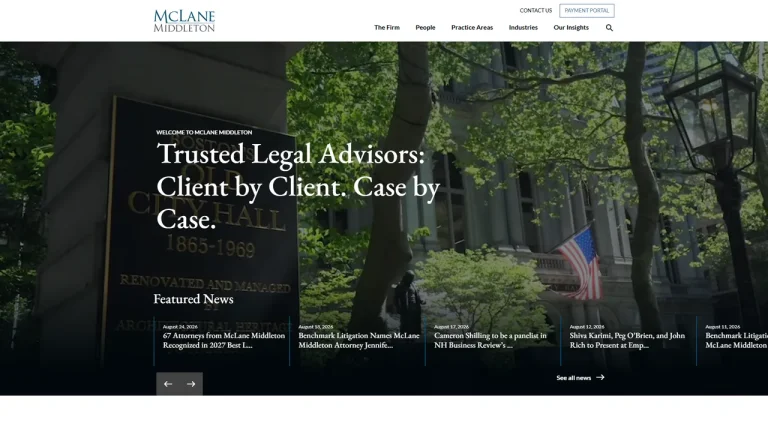
McLane Middleton, Professional Association - Manchester, NH
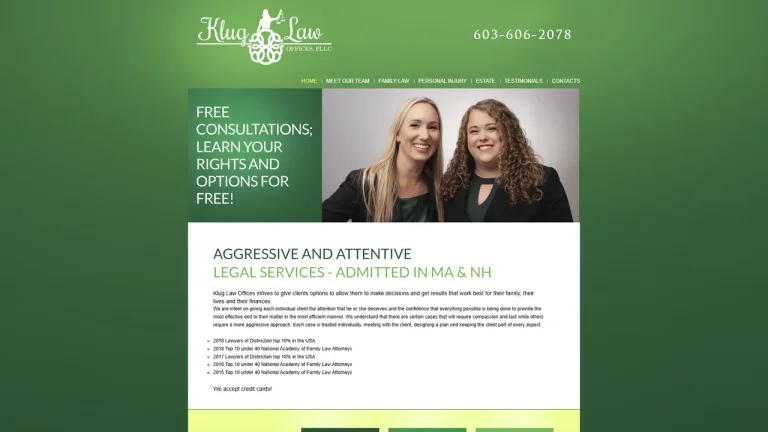
Klug Law Offices, PLLC - Manchester, NH

Gleason Legal PLLC - Manchester, NH
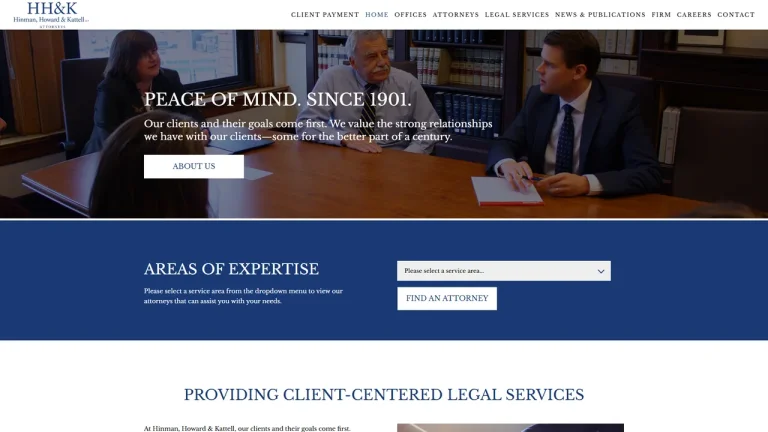
Hinman, Howard & Kattell, LLP - Manchester, NH
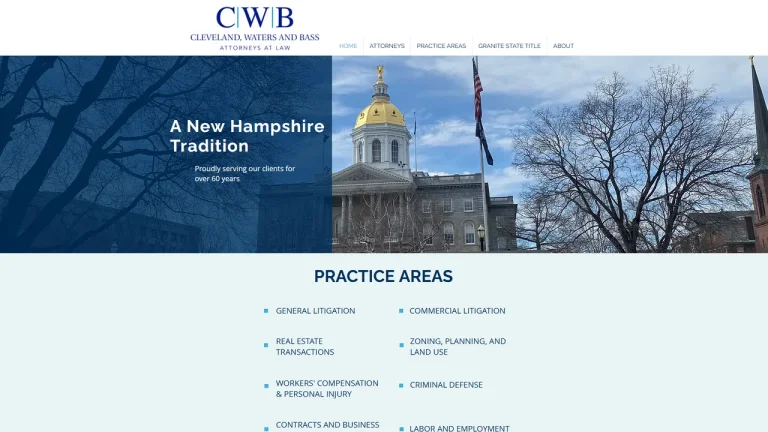
Cleveland, Waters and Bass, P.A. - Concord, NH
Wadleigh Starr & Peters PLLC - Manchester, NH
Cynthia P Gilman Law Office - Manchester, NH

Shaheen & Gordon, P.A. - Concord, NH

Sandra Kuhn, Family Legal Services, P.L.L.C. - Concord, NH

Laflamme Law, PLLC - Concord, NH
The Law Office of Jennifer P. Elliott, PLLC - Concord, NH

Donohue, Beasley & Ferber, PLLC - Concord, NH
Dennis Thivierge | Divorce & Family Law - Concord, NH
603 Legal Aid - Concord, NH

Becker Legal - Concord, NH

Upton & Hatfield, LLP - Concord, NH

Craighead & Martin, PLLC - Manchester, NH
Law Office of Debra Owen Stanley - Concord, NH
Zakre Law Office - Concord, NH

Shaheen & Gordon, P.A. - Concord, NH
Raymond J. DiLucci P.A. - Concord, NH
James Coughenour | Divorce & Family Law - Concord, NH
New Hampshire Divorce Jurisdiction and the Circuit Court Family Division
Marital dissolution in the Granite State is governed by state statutes and administered through the New Hampshire Circuit Court Family Division. This specialized judicial branch maintains locations across all ten counties, including prominent courthouses in Manchester and Nashua within Hillsborough County, Concord in Merrimack County, and Brentwood in Rockingham County. The state capital of Concord also houses the New Hampshire Supreme Court, which oversees statewide judicial administration and hears formal appellate challenges.
Because New Hampshire is an equitable distribution state under N.H. Rev. Stat. Ann. § 458:16-a, marital property is not automatically split equally down the middle. Circuit Court judges evaluate economic contributions, future earning capabilities, and liabilities when dividing assets. Having an attorney familiar with regional court practices from Manchester to Dover ensures your financial integrity remains guarded.
All formal family proceedings are integrated through the New Hampshire Judicial Branch Electronic Filing system. Legal counsel manages required initial disclosures, responds to motions, and represents clients at mandatory settlement conferences, guiding couples toward amicable agreements whenever possible.
Estimated Legal Costs and Retainer Structures for New Hampshire Divorce
| Case Scenario | Fee Structure | Estimated Cost (USD) | Key Cost Determinants |
|---|---|---|---|
| Uncontested Marital Dissolution | Flat Fee or Limited Representation | $1,500 - $3,500 | Mutual agreement on asset division, absence of spousal support disputes, joint petition filing. |
| Contested Divorce with Moderate Assets | Hourly Retainer ($275 - $425/hr) | $5,000 - $14,000 | Real estate equity division, spousal maintenance disputes, formal discovery, pre-trial hearings. |
| High-Net-Worth Contested Dissolution | Hourly Retainer ($375 - $600/hr) | $15,000 - $45,000+ | Closely held business valuations, complex retirement division (QDROs), forensic tax assessments. |
| Post-Decree Enforcement or Modification | Hourly Retainer ($300 - $450/hr) | $2,500 - $8,000 | Substantial change in financial circumstances, non-compliance with orders, alimony reduction motions. |
Critical Legal Deadlines & Statutes in New Hampshire
Meeting statutory deadlines is essential when navigating marital dissolution in the Granite State:
- Residency Requirements: Under N.H. Rev. Stat. Ann. § 458:5, the party filing for divorce must have been a resident of New Hampshire for at least one full continuous year before filing, unless both parties were domiciled in the state when the cause for divorce occurred under N.H. Rev. Stat. Ann. § 458:6.
- Grounds for Dissolution: Spouses can petition for a no-fault divorce based on irreconcilable differences under N.H. Rev. Stat. Ann. § 458:7-a, or pursue fault-based grounds including adultery, extreme cruelty, or abandonment under N.H. Rev. Stat. Ann. § 458:7.
- Mandatory Financial Disclosures: Family Division Rule 1.25-A mandates that both spouses exchange complete sworn financial affidavits, three years of personal and business tax returns, and comprehensive debt statements within 45 days after the petition is served.
- Appellate Deadlines: Any party wishing to appeal a final decree issued by the Circuit Court Family Division must file a notice of appeal with the New Hampshire Supreme Court in Concord within 30 days pursuant to N.H. Sup. Ct. R. 7.
Small Claims Court Limits vs. Hiring a New Hampshire Divorce Attorney
The New Hampshire Circuit Court District Division limits small claims matters to $10,000 under N.H. Rev. Stat. Ann. § 503:1, providing a simplified venue for straightforward monetary disagreements. However, marital dissolutions fall exclusively under the jurisdiction of the Circuit Court Family Division, where orders involve permanent distributions of real property, shared retirement assets, and ongoing support duties that far exceed small claims monetary ceilings.
While self-representation is permitted for joint uncontested petitions, proceeding pro se in contested matters carries substantial hazards. Unrepresented individuals frequently make irreversible errors regarding pension valuation, tax consequences of property transfers, and statutory alimony criteria under N.H. Rev. Stat. Ann. § 458:19. An experienced New Hampshire family lawyer ensures your marital rights remain protected and all decree terms are strictly enforceable.
Red Flags to Avoid When Selecting a New Hampshire Divorce Lawyer
- Guaranteeing Specific Financial Allocations: Under the New Hampshire Supreme Court Rules of Professional Conduct, attorneys cannot promise specific percentages or alimony amounts; asset division rests strictly within judicial discretion.
- Inexperience in the Circuit Court Family Division: Hiring a general practitioner unfamiliar with local family division procedures in Manchester, Concord, or Brentwood can create costly delays.
- Encouraging Unnecessary Courtroom Acrimony: Beware of lawyers who discourage mediation or early settlement discussions solely to generate billable hours through adversarial motion practice.
- Unclear Retainer Agreements: Trustworthy divorce attorneys provide written fee agreements detailing hourly rates, billing increments, and itemized monthly invoices without unexpected surcharges.
Frequently Asked Questions
How does New Hampshire divide marital property during a divorce?
New Hampshire is an equitable distribution state under N.H. Rev. Stat. Ann. § 458:16-a. The court presumes that an equal division of marital property is equitable, but judges can award an unequal division after evaluating factors such as the length of the marriage, each spouse's age and health, vocational skills, employability, liabilities, and contributions to the marital estate.
What is the residency requirement to file for divorce in New Hampshire?
To establish jurisdiction under N.H. Rev. Stat. Ann. § 458:5, either the filing spouse must have resided in New Hampshire for at least one full continuous year before filing, or both spouses must be domiciled in the state when the petition is filed and the cause of divorce arose in New Hampshire.
How is alimony determined under New Hampshire family law?
Alimony is governed by N.H. Rev. Stat. Ann. § 458:19. The court determines whether the requesting spouse lacks sufficient income or property to meet reasonable needs and whether the paying spouse has the financial capacity to provide support, factoring in marital lifestyle, earning capacity, and the duration of the marriage.
Is mediation mandatory in New Hampshire divorce cases?
The New Hampshire Circuit Court Family Division encourages alternative dispute resolution and frequently orders parties to participate in court-connected mediation or structured settlement conferences, unless an exception such as domestic violence or an existing protective order applies.
How can I verify that my divorce lawyer is licensed in New Hampshire?
You can verify an attorney's licensing status, standing, and disciplinary history by searching the official attorney registry maintained by the New Hampshire Bar Association and reviewing public records through the New Hampshire Supreme Court Attorney Discipline Office.