
Drug Crime Defense Lawyers in New Hampshire
Charged with a drug offense in New Hampshire? Secure aggressive legal defense to challenge unlawful searches and explore diversion programs statewide. Experienced criminal defense attorneys scrutinize search warrants, contest constructive possession claims, and advocate for alternative sentencing to protect your future. Browse our verified directory to connect with seasoned New Hampshire drug defense counsel.

New Hampshire Attorney General's Office - Concord, NH

Associated Attorneys of New England - Manchester, NH

Law Office of Michael J. Sheehan - Concord, NH
Law Office of Donald A. Kennedy - Manchester, NH

Law Offices of Michael R. St. Louis - Manchester, NH
Keith Mathews, Attorney at Law - Manchester, NH

Craig & Gatzoulis, PLLC - Manchester, NH
The DWI Defense Legal Group - Manchester, NH

Crisp Law Firm PLLC - Concord, NH
Law Offices of Martin and Hipple, PLLC - Concord, NH
Brennan Lenehan Iacopino & Hickey - Manchester, NH

Shaheen & Gordon, P.A. - Concord, NH

Lothstein Guerriero, PLLC - Concord, NH

Tamayo Law Firm, PLLC - Manchester, NH

Shaheen & Gordon, P.A. - Concord, NH
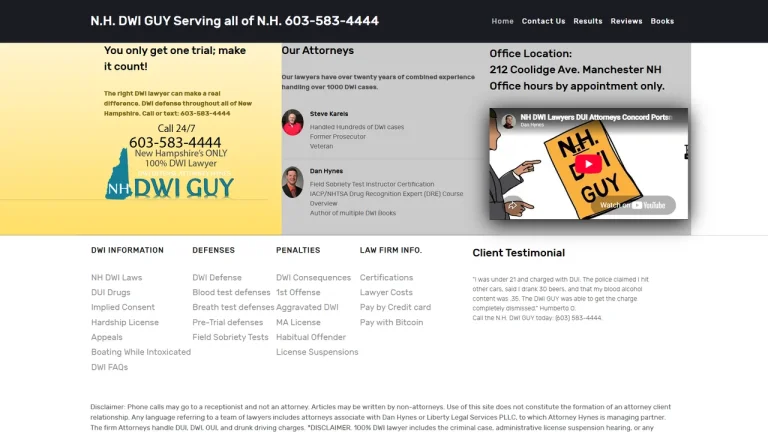
N.H. DWI GUY - Manchester, NH
Chip Sullivan, Attorney at Law - Concord, NH
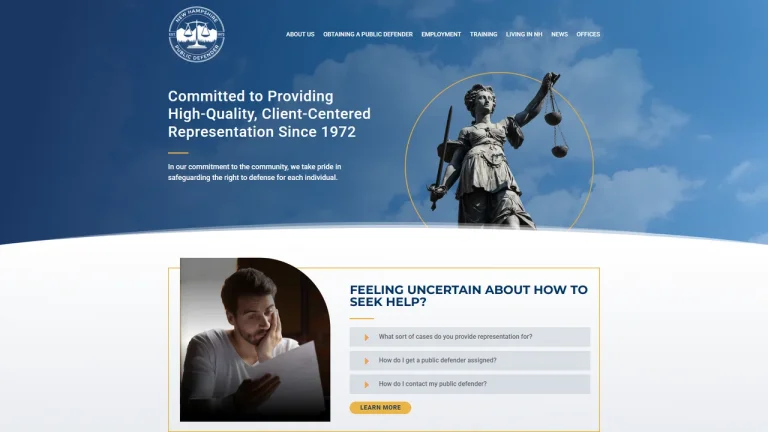
New Hampshire Public Defender - Manchester, NH
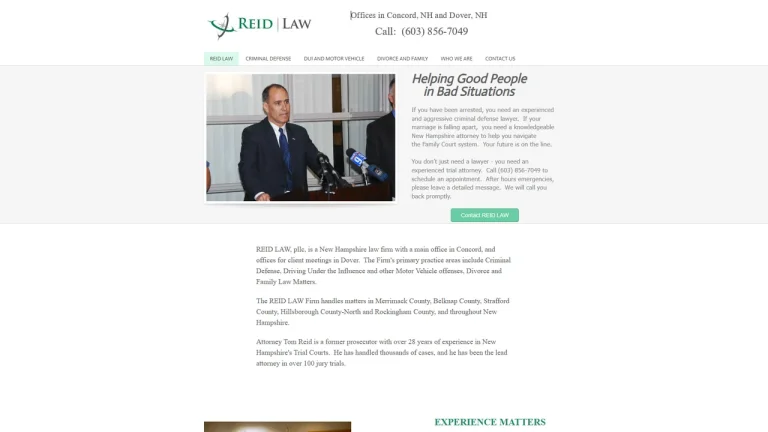
Reid Law, pllc - Concord, NH
Draghi Law Offices - Concord, NH

George T. Campbell, Attorney at Law - Manchester, NH
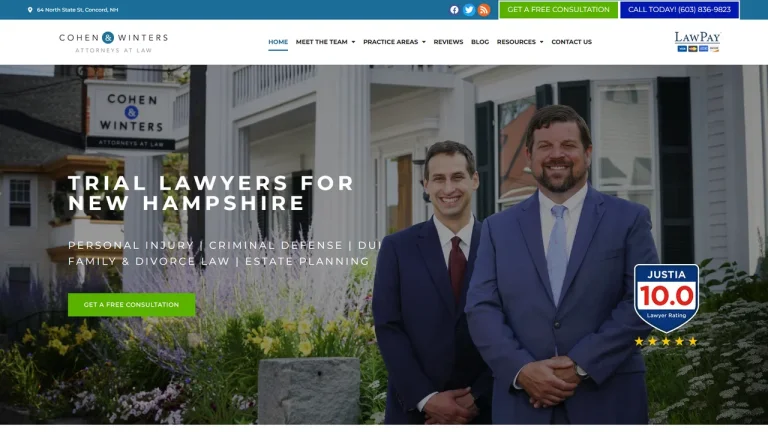
Cohen & Winters, PLLC - Manchester, NH
Attorney Jonathan Cohen - Concord, NH
Navigating New Hampshire Drug Offense Jurisdiction & Legal Representation
Drug crime charges in New Hampshire involve intense prosecutorial scrutiny and strict statutory penalties governed by the state's Controlled Drug Act. Misdemeanor possession allegations and initial bail hearings take place in the New Hampshire Circuit Court District Division across regional judicial centers including Hillsborough, Merrimack, Rockingham, and Strafford counties. Minor possession matters originating in municipalities such as Manchester, Nashua, Concord, Dover, or Keene are processed through these local circuit courts by city police prosecutors or assistant county attorneys.
When an allegation escalates to felony possession, possession with intent to sell, manufacturing, or distribution, the case moves into the New Hampshire Superior Court system via grand jury indictment or transfer. Superior Courts conduct comprehensive pre-trial motion hearings, oversee specialized county adult drug court dockets, and conduct felony jury trials. The jurisdictional divide between circuit district divisions and county superior courts highlights the vital need for legal counsel familiar with local courthouse customs, prosecution policies, and judicial perspectives across each county seat.
An experienced New Hampshire drug crime defense lawyer rigorously examines every element of the police investigation. From the validity of motor vehicle stops and canine sniffs to the execution of residential search warrants and chain-of-custody protocols at the New Hampshire State Police Forensic Laboratory, qualified counsel constructs defensive strategies designed to suppress illegally obtained evidence and protect your constitutional rights.
New Hampshire Drug Crime Defense Fee Structures & Legal Costs
| Case Scenario | Fee Structure | Estimated Cost (USD) | Key Cost Determinants |
|---|---|---|---|
| Simple Possession (Class A or Class B Misdemeanor) | Flat Fee | $2,000 - $4,500 | Controlled substance classification, criminal history, constructive possession arguments, and pre-trial diversion eligibility. |
| County Drug Court or Diversion Program Entry | Flat or Hourly ($250 - $400/hr) | $2,500 - $6,000 | County attorney admission criteria, clinical substance evaluations, structured court monitoring hearings, and treatment plan compliance. |
| Possession with Intent to Sell (Class A/B Felony) | Retainer + Hourly ($300 - $550/hr) | $6,000 - $15,000 | Quantity and schedule of narcotics, search warrant litigation, electronic surveillance challenges, and confidential informant discovery. |
| Complex Trafficking, Manufacturing, or Enterprise Trials | Retainer + Hourly ($350 - $600/hr) | $12,000 - $35,000+ | Multi-agency task force operations, wiretap suppression, independent chemical re-testing, and multi-week Superior Court jury trials. |
Critical Legal Deadlines & Statutes in New Hampshire
Controlled substance prosecutions are governed by the New Hampshire Controlled Drug Act under N.H. Rev. Stat. Ann. § 318-B:2, with criminal classifications and sentencing exposure established under N.H. Rev. Stat. Ann. § 318-B:26. Following an arrest, strict statutory timelines take effect. Under N.H. Rev. Stat. Ann. § 597:2, an individual held in custody must receive a prompt bail review hearing, typically held within twenty-four to forty-eight hours of detention, where conditions of release and preventative detention arguments are formally adjudicated.
Statutory limitations periods dictate how quickly formal charges must be initiated by the state. Under N.H. Rev. Stat. Ann. § 625:8, the prosecution must file misdemeanor drug charges within one year, while felony narcotics charges carry a six-year statute of limitations. Furthermore, evidentiary challenges concerning unlawful searches, warrantless vehicle frisks, and wiretaps must comply with court scheduling orders; suppression motions under Part I, Article 19 of the New Hampshire Constitution must be submitted within specific pre-trial deadlines established during initial Superior Court dispositional conferences.
Small Claims Limitations vs. Professional Drug Defense Counsel
The New Hampshire Circuit Court District Division provides access to small claims proceedings under N.H. Rev. Stat. Ann. § 503:1, allowing residents to resolve basic financial disputes up to the statutory limit of $10,000 without retaining an attorney. In sharp contrast, defending against a state drug prosecution in criminal court involves high personal stakes where self-representation creates grave legal vulnerabilities. A drug conviction threatens fundamental liberties, creates a permanent criminal record, and can result in severe state prison sentences.
Aside from potential terms of incarceration, drug-related convictions carry collateral consequences including mandatory license revocations, civil asset forfeiture of vehicles or currency, disqualification from federal student financial aid, and permanent employment barriers. Licensed attorneys admitted to the New Hampshire Bar Association understand how to effectively challenge search warrants, contest the subjective inferences of distribution intent, and negotiate alternative dispositions that safeguard your freedom.
Red Flags When Selecting a New Hampshire Drug Defense Lawyer
- Guarantees of case dismissal or unconditional entry into a diversion program prior to receiving and analyzing the state's formal investigative discovery.
- Pressuring clients to accept immediate guilty pleas at initial arraignment without conducting an evidentiary review of the search and seizure procedures.
- Unfamiliarity with local county diversion protocols, adult drug court entry guidelines, or treatment-based sentence mitigation options.
- Retainer contracts lacking clarity regarding trial preparation fees, independent forensic laboratory re-testing costs, or expert witness expenses.
Frequently Asked Questions
What is the difference between simple possession and possession with intent to sell in New Hampshire?
Simple possession involves holding a controlled substance purely for personal use. Possession with intent to sell is a felony charge inferred from factors such as drug quantity, packaging materials, scales, currency denominations, text messages, or witness statements, carrying significantly higher mandatory sentences.
Are drug court diversion programs available for felony charges in New Hampshire?
Yes, many New Hampshire counties operate Adult Drug Courts or pre-trial diversion programs that allow eligible non-violent offenders facing drug-motivated charges to complete intensive supervision and rehabilitation in exchange for potential charge reductions or dismissals.
Can evidence be suppressed if police searched my vehicle without a warrant?
Under Part I, Article 19 of the New Hampshire Constitution, privacy protections against warrantless searches are strictly enforced. Unless the state proves an established exception to the warrant requirement, such as valid consent or exigent circumstances, evidence obtained through an illegal vehicle search may be suppressed.
What are the penalties for a Class B felony drug conviction in New Hampshire?
A Class B felony drug conviction can result in a statutory prison sentence of up to seven years and substantial court fines, along with possible probationary supervision, treatment requirements, and a permanent criminal record.
How can an attorney challenge the chemical testing of seized substances?
Defense counsel can challenge the validity of the laboratory analysis by examining the chain of custody, reviewing laboratory calibration logs, assessing testing methodologies used at the state forensic laboratory, or requesting independent re-testing of the sample.