
DUI/DWI Defense Lawyers in New Hampshire
Facing DUI or DWI charges in New Hampshire? Connect with top-rated defense attorneys to challenge chemical tests and protect your driver's license today. A skilled criminal defense lawyer evaluates field sobriety protocols, requests prompt administrative hearings, and negotiates to minimize penalties or avoid trial. Browse our statewide directory to consult verified New Hampshire DUI defense advocates.

Law Offices of Michael R. St. Louis - Manchester, NH
Lothstein Guerriero, PLLC - Concord, NH
N.H. DWI GUY - Manchester, NH

Law Offices of F. Michael Keefe, PLLC - Manchester, NH
The DWI Defense Legal Group - Manchester, NH
Reid Law, pllc - Concord, NH
Bossie & Wilson - Manchester, NH

Sakellarios Legal - Manchester, NH
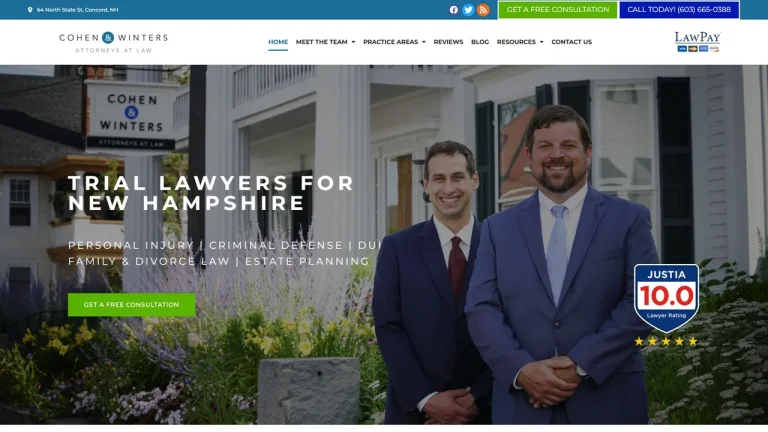
Attorney Andrew Winters - Concord, NH
Puckhaber Law Offices - Concord, NH
Steiner Law Office, PLLC - Concord, NH

Shaheen & Gordon, P.A. - Concord, NH

Shaheen & Gordon, P.A. - Concord, NH

Lehmann Major List, PLLC - Concord, NH
Shawn J Sullivan Law Office - Concord, NH

Shaheen & Gordon, P.A. - Manchester, NH

Tamayo Law Firm, PLLC - Manchester, NH
New Hampshire Public Defender - Manchester, NH

Craig & Gatzoulis, PLLC - Manchester, NH
McGrath Law Firm - Concord, NH

Keith Mathews, Attorney at Law - Manchester, NH
Becker Legal - Concord, NH
Law Offices of James A Shepard - Concord, NH

Navigating New Hampshire DUI/DWI Defense & Court Jurisdiction
Operating a motor vehicle while impaired in the Granite State triggers immediate dual-track proceedings involving both administrative license suspensions and criminal prosecution. Initial misdemeanor DWI appearances, arraignments, and bench proceedings originate within the New Hampshire Circuit Court District Division across regional venues including Manchester, Nashua, Concord, and Portsmouth. When an offense involves aggravated circumstances, prior convictions, or vehicular collision resulting in serious injury, proceedings escalate to the New Hampshire Superior Court, such as Hillsborough County Superior Court or Rockingham County Superior Court.
The administrative track is conducted independently through the New Hampshire Division of Motor Vehicles (NH DMV) Bureau of Hearings located in Concord. While the criminal trial determines potential incarceration, statutory fines, and court-ordered driver intervention programs, the NH DMV determines your driving privileges through separate administrative rules. Retaining an attorney who actively practices within your local county circuit ensures that your defense strategy addresses both civil licensing sanctions and criminal courtroom exposure simultaneously.
Defense counsel thoroughly investigates the lawfulness of the initial traffic stop, the technical administration of standardized field sobriety exercises, and the operational logs of chemical testing equipment. Because prosecutors must prove impairment beyond a reasonable doubt, an experienced local practitioner can identify investigative flaws, file dispositive suppression motions, and seek favorable resolutions before formal jury or bench trials commence.
Typical New Hampshire DUI/DWI Defense Fee Structures & Legal Costs
| Case Scenario | Fee Structure | Estimated Cost (USD) | Key Cost Determinants |
|---|---|---|---|
| First-Offense DWI (Class B Misdemeanor) | Flat Fee | $1,500 - $3,500 | Blood alcohol concentration (BAC) level, chemical refusal, initial discovery review, and pre-trial plea negotiation conferences. |
| Aggravated DWI or Repeat Offense (Class A Misdemeanor) | Flat or Hourly ($250 - $450/hr) | $3,500 - $8,500 | Mandatory minimum jail exposure, prior record within ten years, forensic breathalyzer calibration challenges, and formal motion hearings. |
| Felony DWI (Subsequent Offenses or Serious Bodily Injury) | Retainer + Hourly ($300 - $550/hr) | $7,500 - $20,000+ | Superior Court indictment, grand jury filings, retention of independent toxicologists, accident reconstruction, and jury trial litigation. |
| NH DMV Administrative License Suspension (ALS) Hearing | Flat Fee / Add-on | $750 - $2,000 | Preparation of administrative subpoena, cross-examination of arresting officer, and chemical refusal appeal filings in Concord. |
Critical Legal Deadlines & Statutes in New Hampshire
Time constraints are extraordinarily strict in New Hampshire drunk driving cases. Following an arrest where a chemical test is refused or registers a BAC of 0.08 or higher (0.02 for drivers under twenty-one), the driver faces an automatic administrative suspension under N.H. Rev. Stat. Ann. § 265-A:30. To contest this immediate loss of operating privileges, you or your attorney must submit a formal written request for an administrative hearing to the NH DMV within exactly thirty calendar days from the date of arrest as prescribed by N.H. Rev. Stat. Ann. § 265-A:31. Missing this statutory deadline results in an automatic, non-negotiable suspension regardless of the outcome in criminal court.
Substantive criminal charges are prosecuted under N.H. Rev. Stat. Ann. § 265-A:2, with mandatory sentencing guidelines and minimum revocation periods outlined under N.H. Rev. Stat. Ann. § 265-A:18. For general misdemeanor DWI prosecutions, the statutory limitations period requires formal complaints to be initiated within one year under N.H. Rev. Stat. Ann. § 625:8. Felony-level indictments must be brought within six years under N.H. Rev. Stat. Ann. § 625:8. Prompt retention of counsel ensures timely entry of appearance, immediate preservation of dashcam or bodycam recordings, and compliance with all Circuit Court scheduling deadlines.
Small Claims Limitations vs. Professional DUI Representation
In New Hampshire, the Circuit Court District Division handles civil small claims matters under N.H. Rev. Stat. Ann. § 503:1, where citizens often represent themselves for minor monetary disputes capped at $10,000. While resolving a simple property or contract conflict without formal representation is common practice in small claims sessions, attempting self-representation in criminal impaired driving proceedings carries disastrous long-term consequences. A DWI prosecution does not involve small civil adjustments; it places your constitutional liberty, career credentials, and personal mobility on the line.
A conviction under state impairment statutes creates a permanent criminal record, mandates participation in an Impaired Driver Care Management Program (IDCMP), demands significant statutory surcharges, and frequently requires the installation of an ignition interlock device on all operated vehicles. A licensed defense attorney scrutinizes complex evidentiary foundations, negotiates charge reductions with county and municipal prosecutors, and identifies procedural constitutional violations that self-represented defendants are unable to recognize or argue effectively.
Red Flags When Selecting a New Hampshire DUI Lawyer
- Guaranteed outcomes or promises of immediate charge dismissals before obtaining and examining police narrative reports, field video footage, and chemical breath records.
- Failing to mention or calendar the critical thirty-day administrative deadline to request an ALS hearing with the New Hampshire DMV Bureau of Hearings.
- Ambiguous fee agreements that hide external litigation costs such as independent toxicologist retention, blood re-testing fees, or trial appearance retainers.
- Attorneys who lack trial presence and courtroom familiarity within the specific New Hampshire Circuit Court District Division or Superior Court handling your case.
Frequently Asked Questions
What is the statutory blood alcohol concentration limit in New Hampshire?
Under state law, an individual is legally impaired if operating a motor vehicle with a BAC of 0.08 percent or greater. For commercial drivers operating a commercial vehicle, the legal limit is 0.04 percent, while drivers under the age of twenty-one face penalties for a BAC of 0.02 percent or greater.
What are the administrative penalties for refusing a breathalyzer test in New Hampshire?
Under the implied consent statute, refusing a lawful post-arrest chemical test results in an administrative license suspension of 180 days for a first refusal. If you have a prior refusal or prior impaired driving conviction within ten years, the administrative suspension period increases to two years.
Can a first-offense DWI charge in New Hampshire be reduced or resolved without jail?
A standard first-offense DWI is classified as a Class B misdemeanor, which carries statutory fines and license revocation but no mandatory incarceration. Skilled defense counsel can often negotiate alternative resolutions or conditional plea structures that minimize suspension duration through prompt completion of an IDCMP intake evaluation.
How long does a DWI conviction stay on a driver's record in New Hampshire?
A DWI conviction remains permanently on your criminal history record unless statutory annulment criteria are satisfied. For sentence enhancement calculations regarding future offenses, the statutory look-back window in New Hampshire is ten years from conviction date to arrest date.
Do I have to appear in person for every New Hampshire Circuit Court hearing?
Retaining private legal counsel frequently permits the submission of a formal waiver of arraignment and entry of a not-guilty plea, which excuses your physical presence at initial court appearances. However, substantive suppression hearings, final pre-trial conferences, and trial sessions require direct attendance.