
Accident & Injury Lawyers in New Jersey
Consulting an experienced New Jersey accident and injury lawyer ensures your legal rights are protected against aggressive insurance carriers under state tort laws. Dedicated personal injury attorneys work on contingency to negotiate maximum financial compensation and overcome complex insurance barriers without unnecessary trial delays. Browse our verified directory below to schedule an initial consultation today.

The Law Offices of Levitt and Kazan - Newark, NJ

Davis Law Center, LLC - Newark, NJ

Jacoby & Meyers, LLP - Edison, NJ

Genova Burns LLC - Jersey City, NJ

Brach Eichler Injury Lawyers - Newark, NJ

Triunfel Law - Jersey City, NJ

Zijian Guan, Esq. - Jersey City, NJ

Sanchez Sanchez & Santoliquido - Elizabeth, NJ

Anthony Pope Law Firm - Newark, NJ

Adams Gutierrez & Lattiboudere, LLC - Newark, NJ

Garces, Grabler & LeBrocq, P.C. - Jersey City, NJ

Law Offices of Kevin E. Glory, LLC - Newark, NJ

Hunt Hamlin & Ridley - Paterson, NJ
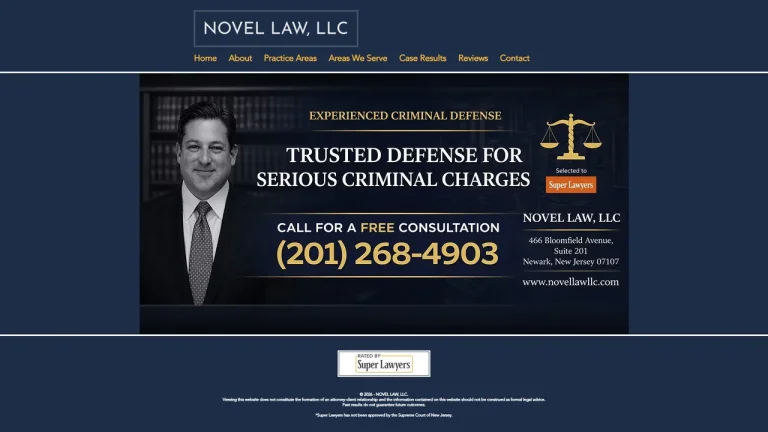
Novel Law, LLC - Newark, NJ
Mintz & Geftic, LLC - Elizabeth, NJ
Druckman & Hernandez - Elizabeth, NJ

Horn Injury Law - Newark, NJ

Terry Law Group, LLC - Newark, NJ

Brach Eichler Injury Lawyers - Trenton, NJ

Michael C. Kazer, P.C. - Jersey City, NJ

Pallitto Law, LLC - Newark, NJ

Law Office of Gerard C. Tamburino - Newark, NJ
Bross Law - Newark, NJ

Malhotra & Associates - Newark, NJ
New Jersey Personal Injury Jurisdiction and Superior Court Law Division
Personal injury claims throughout the Garden State fall under the jurisdiction of the New Jersey Superior Court, Law Division, Civil Part. Proceedings are organized across 15 vicinages encompassing all 21 counties, with notable judicial centers including the Essex County Historic Courthouse in Newark, the Bergen County Justice Center in Hackensack, the Middlesex County Courthouse in New Brunswick, the Hudson County Administration Building in Jersey City, and the Camden County Hall of Justice in Camden. The Supreme Court of New Jersey sits in the state capital of Trenton at the Richard J. Hughes Justice Complex.
New Jersey operates a complex statutory framework for motor vehicle collisions. Automobile policies are governed by statutory no-fault Personal Injury Protection (PIP) pursuant to N.J. Stat. Ann. § 39:6A-4, which covers immediate medical treatment regardless of fault. Claimants subject to the limitation on lawsuit option (verbal threshold) under N.J. Stat. Ann. § 39:6A-8 cannot recover non-economic damages for pain and suffering unless they demonstrate a permanent injury certified by an objective medical physician.
All civil claims are filed and tracked electronically through the statewide eCourts Civil portal. Navigating this rigorous system requires legal counsel capable of managing formal discovery tracks, presenting comprehensive economic evaluations, and defending against shared negligence claims from corporate defense attorneys.
Contingency Fee Structures and Cost Determinants in New Jersey Injury Claims
| Case Scenario | Fee Structure | Estimated Cost (USD) | Key Cost Determinants |
|---|---|---|---|
| Motor Vehicle Collision with Verbal Threshold Claim | Contingency Fee (Statutory Sliding Scale) | $0 Upfront ($2,500 - $12,000 case expenses) | Physician permanency certification under N.J.S.A. § 39:6A-8, diagnostic MRI scans, PIP ledger review. |
| Commercial Trucking / Tractor-Trailer Crash | Contingency Fee (Statutory Sliding Scale) | $0 Upfront ($15,000 - $60,000+ case expenses) | Electronic logging device downloads, hours-of-service compliance audits, cargo loading records, accident reconstruction. |
| Premises Liability / Slip, Trip, and Fall | Contingency Fee (Statutory Sliding Scale) | $0 Upfront ($3,000 - $18,000 case expenses) | Surveillance footage preservation, commercial property maintenance records, weather data, orthopedic expert reviews. |
| Catastrophic Injury / Wrongful Death Action | Contingency Fee (Statutory Sliding Scale) | $0 Upfront ($25,000 - $100,000+ case expenses) | Life-care planning projections, forensic economic loss assessments, specialized medical expert testimony. |
Critical Legal Deadlines & Statutes in New Jersey
Personal injury litigation in New Jersey is governed by strict statutory deadlines:
- Statute of Limitations: Under N.J. Stat. Ann. § 2A:14-2, personal injury actions must be commenced within two years from the date the cause of action accrued. Failing to file within this window permanently forfeits your right to compensation.
- Modified Comparative Negligence: Under N.J. Stat. Ann. § 2A:15-5.1, New Hampshire-style modified comparative fault applies. A claimant may only recover damages if their negligence is not greater than that of the person or persons against whom recovery is sought (51% bar).
- Public Entity Notice Requirements: Under the New Jersey Tort Claims Act, N.J. Stat. Ann. § 59:8-8, an injured party must serve a formal Notice of Claim against any municipal, county, or state public entity within 90 days of the injury before a lawsuit can be maintained.
- Certification of Permanency: For auto claims governed by the verbal threshold, N.J. Stat. Ann. § 39:6A-8 requires a physician certification of permanent injury to be executed and served within 60 days of the defendant's answer.
Special Civil Part & Small Claims vs. Hiring a New Jersey Injury Lawyer
In New Jersey, the Special Civil Part Small Claims Section handles claims of up to $5,000 under N.J. Ct. R. 6:1-2(a)(2), while the regular Special Civil Part adjudicates claims up to $20,000. These courts provide expedited resolution for minor property damage disputes where physical injuries are not present.
However, bodily injury claims involving surgical intervention, ongoing physical therapy, or lost income belong in the Superior Court Law Division (Civil Part), which has unlimited financial jurisdiction. Self-representation against commercial liability carriers is fraught with risk due to complex discovery rules and compulsory medical evaluations. Personal injury attorneys handle claims on contingency under New Jersey Court Rule N.J. Ct. R. 1:21-7, advancing all necessary costs to maximize compensation.
Red Flags to Avoid When Choosing a New Jersey Injury Lawyer
- Unlawful Direct Solicitation: Beware of lawyers or runners who contact you directly via phone or at hospitals shortly after an accident; direct solicitation violates New Jersey Rules of Professional Conduct RPC 7.3.
- Charging Contingency Fees Beyond Court Rules: New Jersey Court Rule N.J. Ct. R. 1:21-7 strictly caps contingency fees at 33.33% of the first $750,000 recovered; attorneys seeking higher percentages without court approval violate state rules.
- Lack of Direct Litigation Experience in County Vicinages: Firms that merely act as settlement mills rather than appearing before local judges in Newark, Hackensack, or New Brunswick often settle claims well below their real value.
- Vague Explanations of Medical Liens: Skilled lawyers explicitly discuss how health insurance liens, Medicaid, Medicare, and PIP subrogation claims will be resolved out of the final settlement.
Frequently Asked Questions
What is the verbal threshold in New Jersey auto accident cases?
The verbal threshold, or limitation on lawsuit option under N.J. Stat. Ann. § 39:6A-8, restricts your ability to sue for pain and suffering unless your injuries fall into specified statutory categories, such as death, dismemberment, significant scarring, displaced fractures, or a certified permanent injury to a body part.
How does comparative negligence affect compensation in New Jersey?
Under N.J. Stat. Ann. § 2A:15-5.1, New Jersey applies modified comparative negligence. If you are 50% or less at fault, you can recover damages reduced by your fault percentage. If you are found to be 51% or more at fault, you are legally barred from recovering any damages.
How much can a New Jersey personal injury lawyer charge for legal fees?
Contingency fees in New Jersey are strictly regulated under New Jersey Court Rule N.J. Ct. R. 1:21-7. Lawyers may charge up to 33.33% on the first $750,000 recovered, 30% on the next $750,000, and 25% on the subsequent $750,000, calculated after deducting allowable litigation disbursements.
What is the deadline for filing a claim against a public entity in New Jersey?
Under N.J. Stat. Ann. § 59:8-8 (Title 59), you must file a formal Notice of Tort Claim with the responsible public body within 90 days of the incident. Missing this deadline generally bars you from ever bringing a lawsuit against the municipality, county, or state agency.
How can I check an attorney's professional standing in New Jersey?
You can verify an attorney's license and review public disciplinary history using the Attorney Index search provided by the New Jersey Courts and administered by the Office of Attorney Ethics (OAE) under the Supreme Court of New Jersey.