
Estate Planning Lawyers in New Jersey
Safeguard your family future with a comprehensive New Jersey estate plan designed to minimize inheritance taxes and preserve multi-generational wealth. Experienced estate planning attorneys coordinate wills, trusts, and advance medical directives tailored to state statutory requirements. Explore our verified statewide directory below to consult with top-rated New Jersey estate planning lawyers.

Adams Gutierrez & Lattiboudere, LLC - Newark, NJ
Spiegel & Utrera, P.A. - Clifton, NJ

Londa & Londa - Elizabeth, NJ

Scott-Foster Lindal - Elizabeth, NJ
Milan C. Patel, Attorney at Law - Edison, NJ

Ciro A. Spina, III, Esq. Attorney at Law - Clifton, NJ
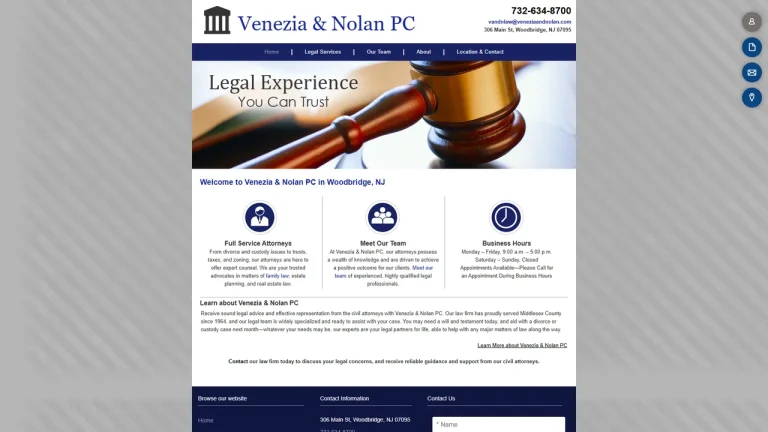
Venezia & Nolan PC - Woodbridge, NJ
Marvin Lehman, Esq. - Elizabeth, NJ
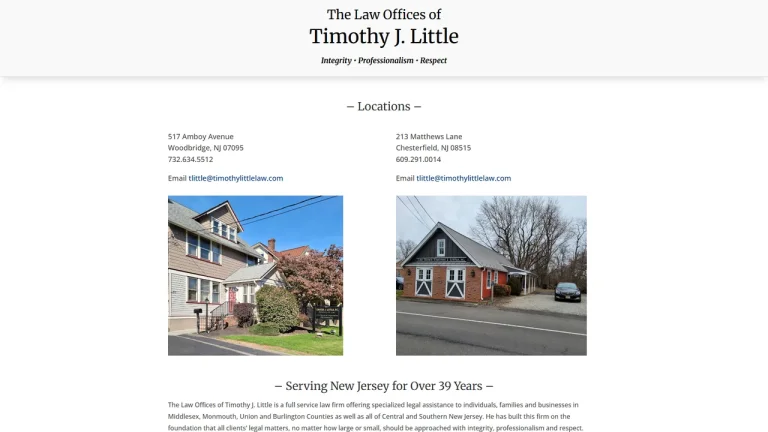
Timothy J. Little, P.C. - Woodbridge, NJ

Meyner and Landis LLP - Newark, NJ

Bogart Keane Ryan, LLC - Jersey City, NJ

Law Offices of Peter G. Aziz & Associates LLC - Clifton, NJ

The Law Office of Savio D. Figaro, LLC - Jersey City, NJ

Justice On Time LLC - Edison, NJ
Legal Tax Planners - Edison, NJ

Law Office of Lawrence Callegari, Esq. - Paterson, NJ

Mignone Law Firm - Newark, NJ

Zeitzoff Law LLC - Jersey City, NJ

Raul J. Pinto - Attorney At Law - Elizabeth, NJ
Willis Law Group LLC - Jersey City, NJ
Carmen V. Carrillo, Esq. LLC. - Newark, NJ
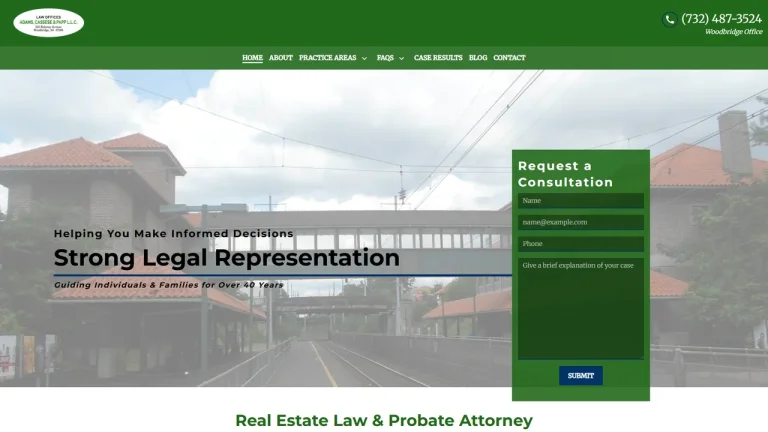
Adams, Cassese & Papp L.L.C. - Woodbridge, NJ

Davis Law Office - Jersey City, NJ
Comprehensive Estate Architecture Under New Jersey Law
Developing an effective estate plan in New Jersey requires integrating testamentary instruments, lifetime incapacity protections, and strategic tax planning. While the state eliminated its separate estate tax, New Jersey continues to enforce an inheritance tax on non-lineal beneficiaries. Estate plans are administered locally through the County Surrogate offices across the 21 counties, with judicial oversight from the Chancery Division, Probate Part of the New Jersey Superior Court.
A well-structured New Jersey estate plan provides essential legal protections during your lifetime as well as after death. Lifetime incapacity planning is governed by state statutes covering financial durable powers of attorney and advance health care directives. Without these instruments in place, family members face the expense and public delay of petitioning the Superior Court for formal adult guardianship appointments.
Skilled New Jersey estate planning lawyers tailor strategies to your family unique circumstances. Whether you reside in Bergen, Essex, Middlesex, Ocean, or Mercer County, local legal counsel protects personal wealth against statutory intestacy rules, minimizes state tax burdens, and ensures orderly fiduciary continuity.
Estate Planning Package Costs and Fee Options in New Jersey
| Case Scenario | Fee Structure | Estimated Cost (USD) | Key Cost Determinants |
|---|---|---|---|
| Core Estate Plan (Will, POA, Living Will) | Flat Fee | $1,200 - $2,500 | Individual versus married couple, non-complex asset inventory, statutory healthcare proxies. |
| Trust-Based Comprehensive Estate Plan | Flat Fee | $2,500 - $5,500 | Revocable living trust, pour-over wills, real estate retitling deeds, incapacity powers. |
| High-Net-Worth & Business Succession Plan | Retainer / Hourly ($350 - $650/hr) | $5,000 - $15,000+ | Closely held business interests, buy-sell agreements, irrevocable life insurance trusts (ILITs). |
| Adult Guardianship Court Proceeding | Flat / Hourly Retainer | $3,500 - $7,500 | Contested capacity, Superior Court Chancery Division appointment, medical examiner affidavits. |
Critical Legal Deadlines & Statutes in New Jersey
Comprehensive estate plans rely on specific statutory authorizations in the New Jersey code. Financial agency is executed pursuant to the Revised Durable Power of Attorney Act under N.J. Stat. Ann. § 46:2B-8.1, granting agents the authority to manage banking, real estate, and digital property during incapacity. Medical decisions and living wills are executed under the New Jersey Advance Directives for Health Care Act codified at N.J. Stat. Ann. § 26:2H-53.
Estate administration triggers rigid statutory deadlines. Under N.J. Stat. Ann. § 54:34-1, the New Jersey Transfer Inheritance Tax applies to inheritances received by Class C (siblings, sons-in-law, daughters-in-law) and Class D beneficiaries (nieces, nephews, friends). Returns and tax payments must be remitted to the New Jersey Division of Taxation within 8 months of the decedent death to prevent mandatory interest penalties.
Additionally, under N.J. Stat. Ann. § 3B:8-1, a surviving spouse or civil union partner has the statutory right to claim an elective share equal to one-third of the augmented estate. This election must be formally filed in the Superior Court within 6 months after the appointment of a personal representative.
Informal Administrative Relief vs. Comprehensive Legal Planning
Surviving spouses with modest estates valued under $50,000 may pursue informal administration through an affidavit of surviving spouse filed with the County Surrogate pursuant to N.J. Stat. Ann. § 3B:10-3. While the Special Civil Part hears contract claims up to $20,000 (and small claims up to $5,000), it has no authority over fiduciary estate matters or adult incapacity adjudications.
Attempting to build an estate plan using generic forms often leads to defective execution under N.J. Stat. Ann. § 3B:3-2 or uncoordinated non-probate asset designations that trigger unexpected inheritance taxes. Professional legal counsel ensures that beneficiary designations, real estate deeds, and corporate business shares are harmonized to avoid expensive Chancery Division litigation.
Red Flags When Selecting an Estate Planning Lawyer
- Failure to analyze the New Jersey Transfer Inheritance Tax for bequests directed to non-Class A beneficiaries.
- Omitting the statutory New Jersey advance health care directive language required by state health statutes.
- Quoting a low entry fee for a trust but refusing to assist with executing and recording deeds with county clerks to fund real property into the trust.
- Using standardized out-of-state forms that ignore local County Surrogate probate rules and New Jersey Superior Court practice requirements.
Frequently Asked Questions
Does New Jersey have an estate tax or an inheritance tax?
New Jersey repealed its separate estate tax, meaning there is no state estate tax on decedents estates. However, New Jersey still enforces a Transfer Inheritance Tax on assets transferred to non-Class A beneficiaries (such as siblings, nieces, nephews, and friends) at rates up to 16%.
What essential documents constitute a complete estate plan in New Jersey?
A complete New Jersey estate plan typically includes a Last Will and Testament, a Durable Financial Power of Attorney, an Advance Health Care Directive (Living Will and Healthcare Proxy), and, where appropriate, a Revocable Living Trust or Irrevocable Trust.
What is the New Jersey elective share for a surviving spouse?
Under state statute, a surviving spouse or civil union partner has the legal right to claim an elective share equal to one-third of the decedent augmented estate, preventing disinheritance, provided the claim is filed within 6 months of fiduciary appointment.
What occurs if someone becomes incapacitated in New Jersey without a power of attorney?
If someone becomes incapacitated without executing a valid durable power of attorney and healthcare proxy, family members must file a formal complaint in the Superior Court Chancery Division, Probate Part to be appointed legal guardian, requiring physician affidavits and court approval.
Can a New Jersey estate plan reduce state inheritance taxes on beneficiaries?
Yes. Proper estate planning can structure lifetime gifts, utilize trusts, and balance asset titling to mitigate or eliminate exposure to the New Jersey Transfer Inheritance Tax for taxable beneficiaries.