
Harassment Lawyers in New Jersey
Retaining an experienced New Jersey harassment lawyer ensures your rights are forcefully defended under state anti-discrimination and workplace protection laws. Skilled attorneys help resolve hostile workplace disputes, unlawful retaliation, and civil harassment through aggressive negotiation and statutory claims. Explore our verified directory below to schedule a confidential legal review today.
Mets Schiro & Manetta, LLP - Woodbridge, NJ

Chatarpaul Law - Jersey City, NJ

Guzman & Guzman - Paterson, NJ
Lite DePalma Greenberg & Afanador, LLC - Newark, NJ
Central Jersey Legal Services, Inc. - Elizabeth, NJ
Arcé Law Group - Newark, NJ

Brandon J. Broderick, Personal Injury Attorney at Law - Elizabeth, NJ
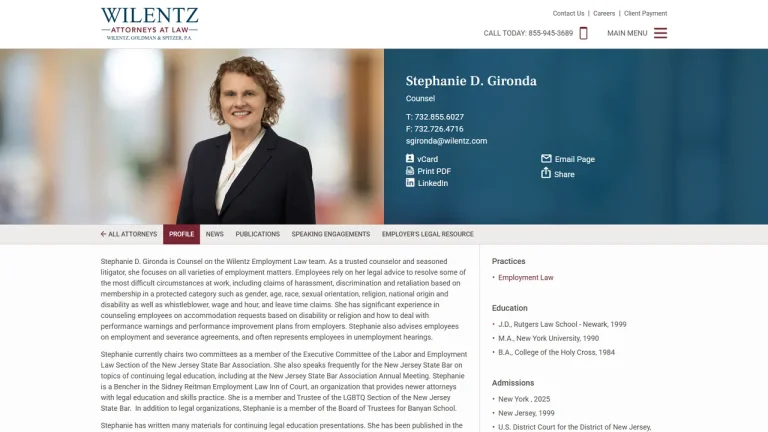
Stephanie D. Gironda - Woodbridge, NJ

Buchanan Ingersoll & Rooney PC - Newark, NJ

McOmber McOmber & Luber, P.C. - Newark, NJ
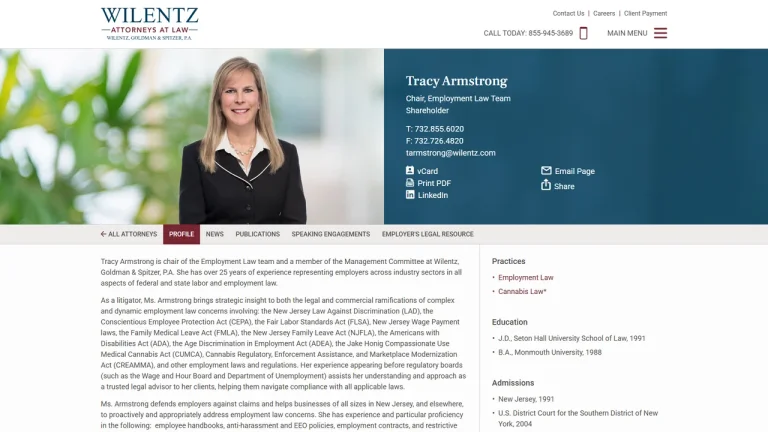
Tracy Armstrong: Wilentz, Goldman & Spitzer, P.A. - Woodbridge, NJ
Icaza, Burgess and Grossman - Newark, NJ
Zazzali, Zazzali, Fagella & Nowakowski - Newark, NJ
Friend & Wenzel, LLC - Clifton, NJ
Moshes Law, P.C. - Jersey City, NJ
Oxfeld Cohen, LLC - Newark, NJ
Law Office of Vincent J. Sanzone, Jr. - Elizabeth, NJ
Fleetwood Legal PC - Jersey City, NJ

Cahn & Parra P.A. - Edison, NJ

Bond, Schoeneck & King PLLC - Newark, NJ
Methfessel & Werbel - Edison, NJ
Salomon & Aquino, LLC - Paterson, NJ
The Law Firm of Hunt, Hamlin & Ridley - Newark, NJ
New Jersey Workplace Harassment Laws and Superior Court Jurisdiction
Workplace and civil harassment claims in the Garden State are governed primarily by the New Jersey Law Against Discrimination (LAD), codified under N.J. Stat. Ann. § 10:5-1 et seq. The statute provides broad protections against discriminatory harassment based on race, gender, sexual orientation, disability, age, and other protected traits. Formal civil lawsuits are filed in the New Jersey Superior Court, Law Division, Civil Part, across 15 judicial vicinages, including major courthouses such as the Essex County Historic Courthouse in Newark, the Bergen County Justice Center in Hackensack, the Middlesex County Courthouse in New Brunswick, and the Camden County Hall of Justice in Camden.
Under N.J. Stat. Ann. § 10:5-12, employers have an affirmative duty to maintain an environment free from hostile work environment harassment and quid pro quo sexual coercion. Once an employee reports offensive conduct, the employer must conduct a prompt, thorough investigation and take effective corrective measures. When corporate management fails to act or retaliates against the reporting worker, the victim has clear statutory grounds to seek substantial compensatory, emotional distress, and punitive damages.
Victims may also pursue administrative relief through the New Jersey Division on Civil Rights (DCR), located in Trenton, Newark, and regional branches, or file directly in Superior Court through the statewide eCourts Civil portal. Retaining a dedicated New Jersey harassment attorney ensures that key electronic evidence is preserved, administrative remedies are evaluated, and corporate defense counsel is met with aggressive trial advocacy.
Estimated Legal Fee Structures and Costs for Harassment Cases
| Case Scenario | Fee Structure | Estimated Cost (USD) | Key Cost Determinants |
|---|---|---|---|
| Pre-Suit Severance & Cease-and-Desist Negotiation | Hourly or Limited Retainer ($300 - $450/hr) | $1,500 - $4,500 | Review of personnel records, drafting demand letters, negotiation with corporate counsel. |
| Severe Hostile Work Environment Litigation | Contingency Fee (33.3% - 40%) | $0 Upfront ($5,000 - $20,000 case expenses) | Depositions of supervisors, HR complaint history, psychiatric evaluations for emotional distress. |
| Quid Pro Quo Sexual Harassment & Retaliation | Contingency Fee with Fee-Shifting | $0 Upfront ($7,500 - $30,000 case expenses) | Digital evidence recovery, termination timeline audits, compensatory and punitive damage claims. |
| Division on Civil Rights (DCR) Administrative Claim | Hourly or Hybrid Fee Structure | $3,000 - $8,500 | Drafting administrative complaint, attending fact-finding conferences, conciliation hearings. |
Critical Legal Deadlines & Statutes in New Jersey
Navigating harassment litigation in New Jersey requires strict compliance with statutory filing limitations:
- Superior Court Lawsuit Deadline: Under N.J. Stat. Ann. § 2A:14-2 and established state jurisprudence, claims filed under the New Jersey Law Against Discrimination must be filed in Superior Court within two years of the discriminatory or harassing action.
- Division on Civil Rights (DCR) Administrative Deadline: Pursuant to N.J. Stat. Ann. § 10:5-18, an administrative complaint filed with the New Jersey Division on Civil Rights must be submitted within 180 days of the unlawful conduct. Choosing the DCR generally forecloses filing in Superior Court on the same claims.
- Whistleblower Retaliation (CEPA) Window: If the harassment escalates to retaliation for reporting illegal workplace conduct under the Conscientious Employee Protection Act, N.J. Stat. Ann. § 34:19-5 establishes a strict one-year statute of limitations.
- Statutory Fee-Shifting Entitlement: Under N.J. Stat. Ann. § 10:5-27.1, prevailing plaintiffs in LAD actions are entitled to recover reasonable attorney's fees and litigation costs directly from the employer.
Special Civil Part Limits vs. Hiring a New Jersey Harassment Attorney
The Special Civil Part Small Claims Section handles claims capped at $5,000 under New Jersey Court Rule N.J. Ct. R. 6:1-2(a)(2), while regular Special Civil Part matters are limited to $20,000. These lower court forums are designed for rapid debt collections and basic contract disputes, making them poorly suited for civil rights actions.
Harassment lawsuits frequently involve complex damages including pain and suffering, reputational injury, lost wages, and punitive awards under N.J. Stat. Ann. § 10:5-3, all of which fall within the unlimited jurisdiction of the Superior Court Law Division. Self-represented employees face aggressive motions to dismiss from corporate defense counsel. Engaging seasoned legal representation levels the playing field, utilizing statutory fee-shifting to pursue full justice without personal financial risk.
Red Flags to Avoid When Selecting a New Jersey Harassment Lawyer
- Guaranteeing Exact Settlement Amounts Before Discovery: Harassment litigation involves analyzing internal HR files and executive depositions; ethical lawyers never promise guaranteed payout sums at initial consultations.
- Demanding Heavy Upfront Fees for Viable Claims: Because the New Jersey Law Against Discrimination includes robust fee-shifting under N.J. Stat. Ann. § 10:5-27.1, attorneys typically take strong liability cases on a contingency basis.
- Overlooking the Election of Remedies Dilemma: Filing with the state Division on Civil Rights precludes filing in Superior Court; an attorney who fails to explain this distinction before filing risks limiting your right to a jury trial.
- Lack of Direct Trial Experience in County Vicinages: Practices and scheduling tracks differ across Essex, Bergen, and Middlesex vicinages; ensure your lawyer routinely tries civil employment cases before local Superior Court judges.
Frequently Asked Questions
What constitutes unlawful harassment under the New Jersey Law Against Discrimination?
Unlawful harassment under N.J. Stat. Ann. § 10:5-12 occurs when an employee is subjected to unwelcome verbal or physical conduct based on a protected characteristic (such as sex, race, age, religion, or disability) that is severe or pervasive enough to alter working conditions and create an intimidating or hostile work environment.
Should I file my harassment claim with the DCR or in Superior Court?
Filing with the New Jersey Division on Civil Rights (DCR) is an administrative process with a 180-day deadline under N.J. Stat. Ann. § 10:5-18 that does not involve a jury. Filing in Superior Court allows for a two-year filing period, a jury trial, broader discovery, and the potential for punitive damages. Selecting one forum generally waives the right to pursue the other.
Can an employer retaliate against me for reporting harassment in New Jersey?
No. Both the New Jersey Law Against Discrimination under N.J. Stat. Ann. § 10:5-12(d) and the Conscientious Employee Protection Act strictly prohibit retaliation. If an employer fires, demotes, transfers, or mistreats you for lodging an internal complaint or filing a claim, they face separate statutory liability.
What compensation can I recover in a New Jersey harassment lawsuit?
Prevailing plaintiffs can recover back pay (lost wages), front pay (future lost earnings), damages for emotional distress and pain and suffering, punitive damages in cases of egregious misconduct under N.J. Stat. Ann. § 10:5-3, and reasonable attorney's fees under N.J. Stat. Ann. § 10:5-27.1.
How do legal fees work in a New Jersey harassment lawsuit?
Most New Jersey employment attorneys represent harassment victims on a contingency fee basis, meaning the lawyer is paid only if they recover money for you. Under the statutory fee-shifting provisions of N.J. Stat. Ann. § 10:5-27.1, the court can also order the liable employer to pay your attorney's fees separately.