
Estate Planning Lawyers in Jersey City
Working with a seasoned Jersey City estate planning lawyer protects your family legacy and safeguards your assets under New Jersey statutory requirements. Dedicated local counsel designs comprehensive wills, durable powers of attorney, and healthcare directives to avoid costly probate disputes and administrative delay. Browse our verified directory below to schedule an estate planning consultation with a Hudson County attorney today.
Law Offices of Guvenc Acarkan - Jersey City, NJ
Genova Burns LLC - Jersey City, NJ

Davis Law Office - Jersey City, NJ

The Law Office of Savio D. Figaro, LLC - Jersey City, NJ
Law Offices of Clarissa R. Cartagena, LLC - Jersey City, NJ
Law Offices of Patel & Cardenas - Jersey City, NJ

Willis Law Group LLC - Jersey City, NJ

Zeitzoff Law LLC - Jersey City, NJ

Moshes Law, P.C. - Jersey City, NJ

Anthony R. Gualano, Esq. - Jersey City, NJ
Bogart Keane Ryan, LLC - Jersey City, NJ
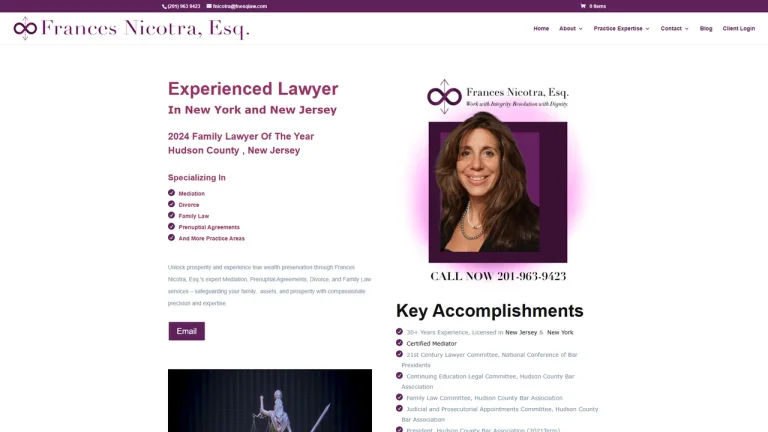
Frances Nicotra, Esq. - Jersey City, NJ

Schumann Hanlon Margulies LLC - Jersey City, NJ
Corrado & Martella P.C. - Jersey City, NJ
Connell Foley Attorneys At Law - Jersey City, NJ

Anuforo Law Firm, LLC - Jersey City, NJ

Law Office of Viktor Semenyuk, LLC - Jersey City, NJ

Ibrahim & Ibrahim Law Firm - Jersey City, NJ

Admani Law - Jersey City, NJ

Theodore Grezlak III, Lawyer - Jersey City, NJ

Edward G. Appel, Attorney at Law - Jersey City, NJ

Artusa Law Firm PC - Jersey City, NJ
Comprehensive Estate Planning in Jersey City & Hudson County
Estate planning in Jersey City requires navigating complex state statutes, local property considerations, and unique family dynamics. From luxury high-rises in Paulus Hook and Newport to multi-family residences in Journal Square, The Heights, and Greenville, protecting urban real estate and personal wealth demands structured legal documentation.
Estate planning documents must interface smoothly with the Hudson County Surrogate's Court and the Chancery Division at the William J. Brennan Courthouse on Newark Avenue. Proper planning guarantees that testamentary documents are executed in full accordance with statutory formalities, eliminating procedural hurdles when instruments are submitted for probate.
A qualified Jersey City estate planning attorney designs comprehensive plans incorporating Last Wills and Testaments, Durable Financial Powers of Attorney, Advance Healthcare Directives, and nomination of guardians for minor children. Local legal representation shields your heirs across Jersey City, Hoboken, Bayonne, and Secaucus from avoidable litigation and tax burdens.
Estimated Estate Planning Costs in Jersey City
| Case Scenario | Fee Structure | Estimated Cost (USD) | Key Cost Determinants |
|---|---|---|---|
| Individual Essential Plan (Will, POA, Healthcare Directive) | Flat Fee | $1,000 - $2,000 | Number of designated beneficiaries, specific asset distributions, and healthcare agent appointments. |
| Married Couple Reciprocal Will & Directive Package | Flat Fee | $1,800 - $3,500 | Minor child guardianship nominations, contingent beneficiaries, and digital asset management clauses. |
| High-Net-Worth Trust & Tax Mitigation Estate Plan | Flat / Retainer | $3,500 - $8,000 | Multiple real estate deed transfers, business interest assignments, and inheritance tax reduction provisions. |
| Estate Plan Review & Codicil / Amendment Updates | Hourly / Flat | $450 - $1,200 | Updating personal representatives, adjusting for marital status changes, or modifying bequest terms. |
Critical Legal Deadlines & Statutes in New Jersey
Wills and testamentary instruments in New Jersey are governed by strict formal requirements under Title 3B. Pursuant to N.J. Stat. § 3B:3-2, a valid will must be in writing, signed by the testator (or by another person at their direction and in their conscious presence), and signed by at least two individuals who witnessed the signing. Executing a self-proving affidavit before a notary public under N.J. Stat. § 3B:3-4 allows the Hudson County Surrogate to probate the will without locating witnesses.
For medical decision-making during incapacity, the New Jersey Advance Directives for Health Care Act, codified in N.J. Stat. § 26:2H-56, authorizes individuals to designate a healthcare representative and provide specific instructions regarding life-sustaining medical treatments. Financial affairs are secured through a Durable Power of Attorney under N.J. Stat. § 46:2B-8.2, which must contain explicit statutory language ensuring authority continues uninterrupted if incapacity occurs.
Although New Jersey repealed its state estate tax for deaths after 2018, the state maintains a Transfer Inheritance Tax under N.J. Stat. § 54:34-1. While spouses, parents, children, and grandchildren (Class A) are exempt, bequests to siblings (Class C) or non-relatives (Class D) face inheritance tax rates up to 16%, with tax returns and payments due within eight months of death.
Small Claims Court Limits vs. Chancery Division Estate Authority
The New Jersey Special Civil Part Small Claims division is limited to civil contract and property claims not exceeding $5,000 under N.J. Court Rule 6:1-2. Small claims courts have zero legal jurisdiction over wills, advance directives, powers of attorney, or estate disputes.
Relying on generic internet templates or informal verbal understandings frequently triggers contested proceedings in the Hudson County Superior Court, Chancery Division, Probate Part. Small claims courts cannot adjudicate disputes over estate assets or validate defective wills. Retaining a dedicated estate planning lawyer ensures your documents comply with New Jersey statutory requirements, protecting your heirs from stressful and costly court battles.
Red Flags to Avoid When Selecting an Estate Planning Lawyer
- Online document services offering fill-in-the-blank templates that lack statutory self-proving affidavits under N.J. Stat. § 3B:3-4, requiring witnesses to testify during probate.
- Attorneys who fail to evaluate New Jersey Transfer Inheritance Tax implications on non-Class A heirs under N.J. Stat. § 54:34-1.
- Law firms that draft wills without reviewing beneficiary designations on life insurance policies, investment accounts, and retirement plans.
- Practitioners lacking courtroom familiarity with the Hudson County Surrogate's Court and Chancery Division on Newark Avenue.
Frequently Asked Questions
What core documents constitute a complete estate plan in Jersey City?
A comprehensive estate plan includes a Last Will and Testament, a Durable Financial Power of Attorney under N.J. Stat. § 46:2B-8.2, an Advance Healthcare Directive with a Living Will under N.J. Stat. § 26:2H-56, and optional revocable or irrevocable trust instruments.
Does New Jersey levy an estate tax or inheritance tax?
New Jersey does not impose a state estate tax on decedents dying after January 1, 2018. However, the state still enforces a Transfer Inheritance Tax under N.J. Stat. § 54:34-1 on inheritances passing to siblings, nieces, nephews, and friends, which is due within eight months.
What happens if someone passes away without a will in Hudson County?
If someone dies intestate, their property is distributed according to default state laws under N.J. Stat. § 3B:5-3. The Hudson County Surrogate appoints an administrator, requiring a surety bond, and assets are divided strictly among statutory heirs regardless of personal wishes.
Why is a self-proving affidavit vital for a New Jersey will?
Under N.J. Stat. § 3B:3-4, a self-proving affidavit executed before a notary public allows the Hudson County Surrogate to admit the will to probate immediately without tracking down the original witnesses to sign sworn statements.
Can a durable power of attorney prevent a court guardianship?
Yes. A properly drafted durable financial power of attorney under N.J. Stat. § 46:2B-8.2 empowers your designated agent to manage banking, bills, and property if you become incapacitated, eliminating the need for an expensive guardianship proceeding in the Chancery Division.