
Medical Malpractice Lawyers in Newark
Engaging an accomplished medical malpractice attorney in Newark ensures your rights are protected against institutional healthcare defense teams under New Jersey law. Qualified legal counsel navigates complex medical records and expert evaluations to resolve disputes through structured negotiation, avoiding protracted court battles. Browse our comprehensive directory below to schedule an initial consultation with trusted local litigators.

Team Law - Newark, NJ

Asta & Bickoff, Personal Injury Lawyers - Newark, NJ

Ginarte Gonzalez & Winograd, LLP - Newark, NJ

Brandon J. Broderick, Personal Injury Attorney at Law - Newark, NJ

The Law Offices of Peter Briskin, P.C. - Newark, NJ

Garces, Grabler & LeBrocq, P.C. - Newark, NJ

Law Offices of George S. Abdy, P.C. (El Abogado Judio) - Newark, NJ

Icaza, Burgess and Grossman - Newark, NJ

Console and Associates P.C. - Newark, NJ

Rubenstein, Berliner & Shinrod, LLC - Newark, NJ

Lee Law Firm, LLC - Newark, NJ

Eisbrouch Marsh, LLC - Newark, NJ

The Dwyer Law Firm, LLC - Newark, NJ

Maran & Maran PC - Newark, NJ

Kirsch, Gelband & Stone, P.A. - Newark, NJ

Robert A. Solomon, P.C. - Newark, NJ

Law Offices of Jeffrey I. Amtman - Newark, NJ

Law Offices of Sobo & Sobo L.L.P. - Newark, NJ
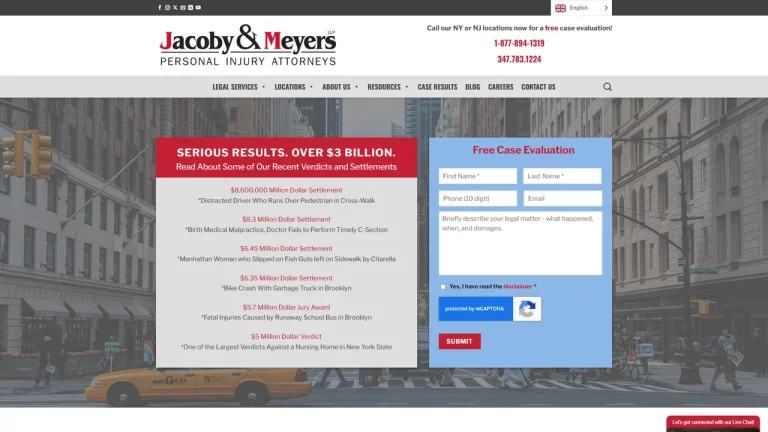
Jacoby & Meyers, LLP - Newark, NJ

New Jersey Injury Lawyers P.C. - Newark, NJ

Brach Eichler Injury Lawyers - Newark, NJ

Prosecuting Medical Malpractice Claims Across Newark Healthcare Facilities
Newark serves as a premier healthcare hub in Northern New Jersey, hosting prominent facilities including University Hospital, Newark Beth Israel Medical Center, and Saint Michael's Medical Center. While these hospitals deliver essential clinical interventions to Essex County residents, severe medical deviations occur. Diagnostic errors, surgical mistakes, birth trauma, and medication mismanagement cause devastating physical and emotional consequences for patients and their families.
Holding major medical institutions, regional healthcare networks, and licensed practitioners accountable requires seasoned legal advocates familiar with local court procedures. Medical malpractice claims originating in Newark are litigated in the Essex County Superior Court, Law Division, housed at the Historic Courthouse on Martin Luther King Jr. Boulevard. Practitioners must navigate complex civil case management conferences, specialized discovery tracks, and rigorous judicial scrutiny under New Jersey civil practice rules.
Whether the alleged negligence took place in an emergency department in University Heights, an outpatient surgical clinic in the Ironbound, or an obstetrics ward serving families throughout Greater Newark, immediate legal intervention is critical. Local malpractice attorneys collaborate with licensed independent medical examiners to audit electronic health records, surgical logs, and nursing notes to establish a documented breach of the accepted standard of care.
Fee Structures and Litigation Cost Determinants for Newark Malpractice Claims
| Case Scenario | Fee Structure | Estimated Cost (USD) | Key Cost Determinants |
|---|---|---|---|
| Preliminary Medical Audit & Feasibility Review | Contingency / Advanced Firm Costs | $0 Upfront ($1,500 - $3,500 record costs) | Volume of digital electronic health records, multi-provider hospital admissions. |
| Affidavit of Merit Procurement & Filing | Contingency / Advanced Retainers | $3,500 - $7,500 Expert Retainer | Board-certified physician specialty matching under New Jersey Patients First Act. |
| Formal Discovery, Motions & Expert Depositions | Contingency Fee (Regulated Sliding Scale) | $15,000 - $45,000 Advanced Costs | Videotaped depositions of surgical staff, independent defense examination rebuttals. |
| Essex County Superior Court Jury Trial | Contingency Fee | Strictly Capped per Court Rules | Life-care economic assessments, forensic visual trial exhibits, multi-week trial. |
Critical Legal Deadlines & Statutes in New Jersey
Medical malpractice lawsuits are governed by rigorous statutory constraints in New Jersey. Under N.J. Stat. Ann. § 2A:14-2, claimants must file a complaint within two years from the date the cause of action accrued or within two years from the date the injured patient discovered, or reasonably should have discovered, the existence of the injury and its causal relationship to medical treatment.
An essential exception applies to birth-related injuries. Pursuant to N.J. Stat. Ann. § 2A:14-2.1, an action for medical malpractice resulting from an injury sustained prior to or during birth must be initiated prior to the minor reaching the age of thirteen. While this extension protects children, preserving electronic evidence and fetal monitoring strips demands immediate action.
A critical procedural hurdle in New Jersey malpractice litigation is the mandatory Affidavit of Merit statute, codified at N.J. Stat. Ann. § 2A:53A-27. Within sixty days following the filing of the defendant's answer (extendable once for an additional sixty days upon good cause shown), the plaintiff must submit an affidavit executed by a licensed, board-certified physician in the same medical specialty as the defendant pursuant to N.J. Stat. Ann. § 2A:53A-41. Failure to supply this affidavit results in a mandatory dismissal with prejudice.
When clinical negligence occurs at a state-affiliated institution such as University Hospital, the claimant must also satisfy the strict notice conditions of the New Jersey Tort Claims Act. A formal Notice of Claim must be served upon the State within ninety days of the injury under N.J. Stat. Ann. § 59:8-8.
Small Claims Limitations vs. Professional Malpractice Representation
The Essex County Special Civil Part restricts monetary jurisdiction to claims not exceeding $20,000, while the Small Claims Section is capped at $5,000. Navigating a medical negligence dispute without an attorney in these lower divisions is legally impracticable. Due to the procedural mandate requiring expert affidavits, exhaustive depositions of healthcare practitioners, and specialized electronic discovery, medical malpractice claims cannot be successfully adjudicated in small claims courts.
Medical malpractice actions in Newark belong exclusively in the Essex County Superior Court, Law Division, and must be submitted through the eCourts NJ electronic document system. These complex claims involve significant economic damages, including future medical care, lost earning capacity, and chronic pain and suffering. Managing these demands requires professional legal counsel capable of matching the institutional resources of hospital defense firms.
Red Flags When Hiring a Medical Malpractice Attorney
- Lawyers requesting upfront retainers or demanding that the injured patient directly finance tens of thousands of dollars in expert witness review fees out-of-pocket.
- Attorneys who fail to immediately evaluate whether the facility is a public entity requiring a 90-day Notice of Claim under the New Jersey Tort Claims Act.
- General practice attorneys who lack dedicated experience matching board-certified medical experts under the stringent requirements of N.J. Stat. Ann. § 2A:53A-41.
- Law firms that promise specific multi-million dollar verdicts before acquiring complete certified hospital records and securing a signed Affidavit of Merit.
Frequently Asked Questions
What is the New Jersey Affidavit of Merit in a medical malpractice lawsuit?
Under N.J. Stat. Ann. § 2A:53A-27, an Affidavit of Merit is a sworn written statement from an independent, board-certified healthcare professional confirming there is a reasonable probability that the defendant's care fell outside acceptable professional standards. It must be filed within 60 to 120 days of the defendant's formal answer.
How long do I have to file a malpractice claim against University Hospital in Newark?
Because University Hospital operates as a state-affiliated public medical institution, claimants must file a formal administrative Notice of Claim within ninety days of the negligent incident under N.J. Stat. Ann. § 59:8-8. Failing to meet this deadline generally bars you from filing a subsequent lawsuit in court.
How are medical malpractice attorney fees determined in New Jersey?
Medical malpractice attorneys work on a contingency fee basis governed by N.J. Court Rules R. 1:21-7. The rule establishes a sliding scale: 33.33 percent on the first $750,000 recovered, 30 percent on the next $750,000, 25 percent on the subsequent $750,000, and 20 percent on the next $750,000.
What constitutes a medical error versus an acceptable treatment risk in New Jersey?
An adverse medical outcome alone does not prove malpractice. To establish liability under New Jersey law, the plaintiff must demonstrate that the practitioner deviated from the prevailing standard of medical care recognized by the medical community, and that this specific deviation directly caused the patient's catastrophic injury or death.
Can I file a medical malpractice claim on behalf of an injured family member?
Yes. Parents or court-appointed legal guardians may pursue actions on behalf of minor children under N.J. Stat. Ann. § 2A:14-2.1. If medical negligence resulted in fatal injuries, the designated executor or personal representative of the decedent's estate may initiate a wrongful death action pursuant to N.J. Stat. Ann. § 2A:31-1.