
Slip & Fall Injury Lawyers in New Jersey
Consulting an experienced New Jersey slip and fall lawyer ensures evidence is preserved and property owners are held accountable under state premises liability law. Qualified personal injury attorneys regularly negotiate substantial insurance settlements without prolonged courtroom trials. Explore our verified directory below to schedule an initial consultation with a reputable New Jersey advocate.

The Law Offices of Levitt and Kazan - Newark, NJ

Sanchez Sanchez & Santoliquido - Elizabeth, NJ

The Rothenberg Law Firm Accident And Injury Lawyers - Lakewood, NJ

Brandon J. Broderick, Personal Injury Attorney at Law - Trenton, NJ

Law Offices of Raffi T. Khorozian, P.C. - Elizabeth, NJ

Hunt Hamlin & Ridley - Paterson, NJ
Lynch Law Firm - Paterson, NJ

Brach Eichler Injury Lawyers - Trenton, NJ
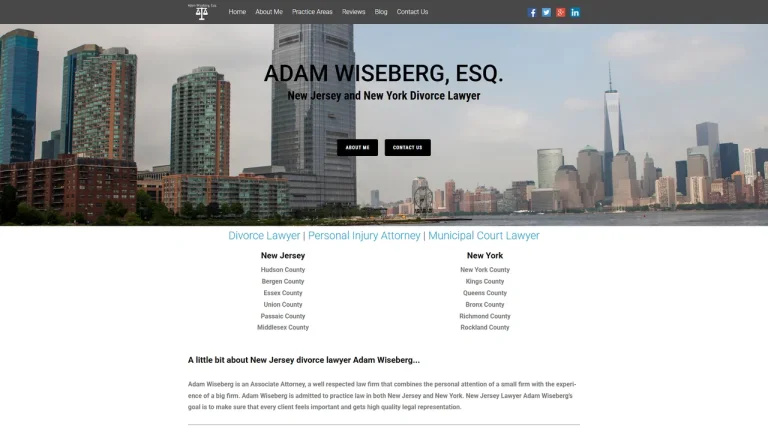
Adam Wiseberg, Esq. - Jersey City, NJ
Bonilla Sindoni LLC - Jersey City, NJ

Freeman Law Center LLC - Jersey City, NJ

Palmisano & Goodman, P.A. - Woodbridge, NJ

Patrick J. Whalen, Attorney at Law, LLC - Trenton, NJ
Stathis & Leonardis, LLC - Edison, NJ

Law Offices of Raffi T. Khorozian, P.C. - Jersey City, NJ
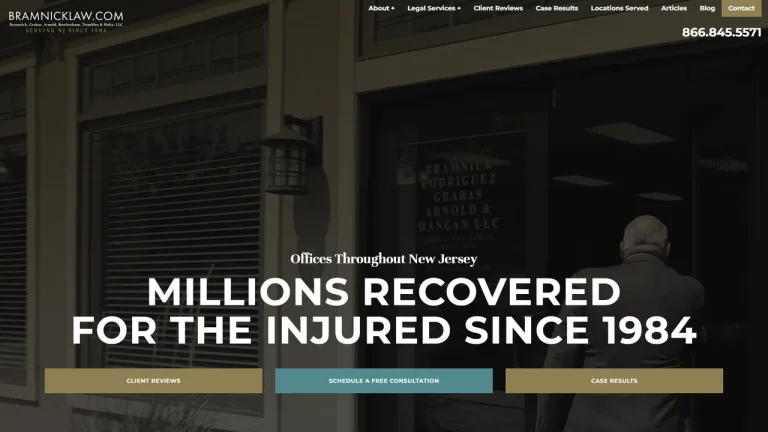
Bramnick, Grabas, Arnold & Mangan, LLC - Newark, NJ

Arcé Law Group - Newark, NJ

Pallitto Law, LLC - Newark, NJ

Giannetta & Giannetta - Newark, NJ
Law Offices of Alex Cirocco, LLC - Clifton, NJ

John Allegra Law - Jersey City, NJ

Horn Injury Law - Newark, NJ
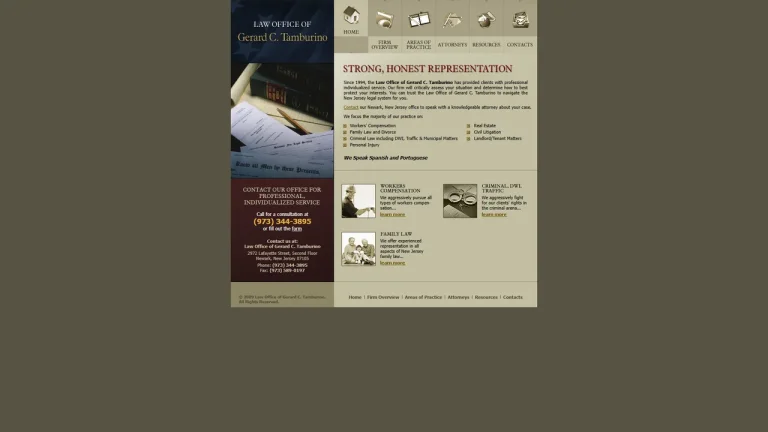
Law Office of Gerard C. Tamburino - Newark, NJ

Galarza & Etwaroo, LLC - Elizabeth, NJ
New Jersey Premises Liability Law and Court Venues
Premises liability actions in New Jersey involve establishing that a commercial business, residential landlord, or property owner breached their legal duty to keep premises reasonably safe for lawful visitors. Falls occurring on icy walkways, broken parking lots, poorly lit stairwells, or wet retail floors across Essex, Bergen, Hudson, Monmouth, and Ocean counties require immediate legal investigation to preserve crucial liability evidence.
When claims cannot be settled directly with commercial property insurers, lawsuits are filed in the New Jersey Superior Court, Law Division. Major dockets are litigated in county courthouses such as the Hudson County Administration Building in Jersey City, the Monmouth County Courthouse in Freehold, and the Ocean County Justice Complex in Toms River. Federal venues in Newark, Trenton, and Camden hear claims involving interstate corporate retailers or diverse parties.
New Jersey case law imposes affirmative obligations on commercial landowners. Under state common-law precedents, commercial property owners must maintain abutting public sidewalks in a reasonably safe condition, including addressing hazardous snow and ice accumulations. Retaining a dedicated New Jersey slip and fall attorney ensures that municipal records, weather data, and property inspection logs are obtained to hold negligent landowners accountable.
New Jersey Slip & Fall Legal Representation Fee Structures
| Case Scenario | Fee Structure | Estimated Cost (USD) | Key Cost Determinants |
|---|---|---|---|
| Pre-Suit Commercial Premises Settlement | Contingency (R. 1:21-7) | 33 1/3% of Settlement | Surveillance video availability, clarity of medical treatment, commercial policy limits |
| Public Entity Fall (Title 59 Tort Claim) | Contingency Fee | 33 1/3% of Recovery | Timely 90-day statutory notice, permanent injury threshold, palpably unreasonable standard |
| Superior Court Disputed Liability Litigation | Contingency (R. 1:21-7) | 33 1/3% of Recovery | Engineering expert reports, comparative fault defenses, deposition volume |
| Catastrophic Spine or Traumatic Brain Injury | Contingency (Regulated Scale) | Sliding Scale under R. 1:21-7 | Future medical cost projections, vocational economics, multi-day jury trial |
Critical Legal Deadlines & Statutes in New Jersey
Under New Jersey law, the statute of limitations for filing a personal injury lawsuit arising from a slip and fall is two years from the date of the accident pursuant to N.H. Rev. Stat. Ann. § 2A:14-2. Failing to file a complaint in the New Jersey Superior Court within this two-year statutory timeframe permanently extinguishes the injured party's right to pursue compensation.
A critical statutory exception applies when an injury occurs on property owned, leased, or maintained by a public entity, such as a municipal sidewalk, public transit station, or government administrative building. Under the New Jersey Tort Claims Act, a formal Notice of Tort Claim must be served on the responsible public agency within 90 days of the injury pursuant to N.J. Stat. Ann. § 59:8-8. Missing this 90-day deadline forever bars claims against public bodies absent extraordinary circumstances.
Small Claims Court vs. Retaining Legal Counsel
The New Jersey Special Civil Part, Small Claims Section handles claims up to $5,000, while the regular Special Civil Part caps jurisdiction at $20,000 under N.J. Ct. R. 6:1-2. While small claims court allows self-represented parties to seek reimbursement for minor property damage, it is ineffective for handling serious bodily injury claims resulting from a premises accident.
Commercial insurance adjusters and defense lawyers routinely assert comparative negligence defenses under N.J. Stat. Ann. § 2A:15-5.1, claiming the victim was distracted or failed to observe an open and obvious hazard. Overcoming these defenses requires hiring professional safety engineers, serving formal preservation letters for video surveillance, and retaining medical specialists. Under N.J. Ct. R. 1:21-7, personal injury attorneys represent fall victims on a contingency fee basis, eliminating financial obstacles for injured plaintiffs.
Red Flags to Avoid When Selecting a Slip & Fall Attorney
- Missing the 90-Day Public Entity Notice: If a fall occurs on municipal or state property, failing to serve a formal Title 59 notice within 90 days under N.J. Stat. Ann. § 59:8-8 permanently bars recovery.
- Failing to Send Immediate Spoliation Letters: Commercial property owners and supermarket chains frequently overwrite digital surveillance footage within days unless a formal legal preservation demand is served.
- Ignoring New Jersey Sidewalk Maintenance Rules: Counsel must understand New Jersey common law distinguishing between commercial and residential sidewalk liability to correctly identify responsible defendants.
- Demanding Upfront Hourly Fees: Personal injury representation in New Jersey should proceed on a contingency fee basis under Court Rule 1:21-7, where the lawyer only collects fees upon a successful financial recovery.
Frequently Asked Questions
What is the New Jersey mode-of-operation rule?
The mode-of-operation rule applies to self-service commercial businesses, such as supermarkets and cafeterias. When a customer slips on an item related to the business's self-service model, the burden shifts to the business to prove it exercised reasonable care, relieving the plaintiff of proving notice.
How does comparative negligence affect slip and fall settlements in New Jersey?
Under N.J. Stat. Ann. § 2A:15-5.1, New Jersey applies modified comparative negligence. You can recover damages as long as your fault is 50% or less, but your recovery is reduced by your percentage of fault. If you are 51% or more at fault, you cannot recover damages.
Are commercial property owners liable for snow and ice in New Jersey?
Yes. Commercial landowners in New Jersey have an affirmative legal duty to remove snow and ice from abutting public sidewalks and parking areas within a reasonable time after a winter storm ends to protect pedestrian safety.
What must I prove to win a slip and fall claim against a government entity?
Under the New Jersey Tort Claims Act (N.J. Stat. Ann. § 59:4-2), you must prove that a dangerous condition existed on public property, that the entity had notice, that its failure to protect was palpably unreasonable, and that you suffered permanent injury meeting statutory thresholds.
How long do I have to file a slip and fall lawsuit in New Jersey?
Under N.J. Stat. Ann. § 2A:14-2, an injured party has two years from the date of the fall to file a lawsuit in the New Jersey Superior Court. If a government entity is involved, a formal notice must also be served within 90 days under N.J. Stat. Ann. § 59:8-8.