
Wills, Estate Planning & Probate Lawyers in New Jersey
Retaining an experienced New Jersey wills, estate planning, and probate attorney ensures your legacy is protected and wealth transfer conforms to state tax statutes. Seasoned legal counsel structures resilient trusts, clarifies healthcare directives, and mitigates estate administration friction. Browse our directory below to consult with qualified probate and estate lawyers across the state.

Artusa Law Firm PC - Jersey City, NJ

Wilentz, Goldman & Spitzer P.A. - Newark, NJ

Justice On Time LLC - Edison, NJ

Law Office of Ricardo Monteiro, LLC - Newark, NJ

AB Araujo Law Group LLC - Edison, NJ
Adams, Cassese & Papp L.L.C. - Woodbridge, NJ

Spiegel & Utrera, P.A. - Clifton, NJ

Burton Jacobovitch LLP - Lakewood, NJ

Carmen V. Carrillo, Esq. LLC. - Newark, NJ

Anthony R. Gualano, Esq. - Jersey City, NJ

Nemergut & Duff - Woodbridge, NJ
Giro & Associates LLC - Newark, NJ
Corrado & Martella P.C. - Jersey City, NJ
Central Jersey Legal Services - Trenton, NJ
Willis Law Group LLC - Jersey City, NJ

Theodore Grezlak III, Lawyer - Jersey City, NJ
Michael T. Halkias, Attorney at Law - Clifton, NJ
Greenberg & Schulman - Woodbridge, NJ
Rosenblum Law - Clifton, NJ
The Price Law Firm LLC - Lakewood, NJ
Londa & Londa - Elizabeth, NJ
Genova Burns LLC - Jersey City, NJ
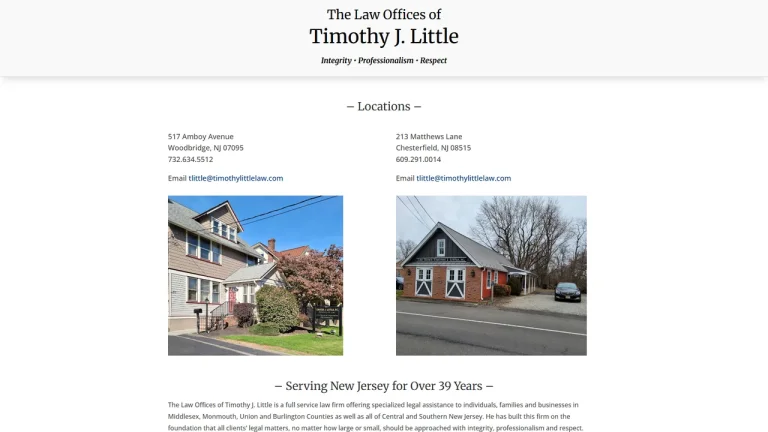
Timothy J. Little, P.C. - Woodbridge, NJ
Estate Administration and Probate Practice Across New Jersey
Estate planning and probate matters in New Jersey intersect with specialized county surrogate offices and state equity courts. Every county in the state maintains an elected Surrogate who acts as a judicial officer of the Surrogate's Court for uncontested probates, qualifications of executors, and issuance of letters testamentary. When an estate faces a will contest, accounting dispute, or adult guardianship hearing, jurisdiction transfers to the New Jersey Superior Court, Chancery Division, Probate Part.
From populous regions like Essex, Bergen, and Middlesex to coastal communities in Monmouth and Ocean counties, knowledgeable estate attorneys guide executors through state-specific asset transfers. They coordinate closely with the New Jersey Division of Taxation in Trenton to secure essential inheritance tax waivers and clear property titles.
Retaining an attorney admitted to practice before the Supreme Court of New Jersey provides families with critical security against disputes over testamentary capacity and undue influence. An experienced estate lawyer customizes revocable trusts, powers of attorney, and healthcare directives to safeguard assets while minimizing administrative delays.
Estimated Legal Fees for Estate Planning and Probate in New Jersey
| Case Scenario | Fee Structure | Estimated Cost (USD) | Key Cost Determinants |
|---|---|---|---|
| Basic Estate Planning Package (Will, POA, Directive) | Flat Fee | $1,250 - $2,800 | Number of asset classes, guardianship clauses for minor children, healthcare proxy terms. |
| Revocable Living Trust & Real Estate Deed Transfer | Flat Fee / Hourly | $3,000 - $6,500 | Number of real property deeds, business ownership assignments, multi-tier trust design. |
| Uncontested County Surrogate Probate Administration | Flat Fee / Hourly | $2,500 - $5,500 | Surrogate filing fees, obtaining tax waivers (L-8/L-9), estate bank account consolidation. |
| Contested Will Litigation & Caveat Proceedings | Hourly Retainer | $8,000 - $25,000+ | Chancery Division appearances, expert capacity evaluations, forensic accounting audits. |
Critical Legal Deadlines & Statutes in New Jersey
New Jersey probate law enforces strict procedural timelines under Title 3B of the New Jersey Statutes Annotated. Under N.J. Stat. Ann. § 3B:3-22, no will can be admitted to probate by a County Surrogate until ten full days have passed after the decedent's death. This mandatory cooling-off window provides interested parties an opportunity to file a caveat to challenge the will's authenticity before letters testamentary are issued.
Once a will is admitted to probate, interested New Jersey residents have four months to contest its validity under New Jersey Court Rule 4:85-1, while non-residents are granted six months. Surviving spouses have the right to claim an elective share equal to one-third of the augmented estate under N.J. Stat. Ann. § 3B:8-1, provided the petition is filed within six months of appointment of the personal representative pursuant to N.J. Stat. Ann. § 3B:8-12. Furthermore, under N.J. Stat. Ann. § 54:34-1, New Jersey inheritance tax returns and payments must be completed within eight months of the decedent's death to prevent statutory interest penalties.
Surrogate Filing vs. Professional Estate Representation
While the New Jersey Special Civil Part adjudicates small claims under $5,000, it holds zero jurisdiction over probate, trusts, or estate disputes. Uncontested estates may initiate filings through the County Surrogate, but proceeding pro se in complex estates carries substantial personal liability for executors.
Executors are personally liable for improper asset distributions before tax clearances are finalized. In New Jersey, bank accounts and real estate remain subject to statutory tax liens until an inheritance tax waiver is obtained from the state. If an interested party files a caveat under New Jersey Court Rule 4:82, the Surrogate is immediately divested of jurisdiction, and the dispute must be litigated in the Superior Court Chancery Division, Probate Part. Retaining legal counsel protects executors from breach of fiduciary duty claims and preserves beneficiary inheritances.
Red Flags When Hiring an Estate Planning and Probate Lawyer
- Offering boilerplate revocable trust documents without assisting in executing deed transfers for New Jersey real property.
- Failing to advise clients regarding the New Jersey Inheritance Tax, which taxes transfers to Class C and Class D beneficiaries (siblings, nieces, nephews, and friends).
- Charging percentage-based estate administration fees rather than reasonable hourly rates or pre-negotiated flat fees.
- Lack of courtroom experience in the specific county Superior Court Chancery Division handling probate disputes.
Frequently Asked Questions
Does New Jersey have an estate tax or an inheritance tax?
New Jersey does not impose an estate tax, but it does enforce an inheritance tax under N.J. Stat. Ann. § 54:34-1 on assets transferred to non-exempt beneficiaries, such as siblings, nieces, nephews, and non-relatives.
How soon after death can an executor probate a will in New Jersey?
Under N.J. Stat. Ann. § 3B:3-22, an executor must wait at least ten full days following the date of death before the County Surrogate can formally admit a will to probate and issue letters testamentary.
What is the deadline for challenging a probated will in New Jersey?
Under New Jersey Court Rule 4:85-1, an individual residing in New Jersey must file a complaint challenging a probated will within four months, whereas an out-of-state resident has six months.
What is a New Jersey inheritance tax waiver (Form L-8 / L-9)?
An inheritance tax waiver is an official state certificate issued by the New Jersey Division of Taxation that releases the state tax lien on a decedent's real estate or bank accounts so they can be transferred.
Can a spouse be completely disinherited under New Jersey law?
No. Under N.J. Stat. Ann. § 3B:8-1, a surviving spouse has a statutory right to claim an elective share of one-third of the decedent spouse's augmented estate, regardless of the will terms.