
Debt Relief Lawyers in Woodbridge
Consulting a trusted Woodbridge debt relief lawyer protects consumers facing aggressive creditor harassment, bank freezes, and collections lawsuits. Knowledgeable legal counsel asserts New Jersey consumer protections, negotiates reduced lump-sum settlements, and prevents unlawful wage garnishments. Explore our directory below to schedule an evaluation with a local debt defense attorney.
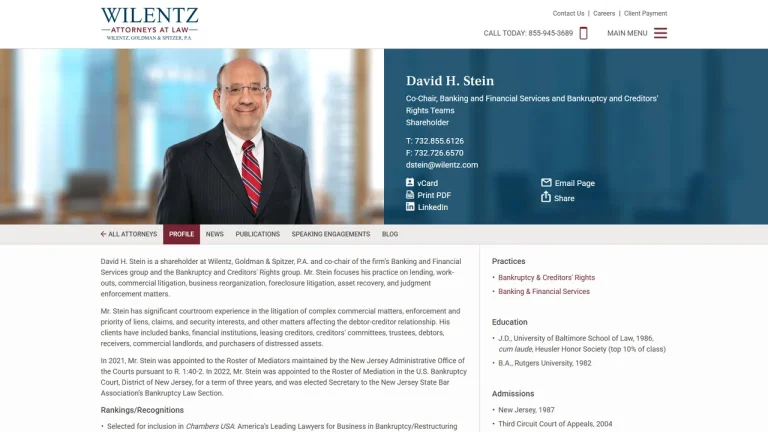
David H. Stein Esq. - Woodbridge, NJ

Philip C. Gutworth, P.A. - Woodbridge, NJ

Todd S. Unger, Esq. LLC - Woodbridge, NJ

Debt Relief and Consumer Defense in Woodbridge
Consumers across Woodbridge Township, from Port Reading to Colonia and Sewaren, often find themselves targeted by aggressive collection agencies, junk debt buyers, and medical billing companies. Overdue credit cards, personal loans, and unexpected healthcare bills can quickly escalate from collection letters into formal court summonses. Navigating debt relief requires a clear legal strategy that enforces state and federal consumer protection statutes to halt aggressive creditor actions.
Debt collection lawsuits involving Woodbridge residents are adjudicated in the Middlesex County Superior Court, Special Civil Part, located at 56 Paterson Street in New Brunswick. Debt buyers routinely purchase unverified accounts for pennies on the dollar and file bulk collection actions, relying on consumer inaction to secure default judgments. When consumers fail to answer, creditors execute wage garnishments and bank levies across local financial institutions. A local debt defense attorney levels the playing field by demanding strict proof of debt ownership, original account documentation, and chain of custody evidence.
Beyond formal court defense, dedicated legal counsel evaluates non-litigation debt restructuring options. Attorneys negotiate directly with major financial institutions to secure lump-sum settlement reductions or restructured repayment agreements without resorting to bankruptcy. Engaging a local Woodbridge lawyer ensures that debt negotiations result in legally binding release agreements that protect against future resale of residual balances.
Legal Fee Framework for Woodbridge Debt Defense Services
| Case Scenario | Fee Structure | Estimated Cost (USD) | Key Cost Determinants |
|---|---|---|---|
| Special Civil Part Lawsuit Defense | Flat Legal Fee | $1,000 - $3,000 | Debt buyer standing, availability of original loan records, total amount claimed. |
| Out-of-Court Balance Negotiation | Flat or Savings Percentage | $1,500 - $4,500 | Lump-sum availability, number of active accounts, creditor identity. |
| FDCPA Harassment Claim | Contingency / Fee-Shifting | $0 Client Cost | Severity of statutory violations, abusive calls, misrepresentations by collector. |
| Motion to Vacate Default Judgment | Flat Legal Fee | $1,200 - $2,800 | Defective service of process, establishing meritorious defenses in New Brunswick. |
Critical Legal Deadlines & Statutes in New Jersey
Consumer debt actions in New Jersey are strictly governed by statutory limitation periods. Under N.J. Stat. Ann. § 2A:14-1, the statute of limitations for filing a lawsuit on a credit card debt, medical bill, or personal loan is six years from the date of default. If a creditor attempts to sue on a debt older than six years, the claim is legally time-barred, and pursuing it may violate federal consumer law.
When a collection complaint is served from the Middlesex County Special Civil Part, a formal written Answer must be filed within 35 days pursuant to N.J. Court Rule 6:3-1 to avoid the entry of a default judgment. Protection against abusive practices is reinforced by the Fair Debt Collection Practices Act under 15 U.S. Code § 1692, which prohibits false threats, deceptive representations, and harassing communications. For wage executions, New Jersey enforces strict caps under N.J. Stat. Ann. § 2A:17-56, limiting wage garnishments to 10 percent of gross earnings only if income exceeds 250 percent of the federal poverty guideline.
Middlesex County Special Civil Part vs. Comprehensive Legal Counsel
Many consumers attempt to handle collections actions pro se or turn to unaccredited national debt settlement companies. These out-of-state entities cannot represent consumers in New Jersey courts and often instruct clients to stop paying creditors while collecting substantial administrative fees. This strategy frequently results in default judgments, frozen bank accounts, and damage to credit scores in the Middlesex County Special Civil Part.
Hiring a licensed New Jersey attorney ensures that collection lawsuits are answered within the 35-day statutory window. An attorney can challenge whether the debt buyer has legal standing, dispute unverified interest rates, or file counterclaims under the New Jersey Consumer Fraud Act, N.J. Stat. Ann. § 56:8-1. If debts are overwhelming, counsel can guide the debtor through formal restructuring or federal bankruptcy protection to achieve complete financial recovery.
Red Flags to Avoid When Selecting a Woodbridge Debt Relief Lawyer
- Unlicensed out-of-state debt settlement firms charging high monthly fees without New Jersey legal representation.
- Advising consumers to ignore summonses from the Middlesex County Special Civil Part, leading to default judgments.
- Failing to verify whether the six-year statute of limitations under N.J. Stat. Ann. § 2A:14-1 has expired before making a payment.
- Guaranteeing complete debt elimination without addressing potential tax liability for canceled debt on IRS Form 1099-C.
Frequently Asked Questions
What is the statute of limitations on debt in New Jersey?
Under N.J. Stat. Ann. § 2A:14-1, the statute of limitations for consumer debt, including credit cards and medical accounts, is six years from the date of default.
How much can a creditor garnish from my wages in New Jersey?
Under N.J. Stat. Ann. § 2A:17-56, garnishments are capped at 10 percent of gross pay if income exceeds 250 percent of the poverty line, with no garnishment permitted below that threshold.
What should I do if sued in the Middlesex County Special Civil Part?
Under N.J. Court Rule 6:3-1, you must file a formal written Answer within 35 days of receiving the summons to avoid an automatic default judgment.
Can a debt collector freeze my bank account in Woodbridge?
A collector can only freeze your bank account after obtaining a court judgment. Once entered, they can issue a writ of execution to levy funds held in your account.
How does the Fair Debt Collection Practices Act protect consumers?
Under 15 U.S. Code § 1692, debt collectors are prohibited from using deceptive tactics, threatening unlawful actions, or contacting consumers at inconvenient times and places.