
Harassment Lawyers in Woodbridge
Retaining a seasoned Woodbridge harassment lawyer provides vital protection against hostile workplace environments, unlawful retaliation, and supervisory abuse. Experienced employment attorneys intervene discreetly to halt misconduct, hold employers accountable, and negotiate fair financial remedies. Browse our verified directory below to consult an accomplished Middlesex County workplace harassment attorney.
Mets Schiro & Manetta, LLP - Woodbridge, NJ
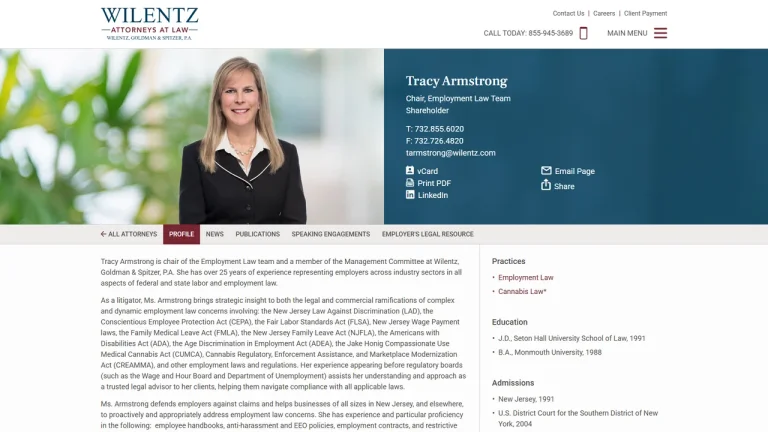
Tracy Armstrong: Wilentz, Goldman & Spitzer, P.A. - Woodbridge, NJ
Workplace Harassment Protections & Judicial Venues in Woodbridge
Experiencing persistent workplace harassment creates a toxic environment that threatens an employee's livelihood and emotional well-being. In Woodbridge Township, employees work in diverse settings ranging from corporate complexes in Metropark and retail storefronts along Route 1 to industrial facilities in Avenel and Sewaren. When supervisors, colleagues, or corporate executives engage in unwelcome sexual advances, racial slurs, or retaliatory hostility, New Jersey law provides powerful legal protections to hold offenders and their employers accountable.
Harassment lawsuits arising in Woodbridge are litigated within the Middlesex County Superior Court, Law Division - Civil Part, located at the Middlesex County Courthouse at 56 Paterson Street in New Brunswick. Workplace harassment claims may also encompass federal civil rights statutes, leading to proceedings in the U.S. District Court for the District of New Jersey. An experienced local attorney understands how Middlesex County judges evaluate evidence of severe or pervasive misconduct and corporate failure to remediate reported harassment.
Engaging legal counsel promptly allows victims of workplace harassment to establish an unassailable evidentiary record. An attorney guides you through proper internal reporting protocols, prevents unlawful termination, and positions your case for maximum settlement value or decisive courtroom trial.
Typical Woodbridge Workplace Harassment Legal Fees
Harassment legal representation in Middlesex County is typically offered on a contingency fee basis supported by statutory fee-shifting provisions, ensuring workers have access to justice without personal financial risk.
| Case Scenario | Fee Structure | Estimated Cost (USD) | Key Cost Determinants |
|---|---|---|---|
| Quid Pro Quo Sexual Harassment Claim | Contingency Fee (Statutory Fee-Shifting) | 33.33% - 40% of Recovery ($0 Upfront) | Direct evidence of retaliation, supervisory status, employer reporting records |
| Severe or Pervasive Hostile Work Environment | Contingency Fee (Statutory Fee-Shifting) | 33.33% - 40% of Recovery ($0 Upfront) | Written complaint logs, witness corroboration, internal investigation adequacy |
| Whistleblower Retaliation (CEPA Action) | Contingency or Hybrid | 33.33% - 40% of Recovery ($0 Upfront) | Proof of protected whistleblowing activity, adverse employment causality, damages |
| Confidential Executive Harassment Severance | Hourly or Retainer | $3,500 - $8,500 | Executive agreement covenants, non-disclosure terms, reputation management |
Critical Legal Deadlines & Statutes in New Jersey
Navigating workplace harassment claims in New Jersey requires vigilance regarding statutory limitations. Under the New Jersey Law Against Discrimination, codified at N.J. Stat. Ann. § 10:5-12, employees must file a hostile work environment or sexual harassment lawsuit in Superior Court within two years of the unlawful conduct under N.J. Stat. Ann. § 2A:14-2. Under the continuing violation doctrine recognized by New Jersey courts, cumulative acts contributing to a hostile work environment may be considered provided at least one incident occurred within the two-year filing period.
For employees subjected to retaliatory harassment after blowing the whistle on illegal corporate conduct, the New Jersey Conscientious Employee Protection Act (CEPA) under N.J. Stat. Ann. § 34:19-1 provides robust protections. However, CEPA imposes a strict one-year statute of limitations from the date of the retaliatory action under N.J. Stat. Ann. § 34:19-5. Missing this one-year cutoff permanently extinguishes your whistleblower claims.
Additionally, New Jersey law strictly protects employee transparency. Under N.J. Stat. Ann. § 10:5-12.8, employment agreements and settlement contracts that attempt to enforce non-disclosure provisions concealing details of workplace discrimination, harassment, or retaliation are deemed contrary to public policy and unenforceable against employees.
Small Claims Court Limits vs. Professional Harassment Counsel
The Special Civil Part of the Middlesex County Superior Court maintains a Small Claims Section limited to disputes of $5,000 or less, with the regular Special Civil Part handling monetary claims up to $20,000. While small claims courts are appropriate for straightforward wage or property reimbursement disputes, workplace harassment claims require substantial judicial remedies far beyond their scope.
Hostile work environment litigation involves complex non-economic claims, including emotional distress, humiliation, punitive damages, and permanent injunctive remedies. Corporate employers are represented by institutional defense firms and must appear through licensed attorneys under N.J. Ct. R. 1:21-1(c). An unrepresented plaintiff facing formal depositions, discovery protective orders, and defense motions in Middlesex County Superior Court risks procedural dismissal without experienced legal counsel.
Red Flags to Avoid When Selecting a Woodbridge Harassment Lawyer
- Ignoring the Strict One-Year CEPA Deadline: Beware of attorneys who confuse the one-year whistleblower filing limitation under CEPA with the two-year NJLAD statute of limitations, which can destroy your retaliation case.
- Enforcing Unlawful Non-Disclosure Clauses: Avoid counsel who recommends accepting settlement contracts containing gag orders that violate statutory protections under N.J. Stat. Ann. § 10:5-12.8.
- Demanding Large Upfront Cash Retainers: Because New Jersey employment laws provide statutory fee-shifting against defending employers, strong harassment claims are managed on a contingency fee basis.
- Lack of Courtroom Trial Preparedness: Retaining a lawyer who solely seeks quick settlements without trial capability in New Brunswick often results in deeply undervalued compensation offers from defense insurers.
Frequently Asked Questions
What constitutes a hostile work environment under New Jersey law?
Under N.J. Stat. Ann. § 10:5-12, a hostile work environment exists when an employee is subjected to unwelcome conduct based on a protected category that a reasonable person would consider sufficiently severe or pervasive to alter employment conditions.
What is the difference between quid pro quo and hostile work environment harassment?
Quid pro quo occurs when employment benefits, promotions, or continued employment are conditioned on submitting to unwelcome sexual advances. A hostile work environment involves pervasive harassment that creates an abusive work setting.
Can an employer force me to sign a non-disclosure agreement regarding harassment in New Jersey?
No. Under N.J. Stat. Ann. § 10:5-12.8, clauses in employment or settlement agreements that conceal the details of workplace harassment, discrimination, or retaliation are legally void and unenforceable against the employee.
How long do I have to file a workplace harassment lawsuit in Middlesex County?
Under N.J. Stat. Ann. § 2A:14-2, you have two years to file an NJLAD harassment complaint in Superior Court. If filing a whistleblower claim under CEPA, you must file within one year under N.J. Stat. Ann. § 34:19-5.
Can I be fired for reporting workplace harassment in Woodbridge?
No. Retaliation against an employee who reports harassment or participates in an investigation is illegal under N.J. Stat. Ann. § 10:5-12, entitling victims to separate statutory damages for unlawful retaliation.