
Wage & Hour Lawyers in Woodbridge
Engaging a Woodbridge wage and hour lawyer secures your earned income and combats unlawful wage theft under New Jersey statutory protections. Dedicated counsel recovers unpaid overtime, resolves contractor misclassifications, and enforces mandatory wage penalties without upfront costs. Review our directory below to retain an experienced Middlesex County wage attorney.
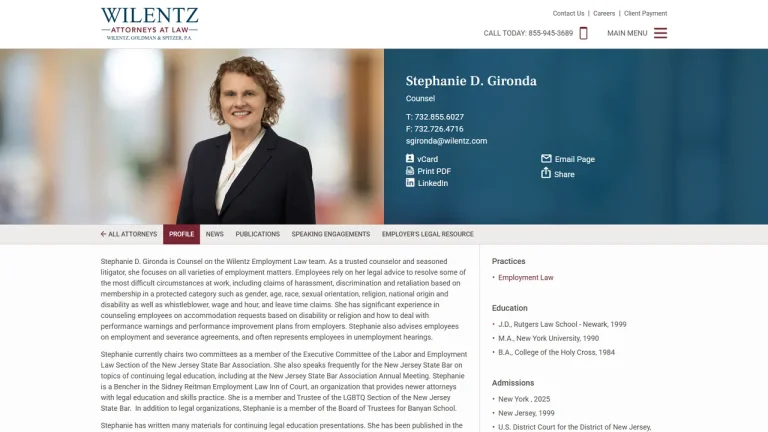
Stephanie D. Gironda - Woodbridge, NJ
Mets Schiro & Manetta, LLP - Woodbridge, NJ
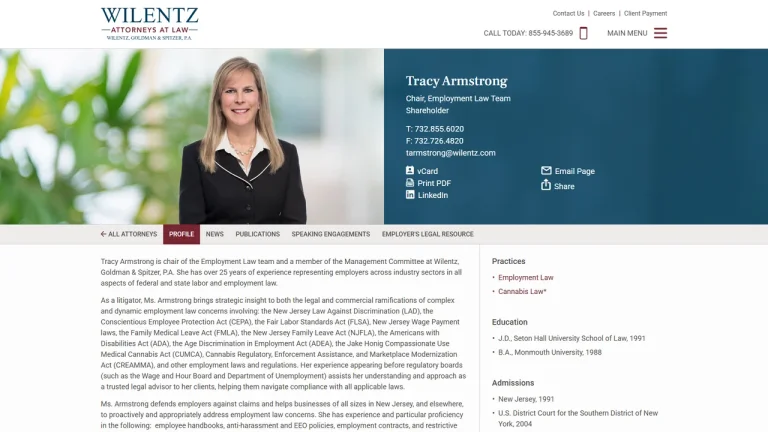
Wage & Hour Jurisdictions & Employee Rights in Woodbridge
Ensuring full and lawful compensation is a fundamental right of every worker in Woodbridge Township. Operating as a major commerce and logistics center at the intersection of the New Jersey Turnpike, Garden State Parkway, Route 1, and Route 9, Woodbridge hosts extensive warehousing centers in Avenel and Port Reading, retail establishments at Woodbridge Center, and corporate offices in Metropark. When employers commit wage theft through unpaid overtime, off-the-clock work, or unlawful deductions, New Jersey law provides comprehensive recovery options.
Wage and hour lawsuits for employees working in Woodbridge are filed in the Middlesex County Superior Court, Law Division - Civil Part, situated at the Middlesex County Courthouse at 56 Paterson Street in New Brunswick. Workers may also file administrative claims with the New Jersey Department of Labor and Workforce Development (NJDOL) Division of Wage and Hour Compliance. An experienced employment lawyer knows how to utilize electronic payroll discovery to uncover systemic time-shaving practices and misclassification schemes.
Retaining an accomplished wage dispute attorney allows workers to hold non-compliant employers financially accountable while safeguarding against workplace retaliation. New Jersey law mandates substantial statutory liquidated damages and fee-shifting, ensuring workers can enforce their rights without financial barrier.
Typical Woodbridge Wage & Hour Legal Fee Structures
Wage and hour claims in Middlesex County are handled almost exclusively through contingency agreements or statutory fee-shifting, requiring zero upfront attorney fees from employees.
| Case Scenario | Fee Structure | Estimated Cost (USD) | Key Cost Determinants |
|---|---|---|---|
| Unpaid Overtime & Off-the-Clock Work | Contingency Fee (Statutory Fee-Shifting) | 33.33% of Recovery ($0 Upfront) | Timecard audit records, punch-clock data, exemption status |
| Independent Contractor Misclassification | Contingency Fee (Statutory Fee-Shifting) | 33.33% of Recovery ($0 Upfront) | Application of New Jersey ABC Test, 1099 tax filings, degree of supervisory control |
| Unlawful Payroll Deductions & Final Paychecks | Flat Fee or Contingency | $500 - $1,500 or Contingency | NJDOL administrative claim vs. civil action, statutory liquidated damages |
| Collective / Class Action Wage Theft Lawsuit | Court-Approved Contingency | 30% - 33.33% of Common Fund | Class certification scope, electronic payroll discovery, employer financial stability |
Critical Legal Deadlines & Statutes in New Jersey
New Jersey maintains some of the most employee-protective wage laws in the nation. Under the New Jersey Wage Theft Act, the statute of limitations for filing claims under the New Jersey State Wage and Hour Law, N.J. Stat. Ann. § 34:11-56a, and the New Jersey Wage Payment Law, N.J. Stat. Ann. § 34:11-4.1, is six years pursuant to N.J. Stat. Ann. § 34:11-56a25.1. Employees can recover unpaid wages dating back six full years from the date the lawsuit is filed.
Critically, under N.J. Stat. Ann. § 34:11-56a25, prevailing employees are entitled to recover the full amount of unpaid minimum wages or overtime plus liquidated damages of up to 200 percent, effectively tripling the initial recovery. Furthermore, the statute mandates that employers found liable must pay the employee's reasonable attorney fees and costs of the action.
When companies misclassify workers as independent contractors (1099 workers) rather than employees (W-2), New Jersey applies the strict "ABC Test" codified under N.J. Stat. Ann. § 43:21-19(i)(6). Under this test, a worker is presumed to be an employee unless the employer satisfies all three prongs: proving the worker is free from control, the service is outside the usual course of business, and the individual is customarily engaged in an independently established trade.
Small Claims Court Limits vs. Professional Wage Claim Representation
The Special Civil Part of the Middlesex County Superior Court operates a Small Claims Section limited to $5,000 and a regular Special Civil Part capped at $20,000. Additionally, the New Jersey Department of Labor Wage Collection Section conducts administrative hearings for wage disputes up to $50,000. While an individual can represent themselves in small disputes, managing wage litigation pro se carries significant financial risks.
Unrepresented workers often fail to demand the mandatory 200% liquidated damages authorized by New Jersey law or struggle to audit complex digital payroll logs. Furthermore, corporate employers are legally prohibited from representing themselves and must appear through licensed counsel under N.J. Ct. R. 1:21-1(c). An experienced wage lawyer conducts formal discovery, challenges false managerial exemptions, and forces employers to cover legal costs under New Jersey's fee-shifting statutes.
Red Flags to Avoid When Selecting a Woodbridge Wage Lawyer
- Ignorance of the Six-Year Statute of Limitations: Avoid attorneys who mistakenly apply the federal two-year FLSA deadline and overlook New Jersey's powerful six-year recovery period under N.J. Stat. Ann. § 34:11-56a25.1.
- Demanding Upfront Hourly Fees: Because New Jersey wage statutes mandate fee-shifting against employers, legitimate wage and hour attorneys represent employees on a contingency fee basis.
- Failure to Demand Mandatory Liquidated Damages: Counsel should consistently pursue the statutory 200% liquidated damages penalty under N.J. Stat. Ann. § 34:11-56a25 rather than settling for unmultiplied base pay.
- Lack of Multi-Plaintiff or Class Experience: If multiple coworkers are denied overtime, counsel must possess the capacity to manage complex collective actions in Middlesex County Superior Court.
Frequently Asked Questions
What is the statute of limitations for unpaid wages in New Jersey?
Under N.J. Stat. Ann. § 34:11-56a25.1, the statute of limitations for filing wage theft and unpaid overtime claims in New Jersey is six years from the date the wages were earned.
What are liquidated damages in a New Jersey wage dispute?
Under N.J. Stat. Ann. § 34:11-56a25, an employer found guilty of wage theft can be required to pay up to 200% of the unpaid wages in liquidated damages, in addition to the base wages owed.
How does New Jersey determine if a worker is an independent contractor?
New Jersey applies the statutory ABC Test under N.J. Stat. Ann. § 43:21-19(i)(6), presuming all workers are employees unless the employer proves the worker is free from control, performs work outside usual operations, and runs an independent trade.
Are salaried employees entitled to overtime pay in Woodbridge?
Being paid a salary does not automatically exempt an employee from overtime. Unless the worker performs bona fide executive, administrative, or professional duties meeting statutory salary thresholds, they are entitled to overtime pay for hours over 40.
Where are wage lawsuits filed for Woodbridge employees?
Wage and hour lawsuits for Woodbridge employees are filed in the Middlesex County Superior Court, Law Division - Civil Part, at the Middlesex County Courthouse in New Brunswick.