
Estate Planning Lawyers in Santa Fe
Creating a comprehensive estate plan in Santa Fe ensures your assets are distributed according to your wishes while avoiding expensive probate proceedings. A skilled estate planning attorney can structure revocable trusts, harmonize community property assets, and protect your family from future legal disputes. Explore our directory below to schedule a consultation with a qualified Santa Fe estate planning lawyer.

Walk-In Wills - Santa Fe, NM

The Law Office of Charles A. Scott, LLC, Santa Fe, NM
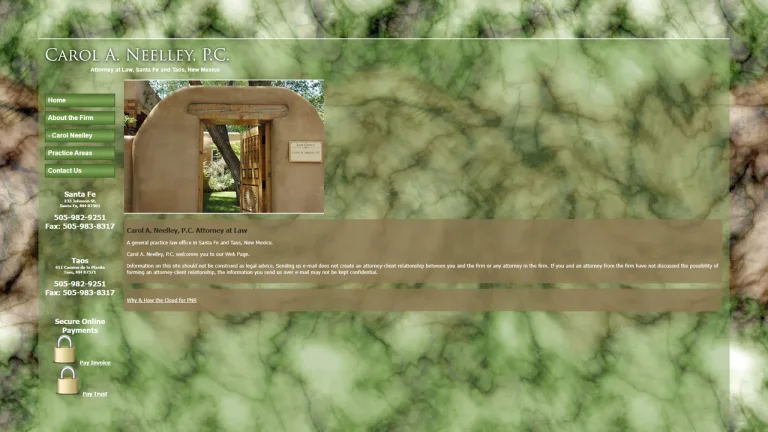
Carol Neelley PC - Santa Fe, NM

Patrick Barry Attorney - Barry Law - Santa Fe, NM

Thomas W. Banner, Attorney - Santa Fe, NM
Pottow Law LLC - Santa Fe, NM

Robert Richards, Esq. - Santa Fe, NM

Brannen and Brannen LLC - Santa Fe, NM

Cuddy & McCarthy LLP - Santa Fe, NM

Katz Herdman MacGillivray & Fullerton PC - SANTA FE, NM
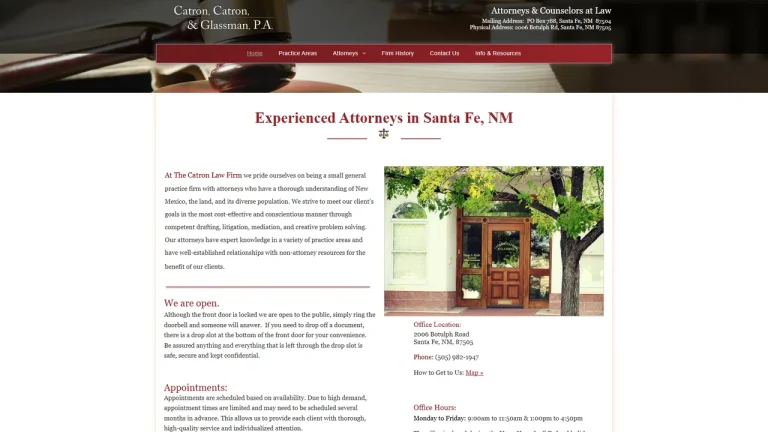
Catron, Catron & Glassman PA, Santa Fe, NM

GARY S. FRIEDMAN - Santa Fe, NM
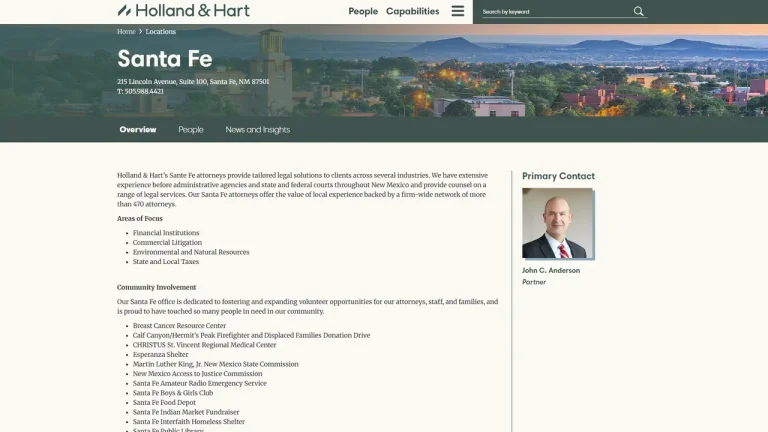
Holland & Hart LLP - Santa Fe, NM

Spencer Fane LLP - Santa Fe, NM

Lasting Legacy Law, LLC - Santa Fe, NM

Lees & Flores, L.L.C. - Santa Fe, NM
Sommer Udall Law Firm - Santa Fe, NM

Engel Law Firm, P.C. - SANTA FE, NM

Law Office of Roger Prucino, Santa Fe, NM
Pregenzer, Baysinger, Wideman & Sale, PC - Santa Fe, NM
Pamela Crane, Attorney - Santa Fe, NM

Sommer Karnes & Associates LLP - Santa Fe, NM
Kristi A. Wareham, P.C. - Santa Fe, NM
Tailored Estate Planning Solutions in Santa Fe County
Estate planning in Santa Fe involves navigating unique state property frameworks and local wealth preservation needs. Because New Mexico is a community property state, crafting an enforceable estate plan requires distinct legal treatment of marital assets versus separate property to ensure tax efficiency and prevent unintended disinheritance.
Estate planning matters in Santa Fe County-whether involving historic adobe residences in the Eastside, luxury real estate in Las Campanas, family ranches in Eldorado, or local small businesses-often utilize revocable living trusts to preserve privacy. If disputes emerge regarding trust interpretation or fiduciary administration, proceedings are heard in the First Judicial District Court at the Steve Herrera Judicial Complex, located at 225 Montezuma Avenue.
Working with an experienced Santa Fe estate planning attorney guarantees that your documents satisfy state execution requirements. A local practitioner assists with formal trust funding, retitling real property with the Santa Fe County Clerk, and establishing robust medical and financial decision-making authority.
Common Estate Planning Services and Estimated Costs in Santa Fe
| Case Scenario | Fee Structure | Estimated Cost (USD) | Key Cost Determinants |
|---|---|---|---|
| Basic Will-Based Estate Plan (Individual or Couple) | Flat Retainer | $1,200 - $2,500 | Last will and testament, durable financial power of attorney, advance healthcare directive drafting. |
| Comprehensive Revocable Living Trust Package | Flat Fee | $2,500 - $5,500 | Trust instrument, pour-over will, Santa Fe County real estate deed transfer, trust funding guidance. |
| High-Net-Worth / Irrevocable Asset Protection Trust | Retainer + Hourly | $6,000 - $15,000+ | Dynasty trust structuring, federal estate tax optimization, business succession covenants. |
| Trust Administration & Asset Retitling Review | Hourly ($300 - $500/hr) | $1,500 - $4,000 | Community property allocation, beneficiary notices, trustee fiduciary advisory services. |
Critical Legal Deadlines & Statutes in New Mexico
Estate planning in Santa Fe is governed by several core state statutes. Under N.M. Stat. Ann. § 40-3-8, property acquired by either spouse during marriage is presumptively community property, requiring specialized trust drafting to maximize the double step-up in income tax basis upon the death of the first spouse.
Trust governance and fiduciary standards are controlled by the New Mexico Uniform Trust Code, codified at N.M. Stat. Ann. § 46A-1-101 et seq. The formal requirements for executing a valid last will and testament are codified at N.M. Stat. Ann. § 45-2-502, which mandates that the will be in writing, signed by the testator, and witnessed by at least two individuals who sign in the testator's presence.
Healthcare proxy designations and living wills are established under the New Mexico Uniform Health-Care Decisions Act, N.M. Stat. Ann. § 24-7A-1 et seq., allowing principals to appoint an agent to direct medical interventions during incapacity. Updating estate documents promptly after major life milestones-such as divorce or remarriage-is critical, as N.M. Stat. Ann. § 45-2-804 automatically revokes testamentary dispositions to a former spouse upon divorce.
Santa Fe County Probate Court vs. Comprehensive Trust Planning
The Santa Fe County Probate Court handles informal, uncontested probate proceedings, while the First Judicial District Court manages complex or contested estates. Under N.M. Stat. Ann. § 45-3-1201, New Mexico allows small estates valued at $50,000 or less (excluding liens and encumbrances) to be collected via an affidavit of entitlement without formal court proceedings.
However, given real estate values across Santa Fe, most estates far exceed this small estate threshold. Relying solely on a will forces real property into the probate system, exposing financial records to public inspection. Establishing a fully funded revocable living trust avoids the delays and court filing fees of probate entirely, ensuring immediate, private asset transfer to designated beneficiaries upon death.
Red Flags When Hiring a Santa Fe Estate Planning Lawyer
- Ignoring community property rules: Avoid practitioners who fail to analyze how N.M. Stat. Ann. § 40-3-8 affects your marital assets, which can lead to adverse capital gains tax consequences.
- Trust mill sales tactics: Be cautious of seminar providers selling boilerplate living trust packages without handling the necessary Santa Fe County real estate deeds to fund the trust.
- Unfunded trust plans: A trust that holds no assets does not avoid probate; your attorney must assist with transferring real estate, investment accounts, and corporate shares into the trust entity.
- Lack of local probate experience: Counsel unfamiliar with the First Judicial District Court may draft ambiguous provisions that invite costly beneficiary litigation.
Frequently Asked Questions
What is the difference between a will and a living trust in Santa Fe?
A will takes effect only after death and must be admitted to probate in court to transfer titled assets. A living trust takes effect immediately, manages assets during incapacity, and distributes property privately outside the probate court system.
Does New Mexico impose an inheritance or estate tax?
No. New Mexico does not have a separate state inheritance or estate tax. Estates are subject only to the federal estate tax if their total taxable value exceeds federal statutory exemption thresholds.
Why is community property important in New Mexico estate planning?
Under N.M. Stat. Ann. § 40-3-8, property acquired during marriage is owned equally by both spouses. Properly classifying community property in a trust allows the surviving spouse to receive a full step-up in cost basis on both halves of the property, minimizing capital gains taxes.
Where are deed transfers recorded for Santa Fe properties placed in a trust?
Real estate deeds funding a trust must be formally recorded with the Santa Fe County Clerk's Office, located at 100 Catron Street in Downtown Santa Fe.
How often should an estate plan be reviewed in New Mexico?
Estate plans should be reviewed every three to five years, or immediately following significant life events such as marriage, divorce, birth of a child, purchase of out-of-state real estate, or substantial changes in federal tax law.