
Residential Real Estate Lawyers in Santa Fe
Navigating residential real estate transactions and boundary disputes in Santa Fe requires localized legal precision to protect your property rights. A knowledgeable real estate attorney can clear clouded titles, audit historic preservation restrictions, and resolve easement conflicts before closing. Explore our directory below to connect with an established Santa Fe residential real estate lawyer.

Hans Voss, Attorney, Economist - Santa Fe, NM
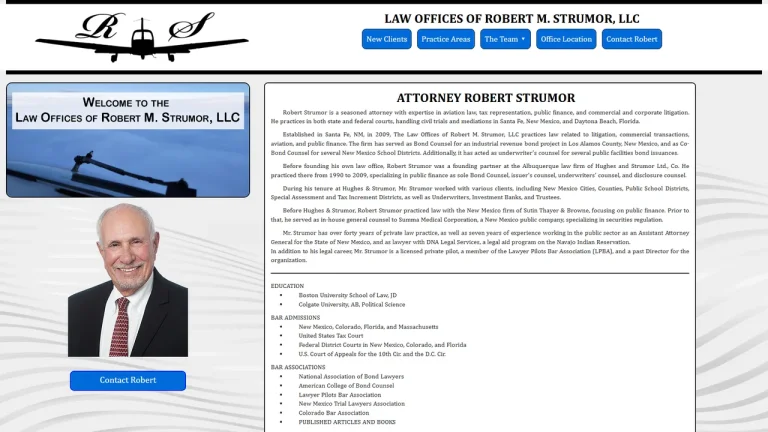
Law Offices of Robert M. Strumor, LLC Santa Fe, NM

Catron, Catron & Glassman PA, Santa Fe, NM

Law Office of Roger Prucino, Santa Fe, NM

Sid Childress, Lawyer - Santa Fe, NM

Sommer Karnes & Associates LLP - Santa Fe, NM

Jay Goodman and Associates Law Firm PC Santa Fe, NM

Robert Richards, Esq. - Santa Fe, NM

Katz Herdman MacGillivray & Fullerton PC - SANTA FE, NM
Carol Neelley PC - Santa Fe, NM
Kristi A. Wareham, P.C. - Santa Fe, NM

Slate Stern Law - Santa Fe, NM

Tami Schneider, Attorney at Law - Santa Fe, NM
GARY S. FRIEDMAN - Santa Fe, NM

Engel Law Firm, P.C. - SANTA FE, NM
William Ivry, Attorney at Law - Santa Fe, NM

Safeguarding Residential Property Rights in Santa Fe County
Residential real estate in Santa Fe presents legal and zoning complexities rarely encountered elsewhere. Real property matters span historic adobe properties in the Eastside and South Capitol, luxury acreage in Las Campanas and Tesuque, and residential subdivisions across Eldorado and Agua Fria.
Property transactions and land-use controversies frequently involve historic architectural preservation requirements enforced by the City of Santa Fe Historic Districts Review Board (HDRB), domestic well permits overseen by the Office of the State Engineer, and shared acequia ditch access rights. Real property deeds, covenants, and easements are officially recorded with the Santa Fe County Clerk at 100 Catron Street.
When property boundaries, title clouds, or seller disclosure failures lead to litigation, matters are filed in the First Judicial District Court at the Steve Herrera Judicial Complex at 225 Montezuma Avenue. Retaining an experienced Santa Fe residential real estate attorney protects your investment against undisclosed title defects, unpermitted structural additions, and disputed access easements.
Real Estate Legal Fee Structures and Service Costs in Santa Fe
| Case Scenario | Fee Structure | Estimated Cost (USD) | Key Cost Determinants |
|---|---|---|---|
| Residential Purchase & Sale Agreement Legal Review | Flat Retainer / Fee | $950 - $2,500 | Title commitment analysis, seller disclosure audit, inspection objection negotiation. |
| Quiet Title Action & Chain-of-Title Defect Resolution | Retainer + Filing Costs | $3,500 - $8,500 | Probate gaps, unreleased liens, wild deeds, First Judicial District Court proceedings. |
| Boundary, Access Easement, or Shared Well Dispute | Hourly ($300 - $500/hr) | $3,000 - $10,000 | Land boundary survey review, prescriptive easement claims, OSE domestic well filings. |
| HOA Covenant Enforcement or Historic District (HDRB) Appeal | Retainer + Hourly | $5,000 - $18,000+ | Architectural style violations, municipal zoning hearings, restrictive covenant litigation. |
Critical Legal Deadlines & Statutes in New Mexico
Residential property rights in Santa Fe are anchored by New Mexico real property statutes. Conveyances, deed forms, and recording priorities are codified under N.M. Stat. Ann. § 47-1-1 et seq. Resolving title defects and adverse claims requires filing a statutory quiet title action pursuant to N.M. Stat. Ann. § 42-6-1 et seq.
Under New Mexico's adverse possession statute, N.M. Stat. Ann. § 37-1-22, an adverse claimant must establish ten years of continuous, open, and hostile possession under color of title while consistently paying all assessed real property taxes throughout that entire ten-year period.
Private domestic well permits and shared well agreements are subject to statutory regulation by the New Mexico Office of the State Engineer pursuant to N.M. Stat. Ann. § 72-12-1. Subdivided residential communities and common-interest associations must comply with the New Mexico Homeowner Association Act, codified at N.M. Stat. Ann. § 47-16-1 et seq. Written real estate contract claims remain subject to the six-year limitation in N.M. Stat. Ann. § 37-1-3(A).
Magistrate Court vs. District Court Quiet Title and Real Property Litigation
Under New Mexico law, the Santa Fe County Magistrate Court has no subject-matter jurisdiction to adjudicate boundaries, determine title to real estate, or issue declaratory judgments regarding easements. Any legal proceeding that directly affects title to real property must be filed in the First Judicial District Court.
Relying solely on title insurance companies or real estate brokers for complex transactions introduces severe risks. Title policies routinely exclude unrecorded easements, boundary encroachments not shown by a current survey, and water rights transfers. Retaining a dedicated residential real estate attorney ensures that shared well covenants are properly structured, acequia ditch access is legally protected, and historical zoning restrictions are verified before earnest money becomes non-refundable.
Red Flags When Hiring a Santa Fe Real Estate Lawyer
- Unfamiliarity with Santa Fe Historic District (HDRB) rules: Santa Fe enforces strict architectural style and color regulations; counsel must understand local municipal preservation codes.
- Overlooking domestic well transfer permits: Failing to file change-of-ownership documentation with the New Mexico Office of the State Engineer under N.M. Stat. Ann. § 72-12-1 can jeopardize water rights.
- Ignoring unrecorded access and acequia easements: In northern New Mexico, historical water ditches and unrecorded access roads carry enforceable legal protections that title searches often miss.
- Relying exclusively on standard closing forms: High-value Santa Fe properties require customized purchase covenants, architectural review contingencies, and robust environmental disclosures.
Frequently Asked Questions
What is a quiet title lawsuit in Santa Fe County?
A quiet title lawsuit is a formal action filed in the First Judicial District Court under N.M. Stat. Ann. § 42-6-1 to remove clouds, unreleased liens, or competing ownership claims, establishing clear legal title to real estate.
Are domestic well permits automatically transferred with real estate in New Mexico?
No. Transferring a domestic well requires filing a Change of Ownership form with the New Mexico Office of the State Engineer under N.M. Stat. Ann. § 72-12-1, alongside a copy of the recorded warranty deed.
What are Santa Fe Historic Districts Review Board (HDRB) regulations?
The HDRB enforces municipal design ordinances in designated historic districts, regulating exterior architectural elements, paint colors, window designs, wall heights, and construction materials to preserve historic character.
What is required for adverse possession in New Mexico?
Under N.M. Stat. Ann. § 37-1-22, adverse possession requires ten years of continuous, open, and hostile possession under color of title, along with proof that the claimant paid all property taxes during that ten-year statutory period.
Where are residential property deeds recorded in Santa Fe?
All real estate deeds, easements, and covenants must be recorded with the Santa Fe County Clerk's Office, located at 100 Catron Street in Santa Fe.