
Wills, Estate Planning & Probate Lawyers in Santa Fe
Engaging an experienced Santa Fe estate planning and probate lawyer ensures your assets are distributed in full alignment with New Mexico statutory requirements. Knowledgeable counsel drafts revocable trusts, establishes powers of attorney, and guides personal representatives through the probate process. Explore our directory below to consult with qualified local estate planning attorneys.

Jay Goodman and Associates Law Firm PC Santa Fe, NM

Coleman Law - Santa Fe, NM

Sommer Karnes & Associates LLP - Santa Fe, NM
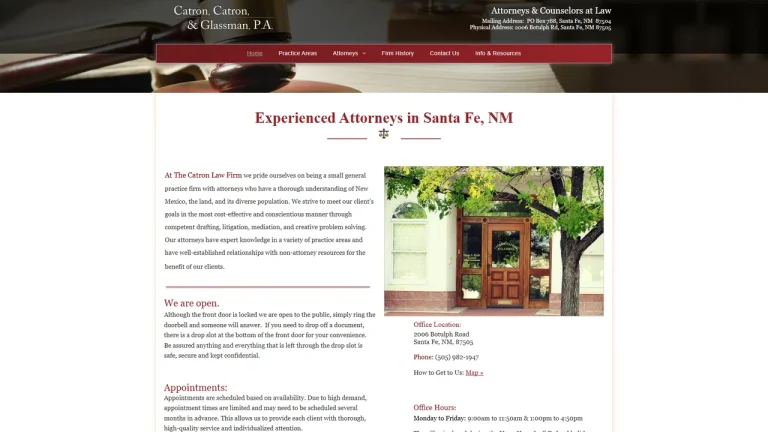
Catron, Catron & Glassman PA, Santa Fe, NM

Kristi A. Wareham, P.C. - Santa Fe, NM

Rodey Law Firm - Santa Fe, NM

Spencer Fane LLP - Santa Fe, NM

Comeau Maldegen Templeman - Santa Fe, NM
Pottow Law LLC - Santa Fe, NM
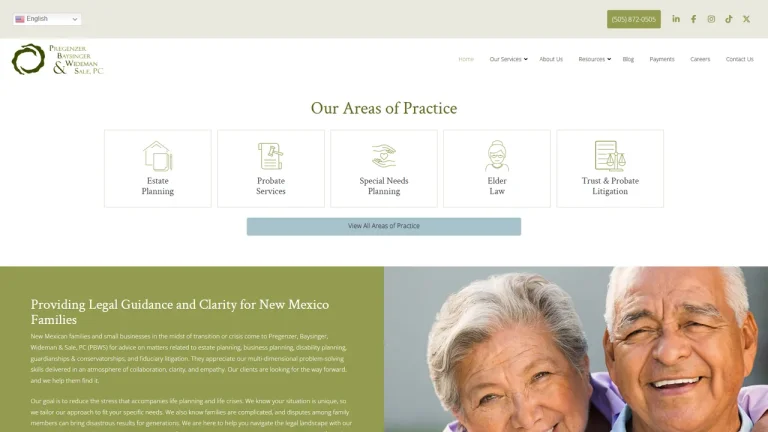
Pregenzer, Baysinger, Wideman & Sale, PC - Santa Fe, NM
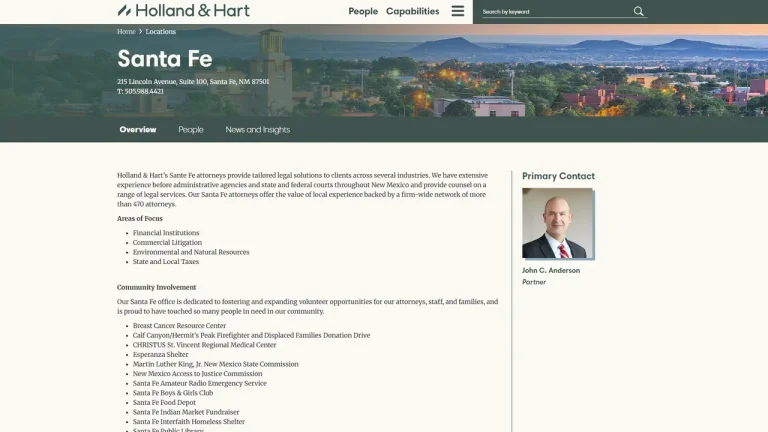
Holland & Hart LLP - Santa Fe, NM
Law Office of Roger Prucino, Santa Fe, NM

Thomas W. Banner, Attorney - Santa Fe, NM
Sommer Udall Law Firm - Santa Fe, NM

Lasting Legacy Law, LLC - Santa Fe, NM

GARY S. FRIEDMAN - Santa Fe, NM

Cuddy & McCarthy LLP - Santa Fe, NM
Walk-In Wills - Santa Fe, NM

The Law Office of Charles A. Scott, LLC, Santa Fe, NM

Patrick Barry Attorney - Barry Law - Santa Fe, NM
Law Office of Barry Green - Santa Fe, NM
Brannen and Brannen LLC - Santa Fe, NM

Lees & Flores, L.L.C. - Santa Fe, NM

Estate Planning and Probate Practice in Santa Fe
Structuring an estate plan or administering a decedent's estate in Santa Fe requires handling complex financial, familial, and cultural factors. Santa Fe and neighboring communities like Tesuque, Eldorado, and Las Campanas have a high prevalence of valuable real estate, extensive family trusts, and significant private art and literary estates. Ensuring that wealth transfers occur smoothly requires comprehensive planning tools, including wills, revocable living trusts, durable powers of attorney, and healthcare directives tailored to New Mexico statutes.
Estate administration in Santa Fe is divided across two judicial bodies depending on the complexity and contested nature of the estate. Uncontested informal probate matters and routine applications for personal representative appointment are processed through the Santa Fe County Probate Court, located in the County Administration Building at 102 Grant Avenue. When an estate involves contested will caveats, trust reformations, elective share petitions, or fiduciary accounting challenges, proceedings must be filed in the First Judicial District Court at 225 Montezuma Avenue.
Working with an experienced Santa Fe estate planning lawyer prevents preventable disputes among surviving beneficiaries. Proper planning ensures that assets are transferred outside of probate where appropriate, protecting family privacy and avoiding statutory delays. A dedicated local attorney structures trusts to manage unique assets like intellectual property and real property while shielding fiduciaries from personal liability during probate administration.
Legal Fee Framework for Santa Fe Estate Planning & Probate
| Case Scenario | Fee Structure | Estimated Cost (USD) | Key Cost Determinants |
|---|---|---|---|
| Basic Estate Plan (Will, POA, Healthcare) | Flat Legal Fee | $1,200 - $2,800 | Marital status, straightforward asset distribution, advance healthcare directive terms. |
| Revocable Living Trust Package | Flat Legal Fee | $2,500 - $6,000 | Deeding Santa Fe real estate into trust, assignment of art collections, incapacity provisions. |
| Informal Probate Administration | Flat or Hourly ($300 - $450/hr) | $2,000 - $5,000 | Self-proving will status, notice requirements to heirs, inventory preparation at 102 Grant Ave. |
| Contested Will & Fiduciary Litigation | Retainer + Hourly ($350 - $550/hr) | $10,000 - $35,000+ | Allegations of undue influence, medical record reviews, First Judicial District trial duration. |
Critical Legal Deadlines & Statutes in New Mexico
Estate administration and probate in New Mexico are governed by the Uniform Probate Code, codified under N.M. Stat. Ann. § 45-1-101. For a will to be legally valid, it must adhere to the execution requirements set forth in N.M. Stat. Ann. § 45-2-502, requiring written execution signed by the testator in the presence of two qualified witnesses. Under N.M. Stat. Ann. § 45-3-307, an informal probate application cannot be approved by the Santa Fe County Probate Court until at least 120 hours (five days) have passed since the decedent's death.
New Mexico enforces a general three-year statute of limitations for initiating formal or informal probate proceedings pursuant to N.M. Stat. Ann. § 45-3-108. If probate is not commenced within three years of death, the estate must generally pass according to the laws of intestacy. Following the publication of notice to creditors, claimants have four months to present formal claims against the estate under N.M. Stat. Ann. § 45-3-803, or one year if notice is not published. Trust administration is governed by the New Mexico Uniform Trust Code, N.M. Stat. Ann. § 46A-1-101, healthcare directives follow the Uniform Health-Care Decisions Act under N.M. Stat. Ann. § 24-7A-1, and powers of attorney must comply with N.M. Stat. Ann. § 45B-1-101.
Santa Fe County Probate Court vs. First Judicial District Court
The Santa Fe County Probate Court, located at 102 Grant Avenue, has limited administrative jurisdiction. The probate judge is authorized to handle uncontested informal probates with original valid wills and appoint personal representatives for intestate estates where all heirs consent. However, the Probate Court cannot interpret ambiguous will provisions, oversee disputed trust administrations, or determine title to disputed real estate.
When an interested party files a caveat challenging testamentary capacity, alleges undue influence, or requests the removal of a personal representative, the matter must be litigated in the First Judicial District Court. Formal probate proceedings in district court require verified pleadings, evidentiary hearings, and compliance with the New Mexico Rules of Civil Procedure. Retaining an experienced estate attorney ensures that contested matters are filed in the appropriate court and that estate fiduciaries are protected against personal liability.
Red Flags to Avoid When Selecting a Santa Fe Estate Planning Lawyer
- Using generic online will templates that omit self-proving affidavits under N.M. Stat. Ann. § 45-2-504, requiring witnesses to testify in court.
- Failing to fund real estate and art holdings into a revocable trust, forcing the estate through probate despite having executed trust documents.
- Missing the three-year statutory deadline under N.M. Stat. Ann. § 45-3-108 to open probate proceedings in Santa Fe County.
- Attempting to resolve disputed wills or trust breaches in the Santa Fe County Probate Court rather than filing in the First Judicial District Court.
Frequently Asked Questions
What is the difference between Santa Fe County Probate Court and District Court?
The Santa Fe County Probate Court at 102 Grant Ave handles uncontested informal probates and appoints executors. The First Judicial District Court at 225 Montezuma Ave handles contested wills, trust disputes, and determinations of real property title.
How long do I have to probate a will in New Mexico?
Under N.M. Stat. Ann. § 45-3-108, formal or informal probate proceedings must be initiated within three years from the decedent's death.
How does a revocable living trust avoid probate in Santa Fe?
Under N.M. Stat. Ann. § 46A-1-101, property properly titled in the name of a revocable living trust passes directly to designated beneficiaries upon death, bypassing the probate court entirely.
What is the deadline for creditors to file a claim against an estate?
Pursuant to N.M. Stat. Ann. § 45-3-803, creditors have four months to submit a claim following the publication of notice in a Santa Fe newspaper, or one year from death if no notice is published.
Does New Mexico impose an inheritance or estate tax?
No. New Mexico does not impose a state estate tax or an inheritance tax on transferred property, though federal estate tax rules may still apply to high-net-worth estates.