
IRS Dispute Lawyers in New York
Retaining an experienced New York IRS dispute lawyer protects your financial assets and shields you from aggressive federal and state tax collection enforcement. Skilled legal counsel routinely resolves high-stakes tax controversies through administrative appeals, installment arrangements, and penalty abatements, avoiding protracted courtroom litigation. Explore our verified directory below to schedule a confidential consultation with a trusted New York tax attorney.

Law Offices of Ronald C. Burke, Esq. - NYC, New York

Refermat & Daniel PLLC - Rochester, NY

McLaughlin & Stern LLP - NYC, New York
Mazzotta and Vagianelis, P.C. - Albany, NY
Goldburd McCone LLP - NYC, New York

Defense Tax Partners - Tax Attorneys, IRS Tax Relief Settlement, Free Consultation - Rochester, NY
Meister Seelig & Fein PLLC - NYC, New York

Timothy S. Hart Law Group, P.C. - Albany, NY
Selig & Associates - NYC, New York

Delia Law P.C. - NYC, New York
Frost Law - NYC, New York
Alvin Brown & Associates - NYC, New York

Defense Tax Partners - Albany, NY

McLaud Law P.C. - Rochester, NY
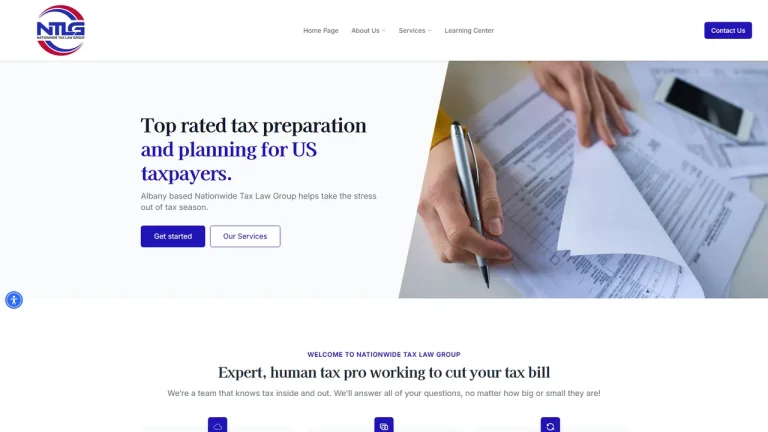
Nationwide Tax Law Group - Albany, NY

Moritt Hock & Hamroff LLP - NYC, New York
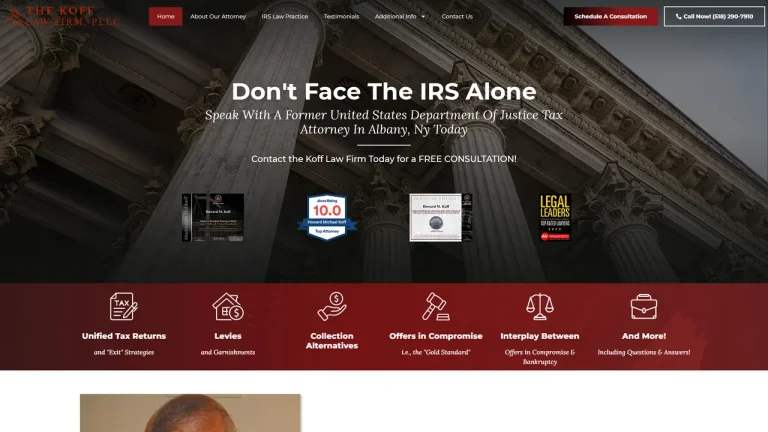
The Koff Law Firm, PLLC - Albany, NY
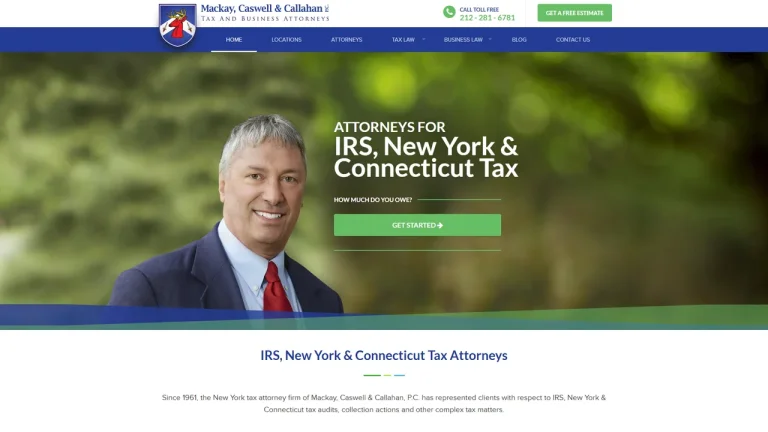
Mackay, Caswell & Callahan, P.C. - Albany, NY
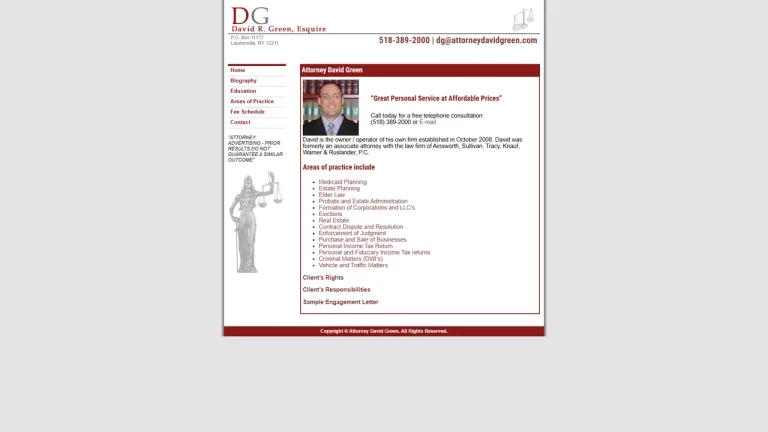
David R Green PC - Albany, NY

Capell Barnett Matalon & Schoenfeld, LLP - NYC, New York
Mackay, Caswell & Callahan, P.C. - NYC, New York

Hodgson Russ LLP - NYC, New York
Nate Strand, Tax Attorney - NYC, New York

Resolving Federal and New York State Tax Controversies
Taxpayers across the Empire State-from corporate enterprises and financial executives in New York City and Long Island to family-owned businesses throughout Albany, Syracuse, Rochester, and Buffalo-face aggressive scrutiny from both federal and state tax authorities. Resolving an IRS audit, administrative summons, or levy action requires strategic coordination between the Internal Revenue Service and parallel enforcement bodies, such as the New York State Department of Taxation and Finance. Federal tax disputes originating in New York are adjudicated primarily through the United States Tax Court, which conducts regular trial calendars in New York City, Albany, and Buffalo.
When tax controversies escalate beyond administrative appeals, formal legal actions proceed to federal district courts-the Southern, Eastern, Northern, or Western Districts of New York-or the United States Court of Federal Claims for refund litigation. Furthermore, New York taxpayers frequently navigate concurrent state liabilities, requiring administrative hearings before the Bureau of Conciliation and Mediation Services or the New York State Division of Tax Appeals headquartered in Albany.
Retaining a licensed New York tax controversy attorney admitted to practice before the New York State Bar and the United States Tax Court provides essential protection under the attorney-client privilege. Experienced legal counsel coordinates forensic accounting reviews, represents taxpayers at IRS Field and Office Audits, files Collection Due Process appeals, and negotiates binding settlement agreements across New York communities.
IRS Dispute Representation & Legal Costs in New York
| Case Scenario | Fee Structure | Estimated Cost (USD) | Key Cost Determinants |
|---|---|---|---|
| IRS Audit Representation & Examination Defense | Hourly Rate ($400 - $750/hr) or Tiered Retainer | $3,500 - $8,500 | Complexity of business deductions, bank deposit analysis, completeness of financial books. |
| Collection Due Process Hearing & Levy Release | Flat Fee or Retainer Agreement | $2,500 - $6,000 | Number of levy notices, filing compliance history, urgency of emergency collection stays. |
| Offer in Compromise Settlement (Doubt as to Collectibility) | Staged Retainer Structure | $4,500 - $10,000 | Total tax liability amount, asset dissipation analysis, reasonable collection potential formulas. |
| United States Tax Court Petition & Pre-Trial Litigation | Retainer Plus Hourly Litigation Rate | $7,500 - $25,000+ | Unagreed deficiency magnitude, legal brief complexity, settlement conference negotiations. |
Critical Legal Deadlines & Statutes in New York
Federal tax controversies are governed by strict jurisdictional deadlines codified within the Internal Revenue Code. Upon receiving a formal Statutory Notice of Deficiency, a taxpayer has exactly 90 calendar days to file a petition with the United States Tax Court under 26 U.S.C. § 6213(a); this deadline is strictly jurisdictional and cannot be extended by any judge or revenue officer.
When the IRS issues a Final Notice of Intent to Levy or Notice of Federal Tax Lien Filing, the taxpayer must request a Collection Due Process hearing within 30 days under 26 U.S.C. § 6330(a)(3)(B) to automatically suspend levy actions and preserve the right to judicial review.
At the state level, taxpayers receiving a Notice of Determination or Notice of Deficiency from the New York State Department of Taxation and Finance must request a conciliation conference or file a petition with the Division of Tax Appeals within strictly 90 days under N.Y. Tax Law § 170(3-a) and N.Y. Tax Law § 2006. General assessment limitations are governed by the three-year statutory rule under 26 U.S.C. § 6501(a), while IRS collections are subject to a ten-year statute of limitations under 26 U.S.C. § 6502(a).
Administrative Pro Se Filings vs. Retaining Licensed New York Tax Counsel
While individual taxpayers can submit routine installment payment requests through the IRS online portal or handle informal audit meetings independently, challenging substantial tax deficiencies without legal representation carries immense financial risk. IRS revenue agents and New York State tax auditors are trained investigators who examine statements for badges of fraud or civil fraud penalties.
Furthermore, CPAs and enrolled agents do not possess formal attorney-client privilege in criminal tax matters or federal district court litigation. Retaining an experienced New York tax attorney ensures your confidential records are protected under the attorney-client privilege and attorney work-product doctrines. Seasoned counsel can contest legal interpretations in U.S. Tax Court, defend against New York statutory residency audits under N.Y. Tax Law § 605(b), and structure comprehensive relief while insulating taxpayers from criminal referral.
Red Flags When Hiring a New York Tax Dispute Lawyer
- National Settlement Mills Promising Pennies on the Dollar: Beware of mass-media advertisements promising to eliminate tax debt for pennies on the dollar; eligibility for an Offer in Compromise depends strictly on detailed statutory financial formulas that mass-marketing mills routinely misrepresent.
- Non-Attorney Tax Representation Scams: Verify that your legal representative is an attorney licensed by the New York State Unified Court System and admitted to the U.S. Tax Court, rather than an unbonded sales agent at an out-of-state call center.
- Demands for Total Upfront Lump-Sum Payments: Reputable New York tax attorneys utilize staged retainer agreements tied to transparent billing milestones, rather than demanding exorbitant non-refundable lump sums before reviewing tax transcripts.
- Unfamiliarity with New York State Dual-Track Liabilities: Resolving federal IRS liabilities often leaves New York State tax debts untouched; avoid practitioners who ignore parallel assessments from the New York Department of Taxation and Finance.
Frequently Asked Questions
What should I do immediately after receiving an IRS Notice of Deficiency?
You must file a petition with the United States Tax Court within 90 days of the date on the notice; missing this deadline forfeits your right to challenge the tax before paying it.
What is the difference between a tax attorney and a CPA in an IRS dispute?
While CPAs handle financial accounting and return preparation, tax attorneys provide legal advice protected by attorney-client privilege and can litigate disputes in federal courts.
How does an Offer in Compromise work for New York taxpayers?
An Offer in Compromise allows qualifying taxpayers to settle their tax liability for less than the full amount owed based on demonstrated inability to pay, future earning potential, and asset equity.
Can the IRS seize my bank accounts or garnish wages in New York?
Yes, the IRS has statutory administrative power to issue bank levies and wage garnishments, but you are entitled to statutory collection notices and hearing rights before these actions proceed.
How does a New York State tax audit differ from an IRS federal tax audit?
New York State audits frequently focus on statutory residency, domicile, and state sales taxes under separate state statutes and administrative tribunals in addition to federal income tax matters.