
Business & Work Visa Lawyers in New York City
Partnering with an experienced business and work visa lawyer in New York City streamlines corporate sponsorships and secures critical talent for your enterprise. Qualified legal counsel navigates complex federal labor certifications and visa petitions, preventing administrative delays and ensuring statutory compliance. Explore our directory below to schedule a corporate consultation with vetted New York immigration attorneys.
Law Office of Dmitry Efros, P.C. - NYC, New York
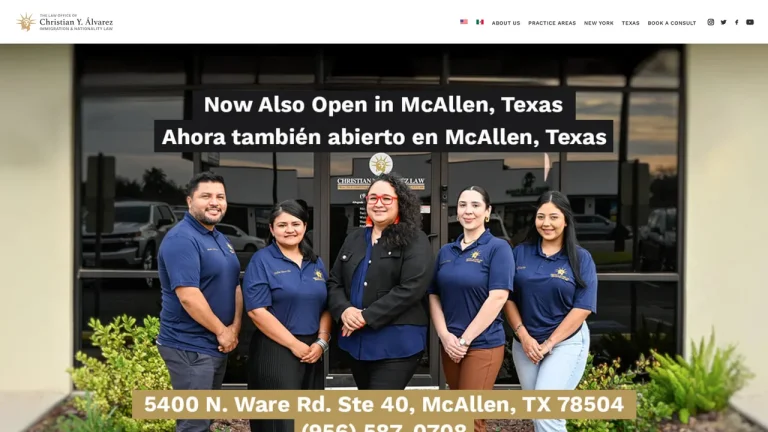
Law Office of Christian Y. Alvarez, P.C. - NYC, New York
Boyer Law Firm, P.L. - New York - NYC, New York
Lockamy & Associates, PC - NYC, New York
Law Offices of Andrew P. Johnson, PC - NYC, New York
Shrestha Law Firm, PLLC (Ramesh K. Shrestha) - NYC, New York
Daryanani Law Group PC - NYC, New York
Sebastian Simon Law Group, PLLC - NYC, New York

小纽美国法律咨询 - NYIS Law Firm - NYC, New York
Spiegel & Utrera, PA, PC - NYC, New York

Law Office of Norman Wong - NYC, New York

Bazargan Law, LLC - NYC, New York
The Vaisman P.C. - NYC, New York
Law Offices of Meri S. Ponist, P.C. - NYC, New York
Spektor, Spektor & Berman, P.C. - NYC, New York
The Law Offices of Prashanthi Reddy, PLLC - NYC, New York
The Masliah Firm - NYC, New York

The Tesoriero Law Firm - NYC, New York
John Nicelli & Associates - NYC, New York
Law Office of Theresa M. Napolitano - NYC, New York
The Siman Law Firm PLLC - NYC, New York
Tewani Immigration Law Firm - NYC, New York
Law Offices of Stuart J. Reich, PLLC - NYC, New York
Corporate Immigration Practice in New York City & Federal Venues
As a preeminent global commercial center, New York City serves as the primary hub for corporate talent mobility, multinational transfers, and high-skilled employment immigration. Sponsoring organizations across Manhattan, Brooklyn, Queens, the Bronx, and Staten Island face strict federal scrutiny when petitioning for specialized international professionals.
Corporate visa petitions and labor certifications are adjudicated through federal administrative bodies, including the U.S. Department of Labor (DOL) Office of Foreign Labor Certification and regional service centers of U.S. Citizenship and Immigration Services (USCIS). In-person interviews, adjustment applications, and compliance audits for New York employers are coordinated through the USCIS New York City District Office at 26 Federal Plaza in lower Manhattan, alongside the Long Island City facility in Queens.
When employment petitions face unwarranted denials, administrative delays, or arbitrary revocation proceedings, judicial appeals are prosecuted within the U.S. District Court for the Southern District of New York (SDNY) at Foley Square or the Eastern District of New York (EDNY) in Brooklyn. Skilled New York corporate immigration lawyers build comprehensive evidential records that satisfy stringent USCIS evidentiary standards, protecting ongoing business operations and securing vital executive talent.
NYC Employment Visa Services & Typical Corporate Fee Models
| Case Scenario | Fee Structure | Estimated Cost (USD) | Key Cost Determinants |
|---|---|---|---|
| H-1B Specialty Occupation Petition | Flat Corporate Fee | $3,000 to $6,000 | Prevailing wage determination, specialty occupation degree alignment, complex RFE rebuttal |
| O-1 Extraordinary Ability / EB-1 Petition | Flat Legal Fee / Staged | $6,000 to $12,000 | Exhibition evidence, peer review expert reference letters, international media portfolio curation |
| PERM Labor Certification & EB-2 / EB-3 | Flat / Retainer | $5,000 to $10,000 | Mandatory DOL print and electronic recruitment compliance, audit response, Form I-140 filing |
| L-1 Intracompany Transferee (Executive/Manager) | Flat Corporate Fee | $4,500 to $8,500 | Foreign and domestic corporate qualifying relationship, specialized knowledge or managerial proof |
Critical Legal Deadlines & Statutes in New York
Employment-based visa applications require exacting adherence to federal regulatory deadlines and statutory standards. Petitions for specialty occupation workers are anchored by 8 U.S. Code § 1101(a)(15)(H), which requires employers to secure an approved Labor Condition Application (LCA) from the Department of Labor before filing with USCIS.
For permanent residency sponsorship through the PERM labor certification process, employers must strictly respect the mandatory recruitment timing codified in 20 C.F.R. § 656.17. All mandatory recruitment advertisements must take place between 30 and 180 days prior to filing Form ETA-9089. Filing even a single day outside this statutory recruitment window results in automatic denial by the Department of Labor.
When USCIS issues a Request for Evidence (RFE) or Notice of Intent to Deny (NOID), response deadlines are governed by 8 C.F.R. § 103.2(b)(8). These time limits typically range from 30 to 87 calendar days and cannot be extended under any circumstances. In matters of agency review, challenges to final denials under the Administrative Procedure Act must be brought within the federal statute of limitations codified in 28 U.S. Code § 2401(a) before the Southern or Eastern District of New York.
Direct Corporate In-House Filing vs. Dedicated Immigration Litigators
While human resources departments can manage basic administrative tasks-such as initiating electronic registrations for the annual H-1B lottery-handling complex petition drafting in-house presents severe compliance vulnerabilities. Federal adjudicators at USCIS frequently challenge whether modern multidisciplinary roles meet the statutory definition of a specialty occupation or whether wage levels accurately reflect duties.
A single filing error or improper job code classification can result in catastrophic petition denials, causing valued foreign personnel to lose lawful underlying status and face mandatory departure from the United States. Experienced New York corporate immigration attorneys conduct comprehensive prevailing wage analyses, construct detailed job duty matrices that withstand adjudicator skepticism, and structure executive visas to insulate employers against costly Department of Labor compliance audits.
Red Flags to Avoid When Retaining Business Visa Counsel
- Law firms that claim guaranteed selection in the H-1B electronic lottery or assure petition approval, violating New York legal ethics rules.
- Attorneys who fail to conduct mandatory Labor Condition Application (LCA) compliance audits or neglect public access file (PAF) maintenance for sponsoring employers.
- General practice practitioners who handle employment visas intermittently without dedicated knowledge of shifting USCIS policy guidance and Second Circuit administrative case law.
- Agencies that do not provide clear written retainer agreements detailing legal fees separately from mandatory USCIS filing fees and premium processing charges.
Frequently Asked Questions
What is the difference between an H-1B visa and an L-1 visa in New York City?
The H-1B visa is designed for professional workers in specialty occupations requiring at least a bachelor's degree and is subject to an annual statutory lottery. The L-1 visa allows multinational companies to transfer qualifying executives, managers (L-1A), or specialized knowledge employees (L-1B) from an affiliated foreign office directly to a New York office without an annual lottery quota.
Can a New York startup sponsor foreign employees for work visas?
Yes, early-stage enterprises and startups in New York can sponsor foreign professionals, provided the business can prove its corporate existence, demonstrate ability to pay the prevailing wage through capitalization or revenue, and establish a genuine employer-employee relationship.
What qualifies an applicant for an O-1 extraordinary ability visa?
An O-1 applicant must demonstrate extraordinary ability in the sciences, arts, education, business, or athletics, evidenced by sustained national or international acclaim. Evidence includes major industry awards, published scholarly or critical articles, high compensation, and lead roles in distinguished organizations.
Who is legally required to pay the costs associated with an H-1B petition?
Under federal Department of Labor regulations, the sponsoring employer is legally mandated to pay all attorney fees, fraud prevention fees, and base USCIS filing costs for an H-1B visa. Passing these expenses onto the foreign employee is illegal.
What options exist if USCIS issues a denial on an employment petition?
If an employment petition is denied, an employer can file a motion to reopen or reconsider with USCIS, appeal to the Administrative Appeals Office (AAO) within 30 days, or pursue federal court litigation under the Administrative Procedure Act in the Southern or Eastern District of New York.