
IRS Dispute Lawyers in New York City
Retaining a skilled New York City IRS dispute lawyer protects your financial assets and shields you from aggressive federal collection actions. Experienced local tax attorneys frequently negotiate favorable installment agreements and penalty abatements without courtroom litigation. Browse our verified directory below to consult an attorney across Manhattan, Brooklyn, Queens, and the greater metro area.

Selig & Associates - NYC, New York

Goldburd McCone LLP - NYC, New York
Malecki Law - NYC, New York
Frost Law - NYC, New York
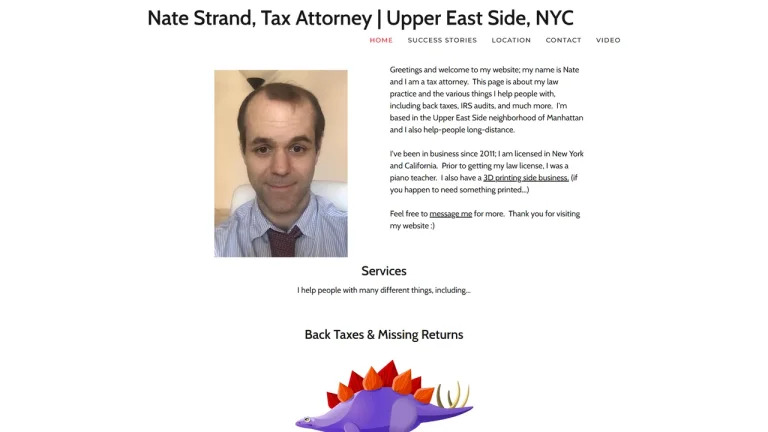
Nate Strand, Tax Attorney - NYC, New York
Alvin Brown & Associates - NYC, New York

Hodgson Russ LLP - NYC, New York
Meister Seelig & Fein PLLC - NYC, New York

Capell Barnett Matalon & Schoenfeld, LLP - NYC, New York

Moritt Hock & Hamroff LLP - NYC, New York
McLaughlin & Stern LLP - NYC, New York
Thorgood Law Firm - NYC, New York

J. David Tax Law - NYC, New York

Delia Law P.C. - NYC, New York
Mackay, Caswell & Callahan, P.C. - NYC, New York
IRS Dispute Resolution & Federal Tax Venues in New York City
Federal tax controversies in New York City require sophisticated knowledge of federal procedural codes and local administrative channels. Taxpayers across the five boroughs-Manhattan, Brooklyn, Queens, the Bronx, and Staten Island-deal directly with Internal Revenue Service operations situated at 290 Broadway in Lower Manhattan, 201 Varick Street in SoHo, and 10 MetroTech Center in Downtown Brooklyn. When audits and administrative appeals fail to achieve a resolution, matters transition into formal judicial proceedings.
Judicial tax litigation primarily occurs before the United States Tax Court, which conducts regular trial sessions in Manhattan at 201 Varick Street and within the Jacob K. Javits Federal Building at 26 Federal Plaza. For claims involving tax refund litigation or criminal tax defense, jurisdiction rests with the United States District Court for the Southern District of New York (SDNY) at Foley Square or the United States District Court for the Eastern District of New York (EDNY) at Cadman Plaza in Brooklyn. Federal tax controversies in New York City also frequently overlap with audits conducted by the New York State Department of Taxation and Finance.
Retaining a New York City tax dispute attorney provides an immediate buffer between you and IRS revenue officers. Qualified counsel handles communications, manages eggshell audits, and structures defensible settlement proposals that conform to federal standards while accounting for the high cost of living and complex asset portfolios typical of New York taxpayers.
Typical Fee Structures & Legal Costs for IRS Tax Controversy Matters
| Case Scenario | Fee Structure | Estimated Cost (USD) | Key Cost Determinants |
|---|---|---|---|
| Individual or Small Business IRS Audit | Hourly or Flat Retainer | $2,500 - $7,500 | Number of audited tax years, Schedule C complexity, adequacy of financial bookkeeping |
| Offer in Compromise (Doubt as to Collectibility) | Flat Fee or Hourly | $3,500 - $9,500 | Reasonable Collection Potential analysis, valuation of NYC real estate equity, multi-tiered asset reviews |
| U.S. Tax Court Deficiency Litigation | Hourly Billing / Retainer | $7,500 - $25,000+ | Statutory Notice of Deficiency response, pre-trial stipulations, settlement conferences with IRS Chief Counsel |
| Criminal Tax Investigation & Defense | Hourly Billing / Retainer | $15,000 - $50,000+ | IRS Criminal Investigation division involvement, offshore account disclosures, federal grand jury subpoenas |
Critical Legal Deadlines & Statutes for Taxpayers
Strict federal statutory windows govern tax assessments, collections, and judicial appeals. Under 26 U.S. Code § 6501(a), the IRS generally has three years from the filing date of a tax return to assess additional tax liabilities. However, if a taxpayer omits gross income exceeding 25 percent of the reported total, the assessment window extends to six years under 26 U.S. Code § 6501(e), and there is no time limit in cases of fraudulent returns.
Once a tax liability is legally assessed, the collection statute of limitations is set at ten years pursuant to 26 U.S. Code § 6502(a). If the IRS issues a formal Notice of Determination or Final Notice of Intent to Levy, taxpayers must act rapidly. Under 26 U.S. Code § 6330, you have exactly thirty days to request a Collection Due Process (CDP) hearing, which automatically halts collection actions and administrative seizures while negotiations proceed.
The most rigid deadline in tax litigation involves the Statutory Notice of Deficiency, commonly referred to as the 90-day letter. Under 26 U.S. Code § 6213(a), a taxpayer has strictly ninety days from the date stamped on the notice to file a petition with the United States Tax Court. This statutory deadline cannot be extended by IRS agents or the court. If missed, you lose the legal right to challenge the tax liability without first paying the entire contested sum.
NYC Civil Court Small Claims Limits vs. Federal Tax Representation
The Small Claims Part of the New York City Civil Court operates under a monetary ceiling of $10,000 pursuant to N.Y. City Civ. Ct. Act § 1801. While useful for resolving basic consumer disputes and local monetary claims, the New York City Civil Court has zero legal authority over the Internal Revenue Service. Federal tax liabilities, tax liens, and collection defenses fall strictly under federal statutory authority and federal judicial venues.
Taxpayers who attempt to negotiate directly with revenue officers or rely on non-attorney representation often face severe financial repercussions. Incomplete disclosures can inadvertently waive rights, prolong collection enforcement, or convert a routine civil examination into a criminal referral. Retaining an attorney admitted before the United States Tax Court and the federal district courts ensures that your legal rights are safeguarded, attorney-client privilege is preserved, and settlement negotiations are conducted strategically.
Red Flags When Hiring a New York City Tax Controversy Attorney
- National Tax Resolution Telemarketing Scams: Steer clear of out-of-state marketing firms advertising promises to settle debts for pennies on the dollar without reviewing your financial records or IRS transcripts.
- Non-Lawyer Representation Misleadingly Sold as Legal Counsel: Avoid companies where you only speak with sales representatives rather than an attorney licensed to practice law in New York and admitted to the U.S. Tax Court.
- Guarantees of Specific Settlement Outcomes: Refuse representation from practitioners who guarantee an Offer in Compromise acceptance before conducting a formal calculation of your Reasonable Collection Potential.
- Absence of Local Office Presence in the Five Boroughs: Beware of firms lacking a local office or experience dealing with local IRS personnel at 290 Broadway or the appeals officers in Manhattan.
Frequently Asked Questions
What happens if I miss the 90-day deadline for a Notice of Deficiency?
If you fail to petition the U.S. Tax Court within ninety days, you forfeit the ability to challenge the tax assessment before paying it. Your only remaining judicial remedy is to pay the full contested amount and file a refund suit in the U.S. District Court for the Southern or Eastern District of New York.
Can the IRS freeze bank accounts or seize wages in New York City?
Yes. The IRS possesses extensive statutory administrative levy authority to seize bank funds and garnish wages without obtaining a local court judgment. Retaining an attorney allows you to invoke collection due process rights and request immediate financial hardship releases.
What is an Offer in Compromise and do I qualify?
An Offer in Compromise is an agreement between a taxpayer and the IRS that resolves tax debt for less than the full amount owed. Qualification depends on proving that the liability is uncollectible based on your net equity in assets and future disposable income under IRS formulas.
Does resolving my IRS dispute also resolve my New York State tax liabilities?
No. While federal and New York State tax authorities share audit findings, resolving an IRS dispute does not automatically settle New York State Department of Taxation and Finance liabilities. A separate administrative resolution must be finalized with state authorities.
Can a CPA represent me in federal court during a tax dispute?
A Certified Public Accountant can represent you during administrative IRS audits, but they cannot represent you in federal district court and generally lack admission to litigate in the U.S. Tax Court. Furthermore, the attorney-client privilege does not apply to CPAs in criminal matters.