
Public Transportation Accident Lawyers in New York
Retaining an experienced public transportation accident lawyer in New York ensures your rights are protected against municipal transit operators and regional authorities. Dedicated transit litigators regularly resolve claims through negotiated settlements with transit insurance boards, avoiding protracted court battles. Explore our directory below to schedule an initial consultation with vetted New York mass transit accident attorneys.
Lurie, Ilchert, MacDonnell & Ryan LLP - NYC, New York

Ajlouny Injury Law - NYC, New York

The Law Offices of Darren T. Moore PC - NYC, New York

Tseitlin Law Firm P.C. - NYC, New York

Mark David Shirian P.C. - NYC, New York

Gurfein Douglas LLP - NYC, New York
The Law Offices of Eric Richman - NYC, New York

Devon Reiff P.C. - NYC, New York
Law Offices of Robert E. Brown, P.C - NYC, New York

Bailey, Johnson & Peck P.C. - Albany, NY

The Law Offices Of Eric R. Bernstein - NYC, New York
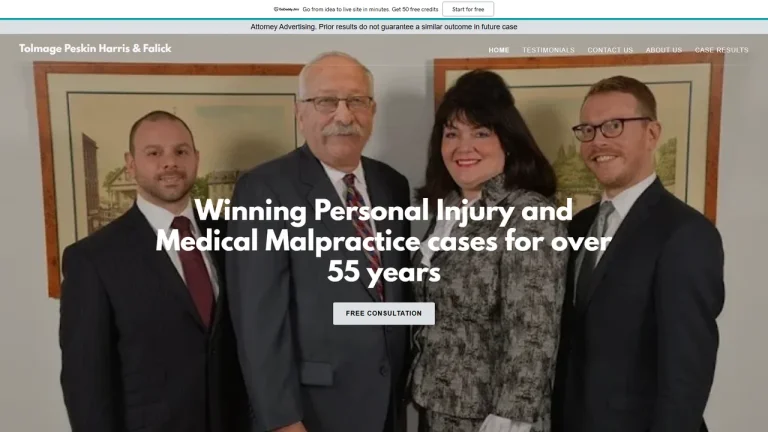
Tolmage, Peskin, Harris, Falick - NYC, New York
Kramer & Pollack, LLP - NYC, New York

Moore Kuehn, PLLC - NYC, New York

Queller, Fisher, Washor, Fuchs & Kool and The Law Office Of William A. Gallina, LLP - NYC, New York

Friedland Law Group - NYC, New York

Morgan Levine Dolan, P.C. - NYC, New York

Smalline and Harri - Albany, NY

Richmond Vona Injury Lawyers - Rochester, NY

Rosenblum Law - NYC, New York

Arye, Lustig & Sassower, P.C. - NYC, New York
NYC Personal Injury Lawyer - Tanya Gendelman, P.C. - Midtown Office - NYC, New York

John Wright Personal Injury Lawyer - Rochester, NY
Sullivan Brill Personal Injury Attorneys - Albany, NY
New York Transit Systems & Sovereign Authority Jurisdiction
Mass transit networks across the Empire State transport millions of passengers daily, operating under complex public authority structures and statutory frameworks. Navigating an injury claim requires identifying the exact governmental entity responsible, whether you were injured on the Metropolitan Transportation Authority (MTA) network-including New York City Transit subways and buses, the Long Island Rail Road (LIRR), and Metro-North Railroad-or on regional transit systems upstate.
Across upstate New York, public transportation services are overseen by regional transportation authorities, including the Niagara Frontier Transportation Authority (NFTA) serving Buffalo and Niagara Falls, the Capital District Transportation Authority (CDTA) serving Albany, Schenectady, and Troy, the Central New York Regional Transportation Authority (Centro) in Syracuse, and the Rochester-Genesee Regional Transportation Authority (RTS). Each regional authority is governed by specific provisions under the New York Public Authorities Law.
Litigation against public transit operators is initiated in the Supreme Court of the State of New York in the county where the collision or incident occurred. Because transit authorities are public benefit corporations, injured passengers must comply with rigorous statutory notice prerequisites before filing a lawsuit. Retaining a dedicated New York transit accident lawyer ensures that evidential preservation orders are served, onboard video recordings are subpoenaed, and jurisdictional requirements are met.
Public Transit Injury Legal Fees & Representation Models
| Case Scenario | Fee Structure | Estimated Cost (USD) | Key Cost Determinants |
|---|---|---|---|
| Municipal Transit Bus Collision | Contingency Fee | 33.3% of recovery | 30-day No-Fault filing compliance, 90-day Notice of Claim, objective medical proof of serious injury |
| Commuter Rail Crash / Platform Incident (LIRR / Metro-North) | Contingency Fee | 33.3% of recovery | Public Authorities Law notice, platform surveillance footage, track maintenance records |
| Subway Derailment or Violent Stop | Contingency Fee | 33.3% of recovery | Jerk and jolt common law proof, train event data recorder analysis, municipal hearing defense |
| Upstate Regional Authority Incident (NFTA / CDTA / Centro) | Contingency Fee | 33.3% of settlement | Upstate county venue dynamics, dashcam footage retrieval, municipal claims adjuster negotiations |
Critical Legal Deadlines & Statutes in New York
Pursuing compensation against a public transit entity in New York involves the most unforgiving statutory deadlines in state civil procedure. Under N.Y. Gen. Mun. Law § 50-e and specific authority sections such as N.Y. Pub. Auth. Law § 1212 for the MTA and N.Y. Pub. Auth. Law § 1299-p for the NFTA, the injured party must serve a formal sworn Notice of Claim within strictly 90 calendar days from the date of the incident.
Failing to serve this 90-day Notice of Claim bars your legal right to compensation permanently, unless leave to serve a late notice is granted by the Supreme Court. Following the notice, the subsequent lawsuit must be commenced within one year and 90 days from the accident date pursuant to N.Y. Gen. Mun. Law § 50-i. Public authorities also hold the statutory right to demand an oral and physical examination under N.Y. Gen. Mun. Law § 50-h before a lawsuit can be served.
For bus accidents, medical bills and lost earnings are processed under New York's No-Fault insurance system. The injured party must submit Form NF-2 to the transit authority's claims department within strictly 30 calendar days of the crash under 11 N.Y.C.R.R. § 65-1.1 and N.Y. Ins. Law § 5106. To recover non-economic damages for pain and suffering, the victim must prove a serious physical injury meeting the statutory categories defined in N.Y. Ins. Law § 5102(d). Liability allocations follow pure comparative fault under N.Y. C.P.L.R. § 1411.
Small Claims Court vs. Transit Authority Litigation
Small claims courts across New York-including town and village justice courts capped at $5,000 and city or district courts capped at $10,000-provide an avenue for minor property disputes, such as an item damaged by a bus door. However, personal injury claims against public transit agencies should never be filed pro se in small claims court.
Transit authorities maintain specialized claims defense bureaus that enforce procedural hurdles aggressively. In bus and train stopping incidents, transit attorneys invoke New York's common law "jerk and jolt" rule, which shields operators from liability unless the claimant proves that the stop was unusually violent and beyond the ordinary operation of the vehicle. Overcoming this defense requires securing vehicle telematics, maintenance records, and expert biomechanical testimony in the New York State Supreme Court.
Red Flags When Selecting Public Transit Accident Attorneys
- Lawyers who fail to serve a sworn Notice of Claim within the mandatory 90-day window, resulting in complete dismissal of the case against the transit authority.
- Firms that fail to submit the No-Fault Form NF-2 within 30 days, leaving clients personally responsible for accumulating hospital bills.
- Practitioners unfamiliar with the strict evidentiary burdens of New York's "jerk and jolt" common law standard in passenger slip or fall cases.
- Attorneys lacking active licensing confirmed through the New York State Unified Court System Attorney Registration directory.
Frequently Asked Questions
What is the deadline to file a claim against the MTA or an upstate transit authority?
You must file a formal sworn Notice of Claim within 90 calendar days of the accident date under General Municipal Law § 50-e and Public Authorities Law § 1212. You then have one year and 90 days from the accident date to file a lawsuit in New York State Supreme Court.
Who pays my medical bills after an injury on a New York public bus?
Medical expenses and lost wages are covered under New York No-Fault insurance. If you were a passenger on a municipal bus or a pedestrian struck by one, the transit authority's self-insurance covers basic economic loss up to $50,000, provided you file Form NF-2 within 30 days.
What is a 50-h hearing in a New York transit case?
A 50-h hearing is a statutory proceeding under General Municipal Law where transit authority attorneys question the injured claimant under oath regarding how the accident occurred and the extent of injuries before a formal lawsuit can be filed.
What is the 'jerk and jolt' doctrine in New York transit law?
New York common law requires an injured passenger to prove that a bus or train sudden stop was unusual, violent, and beyond the normal operating jolts of public transit. Supporting this burden requires witness testimony, video evidence, and operator speed data.
How are legal fees structured in New York transit injury cases?
Transit accident attorneys work on a contingency fee basis set at 33.3% (one-third) of the net recovery. Clients owe no attorney fees unless the lawyer successfully recovers money through a settlement or trial verdict.