
Accident & Injury Lawyers in North Carolina
Retaining an experienced North Carolina accident and injury lawyer protects your compensation from the state's strict contributory negligence defense. Skilled local counsel navigates complex negotiations, gathers vital evidence, and advocates aggressively across the General Court of Justice. Explore our verified statewide directory below to schedule a free case review today.
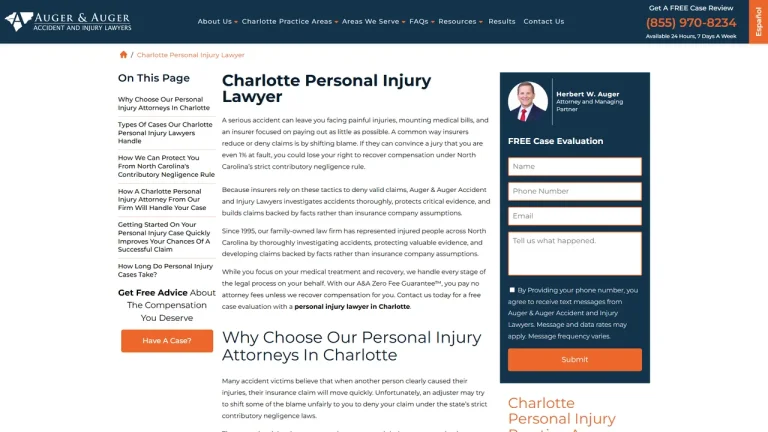
Auger and Auger Accident and Injury Lawyers - Charlotte, NC

Gregory T. Whitley - Fayetteville, NC

Irons & Irons P.A. Auto Accident and Personal Injury Attorneys - Raleigh, NC
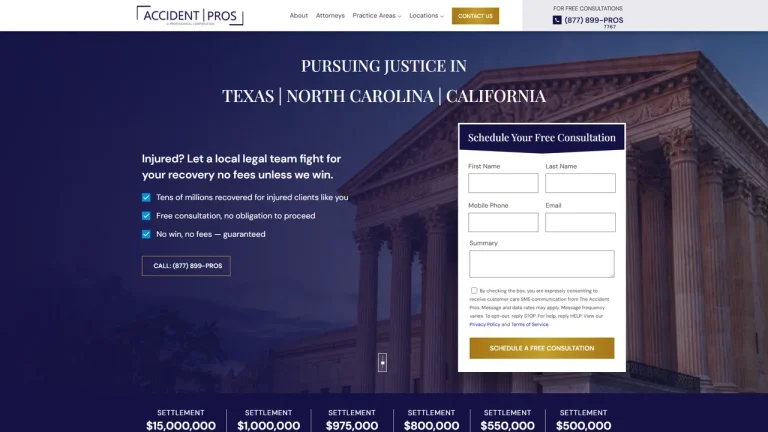
Accident Pros - Charlotte, NC

McGeachy Hudson & Zuravel - Fayetteville, NC

The Law Office of K. D. White, PLLC - Fayetteville, NC

Beth Sibley Law Offices, PLLC - Charlotte, NC

The Law Office of Jonathan Richardson, PLLC - Cary, NC

Burton Law Firm, PLLC - Raleigh, NC
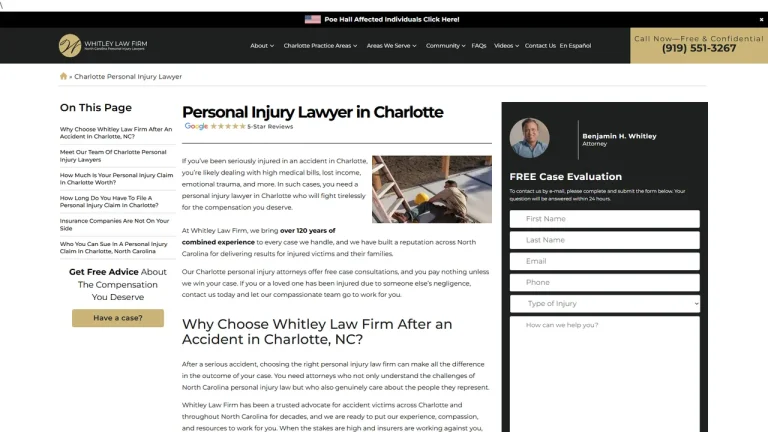
Whitley Law Firm Injury Lawyers - Charlotte, NC

Deaver & Deaver, Trial Attorneys - Wilmington, NC
Law Offices of James Scott Farrin - Fayetteville, NC

Thomas E. Grist, Attorney at Law - Charlotte, NC
Beaver Courie Attorneys at Law - Fayetteville, NC

Grandy & Martin PA - Charlotte, NC
Sandhu Law PLLC - Durham, NC

The Snow Legal Group, PLLC - Charlotte, NC

Mehta and McConnell, PLLC - Charlotte, NC
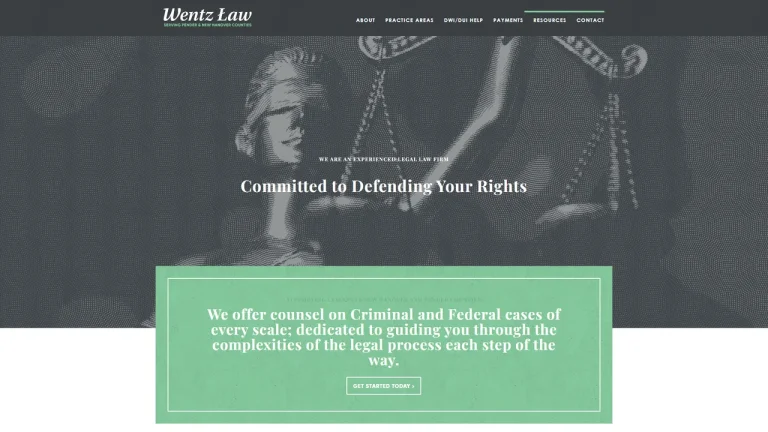
Wentz Law Firm - Wilmington, NC

BP Condlin Attorney at Law - Fayetteville, NC

Duncan Law, LLP - High Point, NC
Myers Law Firm, PLLC - Charlotte, NC
The Clauson Law Firm, PLLC - Durham, NC
Personal Injury Practice Across the North Carolina General Court of Justice
Pursuing personal injury compensation in North Carolina requires navigating the structured hierarchy of the North Carolina General Court of Justice. Civil lawsuits seeking damages exceeding $25,000 are adjudicated in the Superior Court Division, while claims involving $25,000 or less fall under the jurisdiction of the District Court Division. In major urban centers such as Mecklenburg County (Charlotte), Wake County (Raleigh), and Guilford County (Greensboro), formal local court rules and mediation requirements govern case progression.
North Carolina stands as one of only a few jurisdictions in the United States adhering to the pure contributory negligence doctrine. Under this strict common law rule, if an injured claimant is found to have contributed even one percent to the cause of their injury, they are completely barred from recovering any financial compensation from the at-fault party. Overcoming this severe legal hurdle requires meticulous trial preparation, comprehensive accident reconstruction, and immediate evidence preservation.
Retaining an attorney licensed by the North Carolina State Bar provides injured plaintiffs with essential strategic defense against aggressive insurance carriers. Experienced litigators establish critical exceptions to contributory negligence, such as the Last Clear Chance doctrine or demonstrating gross negligence, securing fair recovery for medical expenses, lost earnings, and permanent disability.
Estimated Personal Injury Fee Structures in North Carolina
| Case Scenario | Fee Structure | Estimated Cost (USD) | Key Cost Determinants |
|---|---|---|---|
| Motor Vehicle Collision Settlement | Contingency Fee | 33.3% of Recovery | Contributory negligence defense rebuttals, policy limit payouts, state healthcare lien resolution. |
| Commercial Trucking Accident on Interstate Corridors | Contingency Fee | 33.3% - 40% of Recovery | Federal motor carrier compliance audits, black-box ECM downloads, corporate multi-party liability. |
| Premises Liability & Slip-and-Fall Injury | Contingency Fee | 33.3% - 40% of Recovery | Overcoming open-and-obvious defense, security video preservation, commercial insurance limits. |
| Catastrophic Injury & Wrongful Death Litigation | Contingency Fee | 35% - 40% of Recovery | Estate administration in Superior Court, forensic economic loss modeling, statutory punitive caps. |
Critical Legal Deadlines & Statutes in North Carolina
Personal injury actions in the state are governed by precise statutory deadlines set forth in Chapter 1 of the North Carolina General Statutes. Under N.C. Gen. Stat. § 1-52(16), the standard statute of limitations for filing a lawsuit based on personal injury or property damage is three years from the date the injury occurred or became apparent. For wrongful death claims, a shorter statutory period applies under N.C. Gen. Stat. § 1-53(4), requiring formal filing within two years from the date of the decedent's death.
Defendants asserting the affirmative defense of contributory negligence must carry the burden of proof under N.C. Gen. Stat. § 1-139. When seeking punitive damages for egregious conduct, N.C. Gen. Stat. § 1D-25 imposes a statutory cap limiting punitive awards to three times the amount of compensatory damages or $250,000, whichever is greater. Claims against state government agencies are governed by the North Carolina Tort Claims Act under N.C. Gen. Stat. § 143-291, which directs actions through the North Carolina Industrial Commission subject to a statutory liability ceiling of $1,000,000.
Small Claims Limitations vs. Retaining Personal Injury Counsel
In North Carolina, Small Claims Court-presided over by a Magistrate as part of the District Court Division-is statutorily capped at $10,000 pursuant to N.C. Gen. Stat. § 7A-210. Controversies between $10,000 and $25,000 proceed in District Court, while claims exceeding $25,000 belong exclusively to the Superior Court Division.
Attempting to negotiate or litigate a personal injury claim pro se in North Carolina is exceptionally hazardous due to the pure contributory negligence doctrine. Insurance adjusters routinely elicit recorded statements from unrepresented victims designed to establish minor admissions of fault, such as driving slightly over the speed limit or failing to look down while walking, which entirely destroys the claim. Retaining seasoned legal counsel shields claimants from manipulative insurer tactics, preserves vital surveillance evidence, and leverages the Last Clear Chance doctrine to protect the right to financial recovery.
Red Flags When Selecting a North Carolina Injury Attorney
- Failing to thoroughly analyze the pure contributory negligence doctrine during initial case evaluation.
- Advising an injured client to provide a recorded interview to the adverse party's liability adjuster before reviewing medical records.
- Demanding upfront out-of-pocket retainer fees to investigate standard motor vehicle or premises liability claims.
- Lack of jury trial experience in the North Carolina Superior Court Division where the civil action must be docketed.
Frequently Asked Questions
How does pure contributory negligence work in North Carolina?
Under North Carolina common law, if an injured party is found to be even one percent at fault for the accident, they are completely barred from recovering any financial compensation from the negligent defendant.
What is the Last Clear Chance doctrine in North Carolina?
The Last Clear Chance doctrine is an essential legal exception to contributory negligence that allows an injured party to recover damages if they can prove the defendant had the final opportunity to avoid the collision but failed to do so.
What is the deadline to file a personal injury claim in North Carolina?
Pursuant to N.C. Gen. Stat. § 1-52(16), personal injury actions must be filed within three years from the date of injury, while wrongful death lawsuits must be filed within two years under N.C. Gen. Stat. § 1-53(4).
Are punitive damages capped in North Carolina personal injury claims?
Yes. Under N.C. Gen. Stat. § 1D-25, punitive damage awards are statutorily capped at three times the amount of compensatory damages or $250,000, whichever amount is greater.
Which North Carolina court division hears serious personal injury lawsuits?
Personal injury lawsuits seeking damages in excess of $25,000 must be filed and tried before a jury in the North Carolina Superior Court Division.