
Business & Work Visa Lawyers in North Carolina
Retain experienced North Carolina business and work visa lawyers to secure H-1B, L-1, O-1 visas, PERM labor certifications, and employment green cards. Skilled legal counsel helps corporate employers maintain full Department of Labor compliance while recruiting top global talent. Explore our directory below to consult verified business immigration attorneys.
Arenas Immigration Law - Wilmington, NC

Jennings & Associates - Wilmington, NC

Burgos Law - High Point, NC
Diener Law - Wilmington, NC

Law Office of Emanuela Prister PLLC - Cary, NC

Immigration Lawyer, Family Lawyer, Traffic Lawyer, Law Office of Dahlia Castillo, PLLC - Fayetteville, NC
Helen Tarokic Law PLLC - Wilmington, NC

Charlotte Immigration Law Firm - Charlotte, NC

Brown Immigration Law - Durham, NC
Latorre Law Firm - Charlotte, NC
Chaney Immigration Law Firm - Durham, NC
Global Immigration Law | Abogados de Inmigración - Durham, NC
Thomas E. Fulghum, Attorney at Law - Durham, NC

Law Office of Mercy Changwesha, PLLC - Durham, NC
Hudson Law Group PLLC - Durham, NC
Gilchrist Law Firm - Charlotte, NC

OlaBlu Law, PLLC - Charlotte, NC
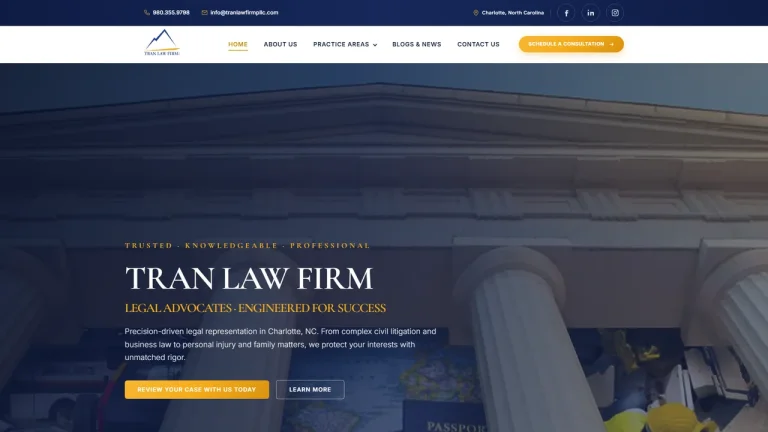
Tran Law Firm, PLLC - Charlotte, NC

Mufuka Law Firm, PLLC - Durham, NC
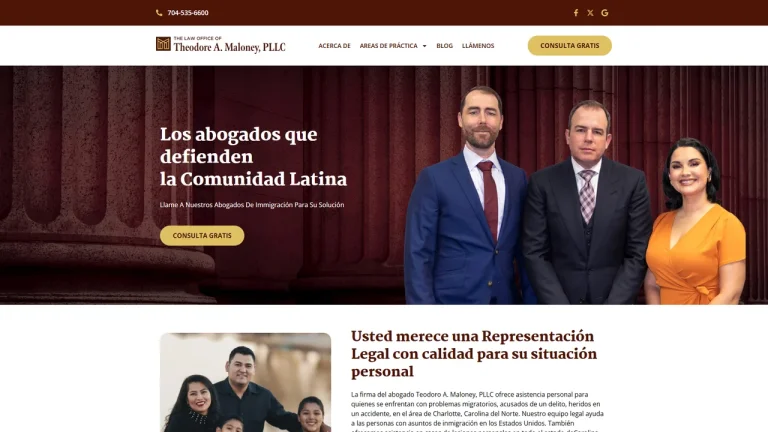
The Law Office of Theodore A. Maloney, PLLC - Charlotte, NC
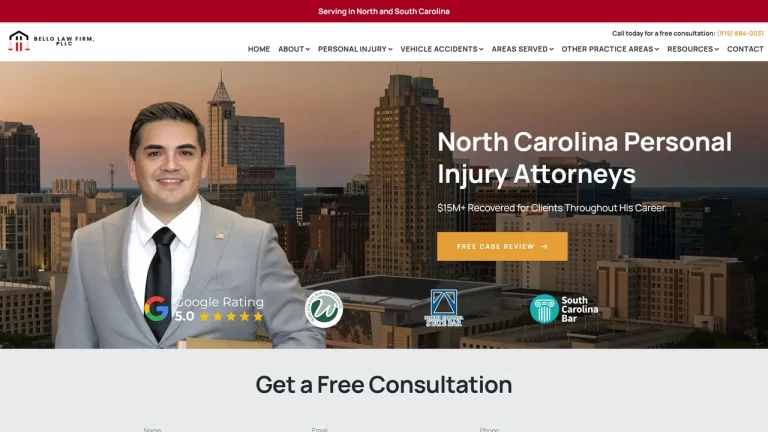
Bello Law Firm - Raleigh, NC
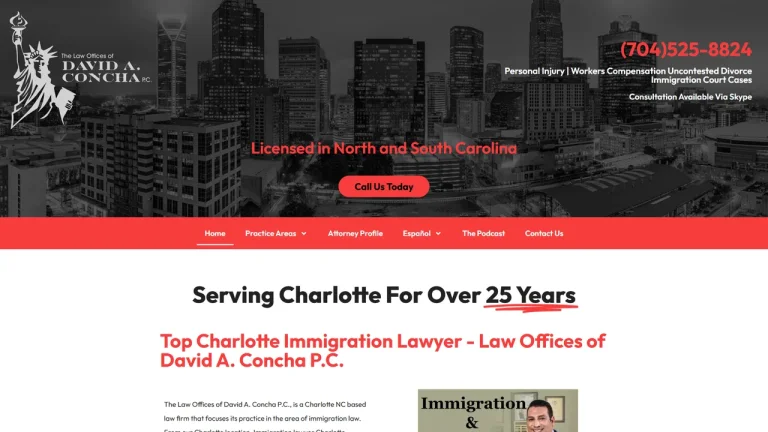
The Law Offices of David A. Concha, P.C. - Charlotte, NC

Hatch Rockers Immigration - Durham, NC
Corporate Immigration & Employment Visas Across North Carolina
North Carolina is a premier commercial center driven by technological innovation, financial institutions, and advanced manufacturing. The Research Triangle Park-spanning Raleigh, Durham, and Chapel Hill-anchors major biotechnology, pharmaceutical, and software enterprises, while Charlotte serves as one of the country largest commercial banking and fintech centers. In addition, the Piedmont Triad region encompassing Greensboro and Winston-Salem supports robust logistics, aviation, and industrial manufacturing sectors. To sustain this economic growth, North Carolina enterprises rely heavily on international executives, specialized researchers, and skilled engineers.
Securing employment-based nonimmigrant visas and permanent residence involves navigating multiple regulatory bodies, including the U.S. Department of Labor (DOL) and U.S. Citizenship and Immigration Services (USCIS). Regional corporate verifications and employment authorization inquiries are coordinated through the USCIS Charlotte and Raleigh Field Offices. Business immigration attorneys ensure that hiring entities meet prevailing wage standards, manage corporate structural reorganizations without jeopardizing employee visas, and establish compliant Public Access Files for state and federal workplace inspections.
Common Legal Fees for North Carolina Employment Immigration
| Case Scenario | Fee Structure | Estimated Cost (USD) | Key Cost Determinants |
|---|---|---|---|
| H-1B Specialty Occupation Petition | Flat Fee (Employer Paid) | $2,500 - $5,000 | Degree-to-job alignment, prevailing wage analysis, and specialty occupation RFE defense. |
| L-1 Intracompany Transferee (Executive/Specialized) | Flat Fee | $4,500 - $8,500 | Foreign qualifying corporate relationship, organizational charts, and executive role documentation. |
| PERM Labor Certification (EB-2 / EB-3) | Flat Fee (Staged Billing) | $4,000 - $9,000 | Recruitment advertising management, prevailing wage determinations, and DOL audit handling. |
| Corporate I-9 & E-Verify Compliance Audit | Hourly Rate | $300 - $600 per hour | Workforce scale, historical document review, and administrative fine exposure mitigation. |
Critical Legal Deadlines & Statutes in North Carolina
Employment immigration requires adherence to strict procedural timelines established under the Immigration and Nationality Act and federal labor standards. Sponsoring professionals for H-1B status under 8 U.S. Code § 1101(a)(15)(H)(i)(b) requires filing a certified Labor Condition Application (LCA) compliant with 20 C.F.R. § 655.731, which mandates that the employer pay the higher of the prevailing wage or actual wage. Permanent employment petitions under the EB-2 and EB-3 immigrant visa categories under 8 U.S. Code § 1153(b) require completing the rigorous PERM labor certification process.
Under Department of Labor regulations outlined in 20 C.F.R. § 656.17, employers must conduct mandatory recruitment within a 180-day window prior to filing the PERM application, observing a strict 30-day quiet period following the last advertisement. Missing these regulatory windows invalidates the recruitment campaign. At the state level, North Carolina imposes mandatory E-Verify employment verification under N.C. Gen. Stat. § 64-26 for all state agencies and private employers employing 25 or more workers. Furthermore, when USCIS issues a Request for Evidence (RFE) on employment petitions, response deadlines are statutory and inflexible under 8 C.F.R. § 103.2(b)(8), requiring comprehensive documentation within the allotted timeframe.
Corporate In-House Filings vs. Retaining Immigration Counsel
Corporate human resources departments often attempt to handle work visa filings internally to control operational costs. However, federal immigration law imposes strict statutory prohibitions that can expose companies to substantial financial and civil liabilities. Under federal regulations, all costs associated with H-1B petitions and PERM labor certifications must be borne exclusively by the sponsoring employer; shifting these legal or administrative expenses onto the employee violates federal law and triggers civil fines and back-wage orders.
Engaging dedicated business immigration counsel ensures comprehensive corporate protection. An attorney correctly matches Standard Occupational Classification (SOC) codes to complex modern tech and research roles, drafts detailed employer support letters, and constructs resilient responses to USCIS scrutiny concerning third-party worksite placements. Moreover, legal counsel audits employer Form I-9 records to ensure compliance with N.C. Gen. Stat. § 64-26, mitigating exposure during federal Homeland Security Investigations (HSI) or Department of Labor audits.
Red Flags When Hiring a Business Immigration Attorney
- Attorneys or corporate intermediaries who suggest requiring foreign workers to pay back legal or filing expenses for PERM certifications, directly violating federal law.
- Firms utilizing generic, boilerplate job descriptions that fail to establish specialty occupation status under USCIS adjudication standards.
- Failing to advise North Carolina employers with 25 or more workers of their mandatory verification duties under N.C. Gen. Stat. § 64-26.
- Missing the strict deadline for responding to a USCIS Request for Evidence (RFE) under 8 C.F.R. § 103.2(b)(8), resulting in petition denial.
Frequently Asked Questions
Are North Carolina employers required to use E-Verify?
Yes. Under N.C. Gen. Stat. § 64-26, all state agencies and private employers that employ 25 or more employees in North Carolina are legally required to verify the work authorization of newly hired workers using E-Verify.
Can an employee pay for their own H-1B or PERM filing fees?
No. Under federal Department of Labor regulations, all legal and administrative costs connected to PERM labor certification and H-1B petition preparation must be paid entirely by the sponsoring employer.
What is the PERM recruitment window for an employment green card?
Under 20 C.F.R. § 656.17, recruitment efforts must occur between 30 and 180 days prior to submitting the PERM application to the Department of Labor, allowing a 30-day waiting period for applicant responses.
What defines a specialty occupation for an H-1B visa?
Under 8 U.S. Code § 1101(a)(15)(H)(i)(b), a specialty occupation requires theoretical and practical application of highly specialized knowledge and the attainment of a bachelor degree or higher in the specific specialty as a minimum entry requirement.
Can an employee travel internationally while an H-1B extension is pending?
International travel during an extension or change of status petition can result in abandonment of the application. Sponsoring employers and beneficiaries should consult immigration counsel before finalizing international travel plans.