
Accident & Injury Lawyers in Raleigh
Retaining an assertive accident and injury attorney in Raleigh is crucial to overcoming North Carolina's pure contributory negligence doctrine. Skilled counsel investigates accident scenes, negotiates with insurance adjusters, and handles litigation in Wake County courts. Explore our verified directory below to schedule a case review with an experienced Raleigh injury lawyer today.
Osborn Injury Lawyers - Raleigh, NC
Paul Robinson Law, PLLC - Raleigh, NC

Mogy Law - Raleigh, NC
Ricci Law Firm Injury Lawyers - Raleigh, NC
Brent Adams & Associates - Raleigh, NC

Owens & Miller PLLC - Raleigh, NC

Vincent-Pope Law Firm, PA - Raleigh, NC
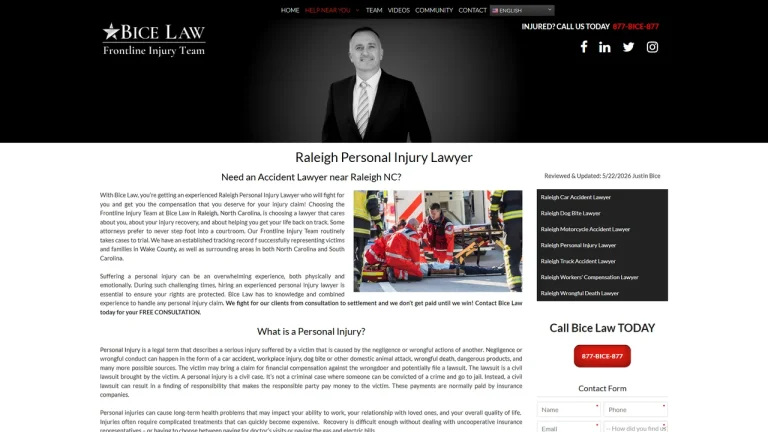
Bice Law LLC - Raleigh, NC

Martinez Law - Raleigh, NC

Law Tigers Motorcycle Lawyers - Raleigh, NC
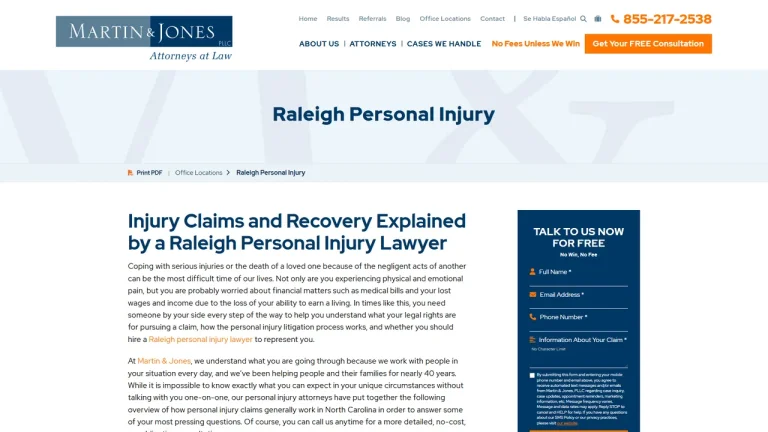
Martin & Jones, PLLC - Raleigh, NC
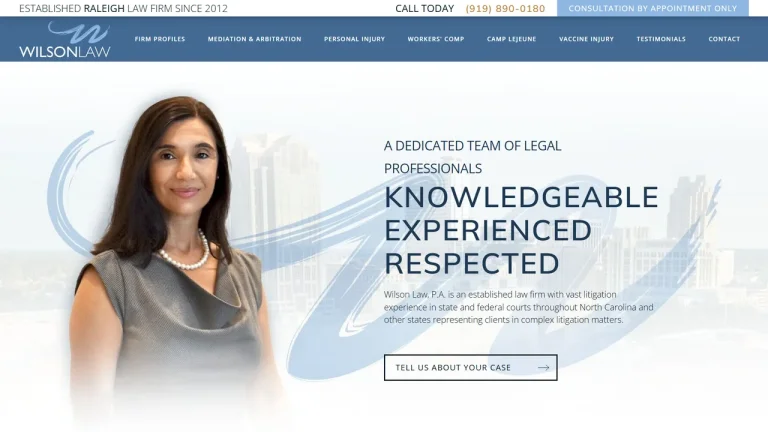
Wilson Law, P.A. - Raleigh, NC

Tien Law Firm - Raleigh, NC
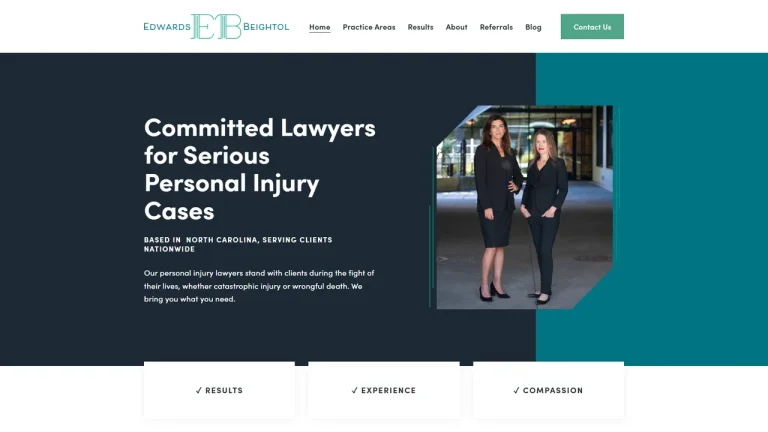
Edwards Beightol, LLC - Raleigh, NC

Nichols Law Firm - Raleigh, NC

Henson Fuerst, Attorneys at Law - Raleigh, NC

Dement Askew Johnson & Marshall, LLP - Raleigh, NC
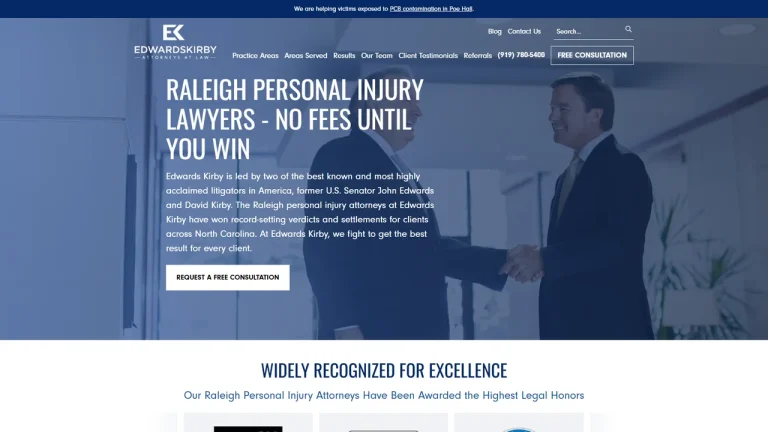
Edwards Kirby, LLP - Raleigh, NC
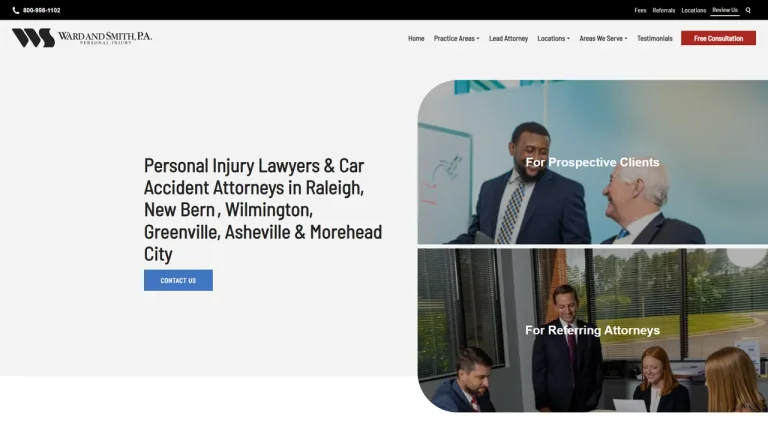
Ward and Smith Personal Injury - Raleigh, NC
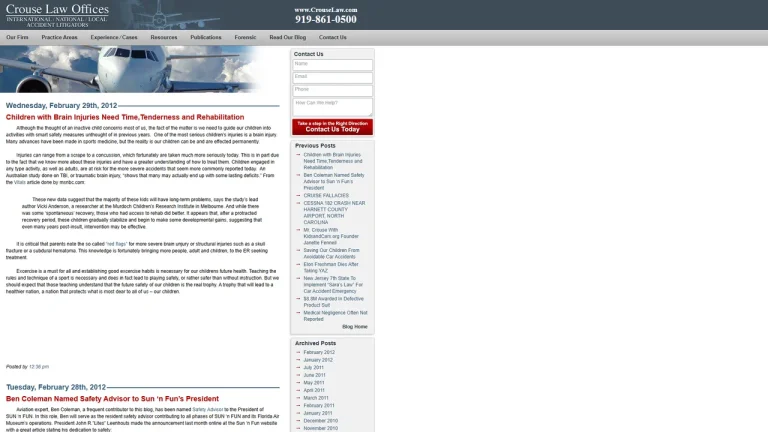
Crouse Law Offices PLLC - Raleigh, NC
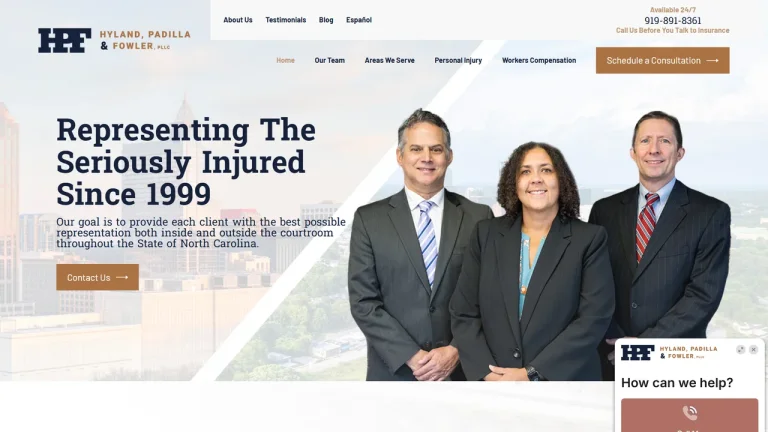
Hyland, Padilla and Fowler PLLC - Raleigh, NC

Jernigan Law Firm - Raleigh, NC

Kurtz & Blum, PLLC - Raleigh, NC

Personal Injury Practice in Raleigh and the 10th Judicial District
Navigating an accident or personal injury claim in Raleigh requires an understanding of North Carolina's legal framework and local court administration. Raleigh is the center of state government and the Research Triangle, characterized by heavy daily commuter traffic along Interstate 40, the I-440 Beltline, Interstate 540, Capital Boulevard, and Glenwood Avenue. Collisions, commercial delivery wrecks, and dangerous premises incidents occur daily across Downtown Raleigh, North Hills, Brier Creek, and Midtown.
Personal injury lawsuits originating in Raleigh are filed in the Wake County Courthouse on Fayetteville Street, operating within North Carolina's 10th Judicial District. If an incident involves interstate parties and damages surpassing $75,000, proceedings may take place in the United States District Court for the Eastern District of North Carolina (EDNC) at the Terry Sanford Federal Building in downtown Raleigh.
The defining legal hurdle for Raleigh injury victims is North Carolina's doctrine of pure contributory negligence. Under state common law, if an insurance carrier establishes that an injured plaintiff was even one percent at fault for the accident, all monetary recovery is barred. Retaining an accomplished Raleigh accident and injury attorney protects your claim from the beginning. Counsel collects critical police and surveillance data, cross-examines eyewitnesses, and applies doctrines like Last Clear Chance to defeat insurer defenses.
Raleigh Personal Injury Fee Structures & Case Classifications
| Case Scenario | Fee Structure | Estimated Cost (USD) | Key Cost Determinants |
|---|---|---|---|
| Motor Vehicle Collision (Disputed Fault) | Contingency Fee | 33.3% of settlement | Overcoming contributory negligence arguments, accident reconstruction, and auto policy limits under N.C. Gen. Stat. § 20-279.21. |
| Commercial Premises Slip & Fall / Inadequate Security | Contingency Fee | 33.3% - 40% of recovery | Proving property owner actual or constructive notice of hazard, open-and-obvious defense rebuttal, and surveillance recovery. |
| Construction Site Third-Party Injury | Contingency Fee | 33.3% - 40% of recovery | Subcontractor indemnity agreements, coordinating third-party claims with workers' compensation liens under N.C. Gen. Stat. § 97-10.2. |
| Fatal Accident & Wrongful Death Claim | Contingency Fee | 33.3% - 40% of recovery | Wake County Clerk of Superior Court estate qualification, distribution to statutory beneficiaries, and economic loss projections. |
Critical Legal Deadlines & Statutes in North Carolina
Personal injury actions in Raleigh are governed by strict statutory filing deadlines. Under N.C. Gen. Stat. § 1-52(16), an injured party has three years from the date of the accident to file a civil lawsuit in court. If an injury results in death, the personal representative of the estate must file a wrongful death action within two years from the date of death pursuant to N.C. Gen. Stat. § 1-53(4).
Healthcare liens present another critical legal timing issue in North Carolina. Under N.C. Gen. Stat. § 44-49, medical providers, physicians, and hospitals treating accident victims have a statutory lien upon personal injury settlement proceeds. However, this recovery is restricted by N.C. Gen. Stat. § 44-50, which limits total medical lien payouts to a maximum of 50 percent of the net settlement amount remaining after attorney fees are deducted. Promptly addressing these statutory liens is essential to ensure that settlement funds are disbursed lawfully.
Small Claims Limitations vs. Professional Injury Representation
In Wake County, the Small Claims Division (Magistrate Court) operates under a $10,000 ceiling pursuant to N.C. Gen. Stat. § 7A-210. For isolated property damage matters with no physical harm, a claimant might consider magistrate court.
However, when bodily injury, emergency care, or ongoing rehabilitation is involved, attempting to resolve an injury claim without an attorney is dangerous. Insurance adjusters are trained to conduct recorded interviews designed to elicit statements admitting minor fault, such as driving slightly fast or being momentarily distracted. Such statements are then used to invoke pure contributory negligence to extinguish the claim. Raleigh accident lawyers operate on contingency, meaning you pay no out-of-pocket fees unless your legal team recovers compensation via settlement or trial in the Wake County Superior Court.
Red Flags When Hiring a Raleigh Accident & Injury Lawyer
- Direct contact by runners or representatives immediately following a crash, violating North Carolina State Bar ethical prohibitions against direct solicitation.
- Firms demanding upfront retainers or out-of-pocket consultation fees for personal injury matters that should be handled on pure contingency.
- Lawyers making unrealistic guarantees regarding exact recovery amounts before reviewing your treatment records from WakeMed or UNC Rex Healthcare.
- Settlement mill firms that pass your file to uncertified legal assistants and have never argued a case before a jury in Wake County Superior Court.
Frequently Asked Questions
What is pure contributory negligence in North Carolina?
North Carolina is one of only a handful of jurisdictions that adheres to pure contributory negligence. If the injured victim is found even 1% at fault for the accident, they are completely barred from recovering compensation from the defendant, unless an exception like Last Clear Chance applies.
What is the statute of limitations for personal injury in Raleigh?
Under N.C. Gen. Stat. § 1-52(16), you have three years from the date of the injury to file a lawsuit in court. Wrongful death claims must be filed within two years from the date of death under N.C. Gen. Stat. § 1-53(4).
Can hospital liens take my entire personal injury settlement in North Carolina?
No. While medical providers can assert statutory liens under N.C. Gen. Stat. § 44-49, the law under N.C. Gen. Stat. § 44-50 explicitly caps medical lien recoveries at 50% of the net settlement amount remaining after attorney fees are deducted.
What insurance minimums apply to drivers in Raleigh?
Under N.C. Gen. Stat. § 20-279.21, North Carolina requires drivers to maintain liability policies of at least $30,000 for bodily injury to one person, $60,000 per accident, and $25,000 for property damage, along with mandatory uninsured motorist (UM) coverage.
Where are personal injury lawsuits litigated in Wake County?
Lawsuits seeking $25,000 or less are heard in Wake County District Court, while claims exceeding $25,000 are tried in the Wake County Superior Court at 316 Fayetteville Street in downtown Raleigh.