
Criminal Defense Lawyers in Raleigh
Securing an aggressive criminal defense lawyer in Raleigh protects your constitutional rights and freedom when facing misdemeanor or felony charges in Wake County. Experienced defense counsel challenges unlawful stops, negotiates dismissal options, and represents clients in bond hearings and trials. Explore our directory below to consult a top-rated Raleigh criminal defense attorney today.

Fabio Ortiz Law Firm - Raleigh, NC
Wilson Williams Law, PLLC. - Raleigh, NC
Frickey Law Firm, PLLC - Raleigh, NC
Bello Law Firm - Raleigh, NC
Sanford Thompson PLLC - Raleigh, NC

Dement Askew Johnson & Marshall, LLP - Raleigh, NC
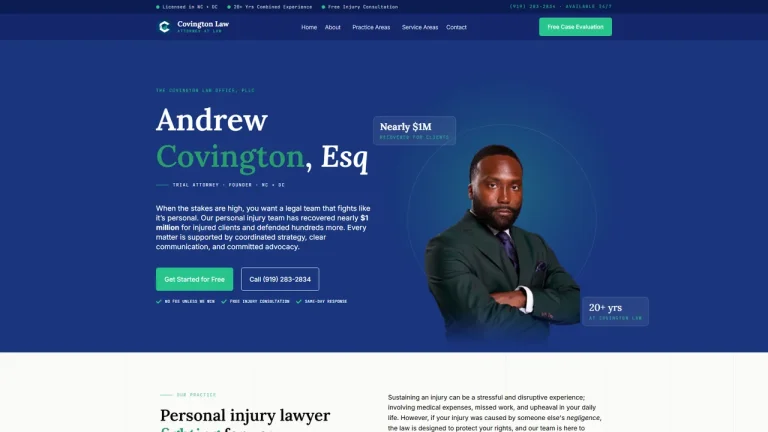
The Covington Law Office, PLLC - Raleigh, NC

Cotten Law Firm, PLLC - Raleigh, NC
Sandman, Finn & Fitzhugh - Raleigh, NC
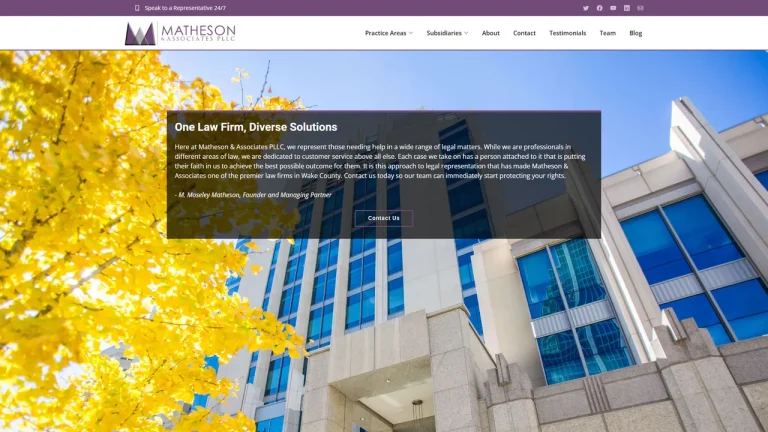
Matheson & Associates PLLC - Raleigh, NC
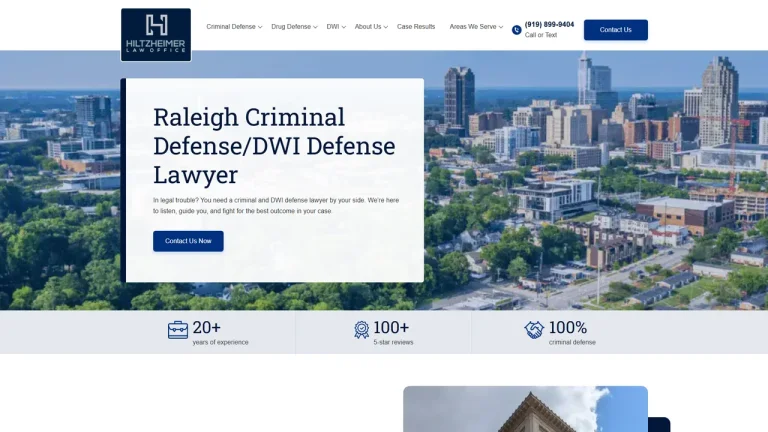
Hiltzheimer Law Office, PLLC | Raleigh DWI Lawyer - Raleigh, NC
Page Law, P.A. - Raleigh, NC

Hatch, Little & Bunn, L.L.P. - Raleigh, NC
Martinez Law - Raleigh, NC

Polk Law PLLC - Raleigh, NC
Joel G Bowden Law Offices - Raleigh, NC

Experienced Criminal Defense Advocacy in Raleigh and Wake County
An arrest or criminal charge in Raleigh can immediately threaten your career, professional credentials, and personal freedom. Law enforcement agencies-including the Raleigh Police Department, Wake County Sheriff's Office, and the North Carolina State Highway Patrol-rigorously patrol downtown entertainment districts along Glenwood Avenue, campus areas, and the I-40 and I-440 corridors. Facing prosecution requires immediate intervention from an experienced local defense attorney.
Criminal proceedings in Wake County are centralized in the 10th Judicial District at the Wake County Justice Center located on South Salisbury Street in downtown Raleigh. District Court judges handle initial appearances, bond modifications, misdemeanor trials, and preliminary felony probable cause hearings, while serious felony indictments proceed to the Wake County Superior Court division. Detained individuals are held at the Wake County Detention Center on Hammond Road.
North Carolina applies a strict, formulaic sentencing structure under the Structured Sentencing Act. Convictions carry mandatory active prison terms or probation dictated by prior record levels and offense classifications. A skilled Raleigh criminal defense lawyer evaluates the legality of police stops, files motions to suppress evidence obtained in violation of the Fourth Amendment, and negotiates diversion agreements to preserve a clean record.
Fee Ranges for Criminal Defense Representation in Raleigh
| Case Scenario | Fee Structure | Estimated Cost (USD) | Key Cost Determinants |
|---|---|---|---|
| First-Offense DWI & Driving Privilege Defense | Flat Legal Fee | $2,000 - $4,500 | Intoxilyzer 9000 machine data, body camera footage review, limited driving privilege petitions |
| Misdemeanor Offenses & Deferred Prosecution | Flat Legal Fee | $1,500 - $3,500 | Negotiation for community service dismissals, conditional discharge programs |
| Felony Charges (Wake County Superior Court Trial) | Retainer / Staged Payments | $5,000 - $25,000+ | Felony class level, prior record level calculation, private investigator and expert witness fees |
| Expungement of Dismissed Charges & Convictions | Flat Legal Fee | $1,000 - $2,500 | Number of counties with records, statutory eligibility audits, district attorney consent |
Critical Legal Deadlines & Statutes in North Carolina
Criminal matters in Raleigh follow rigid statutory procedures where missing a court date triggers an immediate Order for Arrest (OFA) and driver license revocation. In driving while impaired charges under N.C. Gen. Stat. § 20-138.1, a driver breath test result of 0.08 or greater causes an automatic thirty-day civil license revocation; an injured driver can petition for a limited driving privilege after ten days under N.C. Gen. Stat. § 20-16.5.
Misdemeanors are tried in Wake County District Court without a jury. If convicted, a defendant possesses an absolute statutory right to appeal to Wake County Superior Court for a trial de novo before a twelve-person jury pursuant to N.C. Gen. Stat. § 15A-1431. However, this appeal must be declared in open court or filed in writing within fourteen calendar days from the date of judgment. Felony sentencing is determined strictly by calculating prior record points under N.C. Gen. Stat. § 15A-1340.14 and applying the statutory felony grid codified in N.C. Gen. Stat. § 15A-1340.17.
Small Claims Limits vs. Professional Representation in North Carolina
While North Carolina Small Claims Courts governed by N.C. Gen. Stat. § 7A-210 adjudicate civil claims up to $10,000 before a magistrate, magistrates possess zero power to conduct criminal misdemeanor or felony trials. Magistrates issue warrants, conduct initial bond hearings, and administer oaths, but criminal culpability is adjudicated solely in District and Superior Courts.
Attempting to represent oneself in a criminal matter puts your personal freedom and employment at immediate risk. Self-represented defendants routinely make damaging admissions, misunderstand statutory sentencing ranges, and fail to challenge unconstitutional searches. Retaining a lawyer licensed by the North Carolina State Bar guarantees experienced trial representation in the Wake County Justice Center, protects your Fifth Amendment right to remain silent, and positions eligible non-violent offenses for future expungement under N.C. Gen. Stat. § 15A-145.5.
Red Flags When Hiring a Criminal Defense Lawyer
- Guarantees of Dismissal: Any defense lawyer who promises that a case will be dismissed or guarantees a specific plea agreement violates the North Carolina State Bar Rules of Professional Conduct.
- Pressure for Immediate Guilty Pleas: Avoid lawyers who recommend pleading guilty at your first District Court appearance without independently reviewing police dashcam and bodycam video.
- Unfamiliarity with Structured Sentencing Grids: Your defense lawyer must demonstrate command of North Carolina Structured Sentencing Act to accurately calculate prior record levels.
- Lack of Superior Court Trial Experience: Ensure that your attorney regularly tries felony cases before juries at the Wake County Justice Center rather than operating strictly as a plea negotiator.
Frequently Asked Questions
Where are criminal cases heard in Raleigh?
Criminal cases originating in Raleigh and Wake County are heard in the 10th Judicial District at the Wake County Justice Center located at 300 South Salisbury Street in downtown Raleigh.
Where are individuals held after an arrest in Raleigh?
Arrested individuals in Wake County are booked and held at the Wake County Detention Center located on Hammond Road in Raleigh, where initial magistrate appearances and bond hearings take place.
What is a trial de novo in North Carolina criminal court?
Under N.C. Gen. Stat. § 15A-1431, if you are convicted of a misdemeanor in District Court, you have the right to appeal to Superior Court for a trial de novo, which gives you a completely new trial before a jury.
How does North Carolina determine felony sentencing?
North Carolina uses the Structured Sentencing Act under N.C. Gen. Stat. § 15A-1340.17, combining the statutory offense class with the defendant prior record level to determine presumptive sentence ranges.
Can a criminal charge be expunged from my record in Raleigh?
Yes. Dismissed charges or findings of not guilty can be expunged, and certain non-violent misdemeanor and felony convictions may qualify for expungement under N.C. Gen. Stat. § 15A-145.5 after statutory waiting periods.