
Wills Lawyers in Raleigh
Retaining experienced wills lawyers in Raleigh ensures your final wishes are honored and your assets pass seamlessly under North Carolina probate statutes. Skilled local attorneys draft self-proving wills, minimize estate taxes, and guide executors through Wake County probate proceedings to prevent family conflict. Explore our verified Raleigh directory below to schedule a consultation.
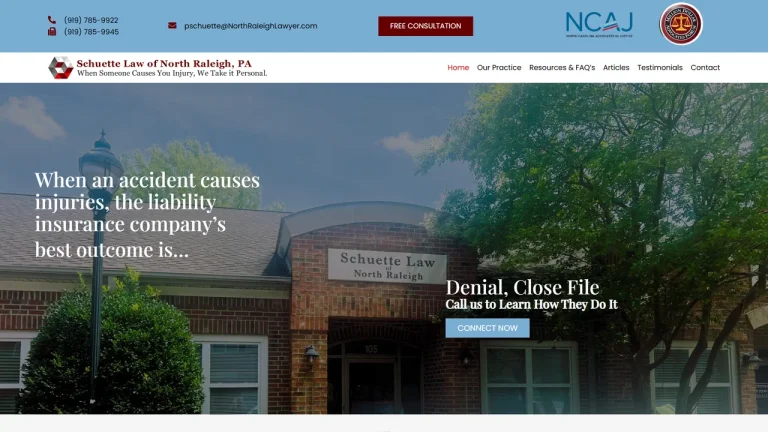
Schuette Law of North Raleigh, PA - Raleigh, NC

Navigating Wills & Probate Administration in Wake County
Establishing a legally enforceable Last Will and Testament is vital for safeguarding your legacy in North Carolina's state capital. Whether transferring residential real estate in Hayes Barton or Five Points, preserving family wealth across North Hills, or designating guardians for minor children in Brier Creek, a customized will prevents statutory intestacy and family disputes.
In North Carolina, the probate process is strictly administered by the Clerk of Superior Court, who acts as the ex officio Judge of Probate. For Raleigh residents, all probate petitions, estate inventories, and will caveat proceedings are centralized at the Wake County Justice Center on South Salisbury Street, operating within the 10th Judicial District. If a will is contested, the matter transfers from the Clerk's division to the Wake County Superior Court for a full jury trial.
Engaging a seasoned Raleigh wills attorney guarantees compliance with rigorous North Carolina execution and notarization formalities. Local counsel understands how to structure testamentary bequests to protect vulnerable heirs, navigate the Wake County Estates Division's audit criteria, and shield executors from personal fiduciary liability.
Will Drafting & Probate Scenarios & Representation Costs
| Case Scenario | Fee Structure | Estimated Cost (USD) | Key Cost Determinants |
|---|---|---|---|
| Basic Attested Will & Guardianship Package | Flat Legal Fee | $850 - $1,800 | Number of specific bequests, minor child trust provisions, execution ceremony logistics. |
| Complex Will with Testamentary Trust Provisions | Flat Legal Fee | $1,800 - $3,500 | Generation-skipping transfer terms, business succession clauses, special needs provisions. |
| Wake County Estate Probate Administration (Uncontested) | Hourly / Statutory Commission | $3,000 - $7,500 | Asset valuation complexity, 90-day creditor notice publication, inventory auditing. |
| Will Caveat Defense / Undue Influence Litigation | Hourly Rate + Retainer | $10,000 - $35,000+ | Superior Court jury trial, medical capacity discovery, expert deposition volume. |
Critical Legal Deadlines & Statutes in North Carolina
Under N.C. Gen. Stat. § 31-3.3, an attested written will must be signed by the testator and attested by at least two competent witnesses in the testator's presence. To eliminate the burden of having witnesses testify before the clerk in probate, wills are routinely made self-proving under N.C. Gen. Stat. § 31-11.6 through simultaneous execution of formal affidavits before a notary public.
Once letters testamentary are issued by the Wake County Clerk of Superior Court, the executor must publish a formal notice to creditors once a week for 4 consecutive weeks pursuant to N.C. Gen. Stat. § 28A-14-1. Creditors have at least 90 calendar days from the date of first publication to present verified claims against the estate; unfiled claims are permanently barred under N.C. Gen. Stat. § 28A-19-3.
Any interested party seeking to contest a probated will on grounds of undue influence or lack of testamentary capacity must file a formal caveat with the Clerk of Superior Court within 3 years of probate pursuant to N.C. Gen. Stat. § 31-32. Furthermore, surviving spouses are protected under N.C. Gen. Stat. § 30-3.1, which authorizes an elective share claim that must be filed within 6 months of letters being issued under N.C. Gen. Stat. § 30-3.4, alongside an immediate one-year family allowance under N.C. Gen. Stat. § 30-15.
Small Claims Limits vs. Retaining Legal Counsel
Wake County Small Claims Court exercises jurisdiction up to $10,000 under N.C. Gen. Stat. § 7A-210 before a magistrate. However, magistrates have zero jurisdiction over wills, trusts, or probate estates. Under North Carolina law, original and exclusive jurisdiction over probate resides solely with the Clerk of Superior Court and the General Court of Justice under Chapter 28A and Chapter 31.
Attempting to draft a will using generic internet templates or administering an estate pro se is fraught with danger. In North Carolina, holographic (handwritten) wills under N.C. Gen. Stat. § 31-3.4 must meet exacting proof standards, and boilerplate documents frequently fail the strict attestation witness requirements of N.C. Gen. Stat. § 31-3.3, triggering invalidation. Furthermore, an executor acting without legal guidance can be held personally liable for improperly paying general creditors before satisfied tax liens. A Raleigh wills lawyer ensures ironclad document execution and seamless probate compliance.
Red Flags to Avoid When Selecting Legal Counsel
- Relying on Generic Non-State Specific Templates: North Carolina has rigorous statutory attestation and self-proving affidavit rules; generic forms often lack required statutory notarization language under N.C. Gen. Stat. § 31-11.6.
- Overlooking Spousal Elective Share Rules: A lawyer who drafts a will disinheriting a spouse without addressing North Carolina's mandatory elective share under N.C. Gen. Stat. § 30-3.1 leaves the estate open to immediate litigation.
- Failure to Provide Probate Administration Support: Drafting a will is only the first step; ensure your firm maintains an active practice assisting executors with the Wake County Clerk of Superior Court Estates Division.
- Attorneys Charging Contingency Fees for Will Drafting: Will preparation must always be billed under transparent flat fees or standard hourly rates; contingency fees for estate drafting violate professional conduct rules.
Frequently Asked Questions
What makes a will legally valid in North Carolina?
Under N.C. Gen. Stat. § 31-3.3, a valid attested will must be in writing, signed by a competent testator aged 18 or older, and signed by at least two competent witnesses who observed the testator sign or acknowledge the will.
What is the function of the Wake County Clerk of Superior Court in probate?
In North Carolina, the Clerk of Superior Court serves as the judicial authority over probate matters, validating wills, qualifying executors, issuing letters testamentary, and auditing mandatory 90-day and annual estate accounting reports.
Can I disinherit my spouse in a North Carolina will?
No. Under N.C. Gen. Stat. § 30-3.1, a surviving spouse has a statutory right to claim an elective share of the decedent's total net assets (ranging from 15% to 50% based on the length of marriage), regardless of contrary will provisions.
What is a will caveat and when can it be filed in Raleigh?
A will caveat is a formal legal challenge alleging lack of mental capacity, fraud, or undue influence under N.C. Gen. Stat. § 31-32. It must be filed within 3 years of probate and is transferred to Wake County Superior Court for a jury trial.
Does having a will prevent my estate from going through probate in Wake County?
No. A will acts as an instructional roadmap for the probate court. To avoid probate entirely, assets must be transferred through a funded revocable living trust or designate valid non-probate beneficiary designations.