
Workplace Discrimination Lawyers in Raleigh
Fight workplace discrimination with top Raleigh employment lawyers, defending your civil rights against bias, failure to accommodate, and systemic prejudice. Seasoned legal counsel guides victims through EEOC administrative filings and structured mediation to recover compensation while avoiding unnecessary courtroom delays. Explore our verified directory below to schedule an authoritative consultation with a dedicated Raleigh civil rights attorney.
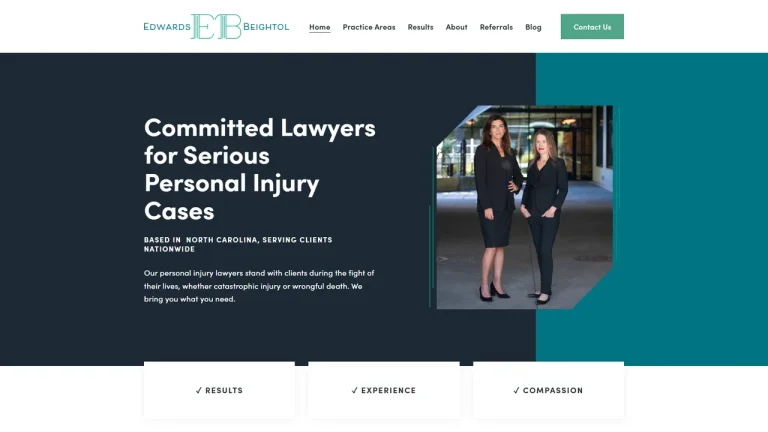
Edwards Beightol, LLC - Raleigh, NC

Edelstein & Payne - Raleigh, NC
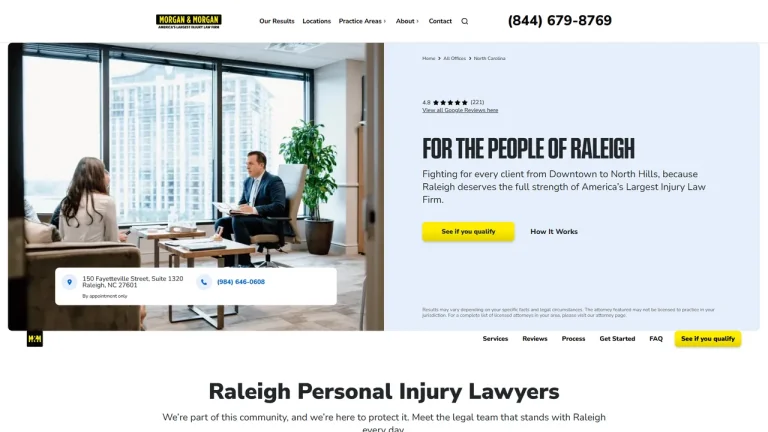
Morgan and Morgan - Raleigh, NC
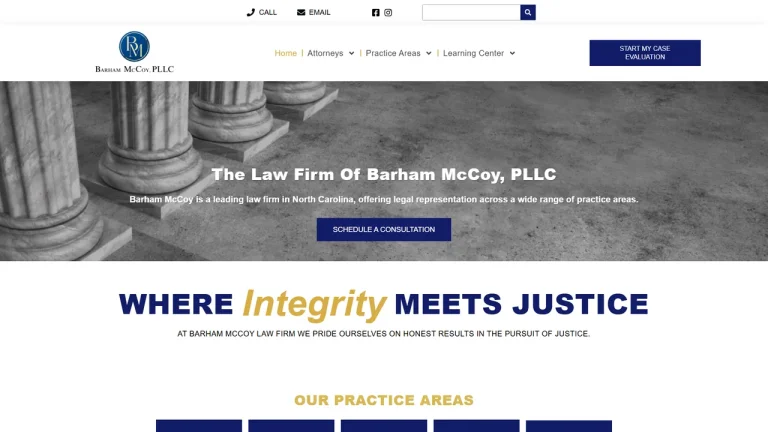
Defending Civil Rights in Raleigh Workplaces
Workplace discrimination undermines employee dignity, professional advancement, and financial security. In Raleigh diverse economic ecosystem-encompassing state government agencies, university research departments, medical centers, and tech companies across North Hills, Brier Creek, and Downtown Raleigh-workers are protected from unlawful bias under state and federal anti-discrimination laws.
Discrimination claims arise when adverse employment decisions-such as demotions, unequal compensation, denied promotions, or termination-are motivated by race, sex, pregnancy, religion, national origin, age, or disability. Experienced Raleigh discrimination attorneys gather comparative personnel records, challenge pretextual performance reviews, and navigate the mandatory administrative charge process with the EEOC Raleigh Area Office on South Salisbury Street.
Lawsuits seeking civil rights remedies in Raleigh are initiated in the Wake County Superior Court at the Wake County Justice Center or brought before the U.S. District Court for the Eastern District of North Carolina. Proceeding under the North Carolina eCourts digital portal and federal CM/ECF records requires litigators capable of withstanding aggressive summary judgment motions filed by seasoned corporate defense counsel.
Workplace Discrimination Legal Scenarios and Estimated Fee Structures in Raleigh
| Case Scenario | Fee Structure | Estimated Cost (USD) | Key Cost Determinants |
|---|---|---|---|
| EEOC Formal Charge Drafting & Representation | Flat Legal Fee or Phased Retainer | $1,500 - $4,000 | Documenting chronological timeline of bias, identifying comparator employees, position statements. |
| EEOC Conciliation & Pre-Suit Mediation | Contingency Fee | 33.33% of Gross Settlement | Back pay and benefit calculations, compensatory emotional harm records, neutral mediator sessions. |
| Federal Title VII / ADA Civil Rights Litigation | Contingency Fee (Litigated Stage) | 33.33% to 40% of Final Recovery | Federal Eastern District depositions, statistical wage disparity experts, corporate trial readiness. |
| Disability Accommodation & Failure to Engage Claim | Hourly Retainer ($300 - $550/hr) | $3,500 - $10,000 | Interactive process documentation, medical functional capacity reviews, undue hardship defenses. |
Critical Legal Deadlines & Statutes in North Carolina
Civil rights and employment discrimination claims operate under strict exhaustion requirements. The North Carolina Equal Employment Practices Act, codified at N.C. Gen. Stat. § 143-422.2, recognizes the public policy of North Carolina to protect employees against discrimination based on race, religion, color, national origin, age, sex, or handicap for employers with 15 or more workers. Because North Carolina does not have a deferral agency with broad independent enforcement powers, federal discrimination charges under Title VII codified at 42 U.S. Code § 2000e-2, the ADA under 42 U.S. Code § 12112, and the ADEA under 29 U.S. Code § 623 must be filed with the EEOC within 180 calendar days of the discriminatory act pursuant to 42 U.S. Code § 2000e-5. Claims under the North Carolina Persons with Disabilities Protection Act must be filed within 180 days under N.C. Gen. Stat. § 168A-11.
Small Claims Limits vs. Professional Discrimination Counsel in Raleigh
The Wake County Small Claims Court, operating under the $10,000 jurisdictional ceiling established by N.C. Gen. Stat. § 7A-210, has zero legal authority to hear employment discrimination actions or enforce federal civil rights statutes. A magistrate cannot issue injunctions, order reasonable accommodations, or award statutory punitive damages.
Pursuing workplace discrimination pro se is fraught with procedural traps. Proving disparate treatment requires establishing a prima facie case under the McDonnell Douglas burden-shifting framework, identifying similarly situated employees outside your protected class, and rebutting employer pretext. An experienced Raleigh workplace discrimination lawyer handles complex discovery, protects you against retaliatory discharge, and leverages statutory fee-shifting provisions to secure maximum financial compensation.
Red Flags to Avoid When Hiring a Raleigh Discrimination Lawyer
- Attorneys who guarantee multi-million dollar payouts before reviewing the employer formal response or position statement.
- Law firms that allow the strict 180-day EEOC filing deadline to lapse without securing a perfected charge of discrimination.
- Lawyers who do not regularly litigate cases in the U.S. District Court for the Eastern District of North Carolina.
- Counsel who fail to explain the difference between North Carolina public policy claims and direct federal Title VII causes of action.
Frequently Asked Questions
How long do I have to report discrimination in Raleigh?
In North Carolina, you must file a formal charge of discrimination with the Equal Employment Opportunity Commission (EEOC) within 180 days of the date the discriminatory act occurred. Failing to meet this deadline will permanently bar your federal civil rights claim.
What is the North Carolina Equal Employment Practices Act?
The NCEEPA is a state statute declaring it the public policy of North Carolina to protect the right of all persons to seek and hold employment without discrimination based on race, religion, color, national origin, age, sex, or disability for employers with 15 or more workers.
Can an employer retaliate against me for filing an EEOC complaint?
No. Federal and state laws strictly prohibit employers from retaliating against employees who report discrimination, file an EEOC charge, or participate in an investigation. Retaliation is an independent actionable claim that often succeeds even if the underlying claim fails.
What is an interactive process under the Americans with Disabilities Act?
Under the ADA, when an employee with a disability requests a reasonable accommodation, the employer is legally required to engage in an ongoing, good-faith dialogue (interactive process) to determine whether a suitable accommodation can be implemented without undue hardship.
What remedies can I recover in a successful workplace discrimination lawsuit?
Potential remedies include back pay with interest, front pay, compensatory damages for emotional distress, punitive damages for malicious conduct, job reinstatement or promotion, and reimbursement of all reasonable attorney fees and litigation costs.