
Tax Lawyers in North Carolina
Retaining an experienced North Carolina tax lawyer protects your assets and ensures compliance during state and federal Department of Revenue examinations. Dedicated tax counsel can resolve substantial liabilities through administrative conferences, penalty abatements, and structured settlement agreements before enforcement begins. Explore our verified directory below to consult an attorney in North Carolina.

Murray & Corley, P.A. - Fayetteville, NC

Tax Relief Settlement Assistance - Wilmington, NC
J. Wesley Casteen, Attorney - Wilmington, NC

NC Planning - Cary, NC
Bradford Law Offices - Cary, NC

Barringer Sasser, LLP - Cary, NC
The Law Office of Katie A. Lawson, PLLC - Durham, NC
Stephen P Stewart Law - Cary, NC
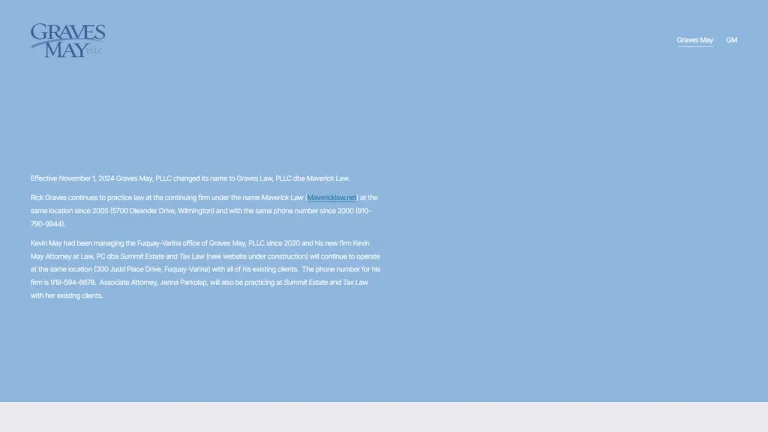
Maverick Law - Wilmington, NC
Kincaid & Associates, PLLC - Wilmington, NC
Compass Estate and Tax Planning - Cary, NC

McCuiston Law Offices, PLLC - Cary, NC

Defense Tax Partners - Tax Attorney, IRS Tax Relief & Audit Defense, Free Consultation - Durham, NC
Bruce Allen, Attorney - Fayetteville, NC
Carolina Estate Planning - Durham, NC
J. Wesley Casteen, Attorney - Wilmington, NC

Gallimore Levy Chrisawn Gallimore PLLC - High Point, NC
Bradford Law Offices, PLLC - Fayetteville, NC
Law Office of Anne Page Watson PLLC - Durham, NC
Cumberland Law Group, LLC - Charlotte, NC

Murchison, Taylor & Gibson, PLLC - Wilmington, NC
McPherson, Rocamora, Nicholson, Wilson & Hinkle, PLLC - Durham, NC
Taibi Law Group, PLLC - Durham, NC
Navigating State and Federal Tax Law Across North Carolina
Tax controversy and compliance in North Carolina require in-depth knowledge of both federal tax regulations and state tax administration. From corporate headquarters and financial institutions in Charlotte and Raleigh to manufacturing operations in Greensboro and technology startups in the Research Triangle, businesses and individuals face complex tax audits and assessments.
State-level tax enforcement is administered by the North Carolina Department of Revenue (NCDOR), headquartered in Raleigh. When formal tax assessments are contested, disputes proceed through administrative reviews before the NCDOR, the North Carolina Office of Administrative Hearings (OAH), and may escalate to the North Carolina Business Court or Wake County Superior Court.
North Carolina tax laws encompass individual income taxes, corporate franchise taxes, sales and use taxes, and pass-through entity tax elections under Chapter 105 of the General Statutes. Engaging a North Carolina tax attorney ensures that timely objections are preserved under N.C. Gen. Stat. § 105-241.11 and administrative remedies are exhausted to prevent unlawful levies or tax liens.
North Carolina Tax Representation & Legal Fee Guide
| Case Scenario | Fee Structure | Estimated Cost (USD) | Key Cost Determinants |
|---|---|---|---|
| NCDOR State Audit Defense & Response | Hourly or Flat Fee | $2,500 - $6,500 | Books and records volume, sales tax audit sampling, auditor conference needs |
| Formal Departmental Review & OAH Appeal | Hourly Rate | $4,000 - $12,000 | Administrative petition drafting, discovery motions, expert CPA testimony |
| North Carolina Corporate Restructuring & Tax Planning | Flat Fee or Hourly | $3,500 - $9,000 | Entity classification, multistate nexus analysis, franchise tax minimization |
| Business Court Tax Controversy Litigation | Hourly Rate | $15,000 - $45,000+ | Motion practice, trial duration, statutory interpretation of tax codes |
Critical Legal Deadlines & Statutes in North Carolina
Strict procedural deadlines govern North Carolina tax controversies. Upon receiving a Notice of Proposed Assessment from the NCDOR, a taxpayer has exactly 45 days to file a formal written Request for Departmental Review under N.C. Gen. Stat. § 105-241.11. Missing this 45-day deadline causes the proposed assessment to become final, collectible, and legally incontestable.
If the NCDOR issues a Notice of Final Determination following departmental review, the taxpayer must file a contested case petition with the Office of Administrative Hearings within 60 days pursuant to N.C. Gen. Stat. § 105-241.15. For state tax refund claims, taxpayers must file within the statutory period set forth in N.C. Gen. Stat. § 105-241.6, which is generally three years from the date the return was due or two years from the date the tax was paid, whichever is later.
Small Claims Court vs. Retaining Legal Counsel
The North Carolina Small Claims Court, presided over by a magistrate, handles minor civil disputes capped at $10,000 under N.C. Gen. Stat. § 7A-210. However, small claims courts have zero jurisdiction over tax assessment disputes with the North Carolina Department of Revenue or the IRS. State law mandates that tax appeals proceed exclusively through the administrative hearing mechanisms established in Chapter 105.
Representing yourself before the NCDOR or in the Office of Administrative Hearings carries significant risk. Departmental auditors and state attorneys are trained in complex statutory accounting standards, burden-of-proof rules, and penalty application. Retaining an attorney allows you to invoke statutory penalty waiver provisions under N.C. Gen. Stat. § 105-237, challenge nexus determinations, and negotiate favorable installment agreements without exposing yourself to bank garnishments or state tax warrants.
Red Flags to Avoid When Selecting a North Carolina Tax Attorney
- Missing the Strict 45-Day NCDOR Window: Any practitioner who delays filing the formal written request for review under N.C. Gen. Stat. § 105-241.11 forfeits your right to contest the state tax liability.
- Unfamiliarity with the NC Office of Administrative Hearings: Challenging state tax determinations requires experience with the specialized administrative rules of the OAH in Raleigh.
- Non-Attorney "Tax Resolution" Mills: Beware of out-of-state telemarketing firms that charge hefty upfront fees with boilerplate promises of pennies-on-the-dollar settlements.
- Ignoring State and Federal Interplay: A federal tax audit adjustment routinely triggers automatic state tax adjustments under North Carolina law; your lawyer must address both jurisdictions simultaneously.
Frequently Asked Questions
What should I do if I receive a Notice of Proposed Assessment from the NCDOR?
You must file a written Request for Departmental Review within 45 days of the date printed on the notice pursuant to N.C. Gen. Stat. § 105-241.11. Failure to act within 45 days makes the assessment final and collectible.
Can the North Carolina Department of Revenue waive tax penalties?
Yes. Under N.C. Gen. Stat. § 105-237, the Secretary of Revenue has discretionary authority to waive or reduce civil tax penalties upon a demonstration of reasonable cause or good faith compliance efforts.
How does North Carolina tax pass-through business entities?
North Carolina permits qualifying partnerships and S corporations to elect to pay state income tax at the entity level under N.C. Gen. Stat. § 105-154.100, providing a statutory workaround to the federal limit on state and local tax (SALT) deductions.
What is the role of the North Carolina Office of Administrative Hearings in tax cases?
The OAH is an independent quasi-judicial agency where an administrative law judge hears contested tax cases under N.C. Gen. Stat. § 150B-23 following an unfavorable Final Determination by the NCDOR.
What is the statute of limitations for filing a North Carolina tax refund claim?
Under N.C. Gen. Stat. § 105-241.6, a refund claim must be filed within three years from the date the return was due or within two years from the date the tax was paid, whichever period expires later.