
Commercial Real Estate Lawyers in Wilmington, NC
Retaining an accomplished commercial real estate lawyer in Wilmington protects your investments across commercial leasing, port logistics development, and land acquisition. Experienced local counsel navigates CAMA environmental permits, complex title searches, and municipal zoning approvals in New Hanover County. Browse our verified directory below to consult an experienced commercial real estate attorney in Wilmington today.

Law Office of Kelly M. Toms - Wilmington, NC

The Wortman Law Firm - Wilmington, NC
Seay Law Firm, PLLC - Wilmington, NC
Ward and Smith, P.A. - Wilmington, NC
Robert H Hochuli Jr - Wilmington, NC

Midtown Law - Wilmington, NC
Coastal Legal Counsel - Wilmington, NC
Rountree Losee LLP - Wilmington, NC

J.C. Hearne, II Attorney at Law - Wilmington, NC

The DeFrancesco Law Firm PLLC - Wilmington, NC
C. York Law, PLLC - Wilmington, NC
Coble Law Firm PC - Wilmington, NC
Carter & Carter, P.A., Attorneys at Law - Wilmington, NC

Equitas Law Partners LLP - Wilmington, NC
Boyles & Callihan, PLLC - Wilmington, NC
Collins & Collins Law Offices, PLLC - Wilmington, NC

Brooks Pierce - Wilmington, NC
Reiss & Nutt, PLLC - Wilmington, NC
J. Wesley Casteen, Attorney - Wilmington, NC

The Humphries Law Firm P.C. - Wilmington, NC
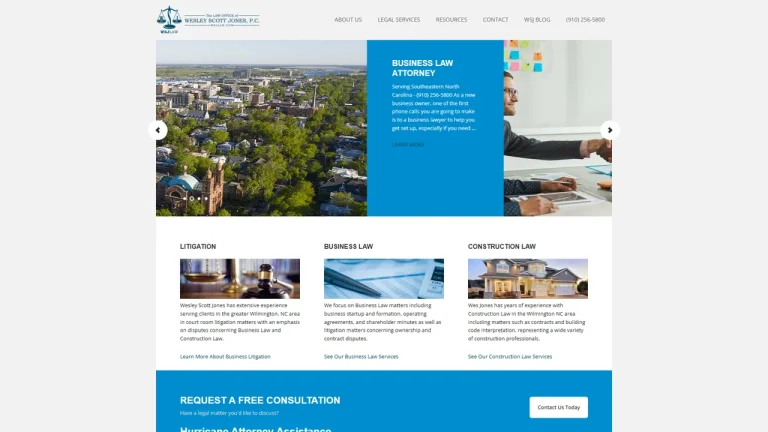
The Law Office of Wesley Scott Jones, P.C. - Wilmington, NC

Murchison, Taylor & Gibson, PLLC - Wilmington, NC
Hutchens Law Firm - Wilmington, NC
Commercial Real Estate Development and Leasing in Wilmington
Commercial growth across Wilmington encompasses diverse sectors, including maritime logistics near the Port of Wilmington, retail and office developments around Mayfaire Town Center, mixed-use commercial projects along the Cape Fear River, and industrial development on the US-421 corridor. Executing commercial property acquisitions, structuring commercial leases, and navigating complex municipal land use ordinances requires experienced legal guidance tailored to the New Hanover County market.
Commercial transactions in coastal North Carolina involve unique regulatory hurdles, particularly regarding environmental compliance. Projects near navigable waterways or wetlands require major development permits under the Coastal Area Management Act (CAMA) administered by the Division of Coastal Management. Furthermore, land development approvals, special use permits, and zoning variances require formal appearances before the Wilmington City Council or the New Hanover County Board of Commissioners.
When commercial real estate disputes arise-such as tenant lease defaults, mechanic lien priorities, or boundary litigation-matters are heard in the 5th Judicial District at the New Hanover County Courthouse on Princess Street. A skilled Wilmington commercial real estate lawyer provides rigorous contract negotiation, oversees environmental due diligence, and ensures closing documents comply with North Carolina strict recording statutes.
Estimated Pricing for Commercial Real Estate Services in Wilmington
| Case Scenario | Fee Structure | Estimated Cost (USD) | Key Cost Determinants |
|---|---|---|---|
| Commercial Lease Review & Tenant/Landlord Negotiation | Flat Legal Fee | $1,500 - $3,500 | Lease term length, personal guaranty clauses, common area maintenance (CAM) terms |
| Commercial Property Acquisition & Due Diligence Closing | Staged / Flat Closing Fee | $3,500 - $9,500 | Purchase price, Phase I environmental review, survey exceptions, title defect clearance |
| Land Use Rezoning & CAMA Development Permitting | Hourly Retainer | $5,000 - $15,000 | Public hearing appearances, municipal staff negotiations, environmental impact studies |
| Commercial Title Dispute & Mechanic's Lien Litigation | Hourly Retainer | $7,500 - $30,000+ | Discovery scope, contractor lien priority disputes, courtroom trial days |
Critical Legal Deadlines & Statutes in North Carolina
Commercial transactions and construction projects in Wilmington operate under strict statutory deadlines. North Carolina Conner Act under N.C. Gen. Stat. § 47-18 mandates that all commercial leases exceeding three years in duration must be formally recorded with the New Hanover County Register of Deeds to be enforceable against third-party purchasers or bankruptcy trustees. Executing and recording a memorandum of lease is vital to protect commercial tenancy rights.
For construction and commercial improvements, contractors and suppliers must comply with strict lien deadlines. Under N.C. Gen. Stat. § 44A-12, a claim of lien on real property must be filed within 120 days from the date labor or materials were last furnished to the site. The accompanying enforcement lawsuit must be filed within 180 days under N.C. Gen. Stat. § 44A-13. Additionally, parties appealing a CAMA permit decision by the Coastal Resources Commission face a twenty-day filing deadline pursuant to N.C. Gen. Stat. § 113A-121.1.
Small Claims Limits vs. Professional Representation in North Carolina
Under N.C. Gen. Stat. § 7A-210, North Carolina Small Claims Courts handle civil claims up to $10,000 before a local magistrate. While an unrepresented individual might consider small claims court for minor commercial deposit disputes, commercial real estate ventures involve corporate entities and contractual liabilities that vastly exceed magistrate court jurisdiction.
Under North Carolina law, business entities such as limited liability companies and corporations cannot represent themselves in North Carolina Superior Court and must be represented by a licensed attorney. Attempting to draft commercial leases or navigate complex acquisitions without legal counsel exposes businesses to personal guaranty enforcement, environmental liability under state statutes, and defective recording risks. Retaining a lawyer licensed by the North Carolina State Bar guarantees that contracts are legally binding and enforceable in the 5th Judicial District.
Red Flags When Hiring a Commercial Real Estate Lawyer
- Unfamiliarity with Coastal CAMA Regulations: Any attorney handling commercial land acquisition near Wilmington waterways must understand the Coastal Area Management Act permitting process.
- Failing to Record Memorandums of Lease: Commercial leases longer than three years are vulnerable under North Carolina pure race statute unless a memorandum is recorded with the Register of Deeds.
- Overlooking Environmental Phase I Assessments: In industrial or port-adjacent acquisitions, failure to require comprehensive environmental due diligence can leave the buyer liable for pre-existing contamination.
- Lack of Local Municipal Board Experience: Commercial rezoning requires practical experience appearing before the Wilmington Planning Commission and New Hanover County Board of Commissioners.
Frequently Asked Questions
Must commercial leases be recorded in New Hanover County?
Under N.C. Gen. Stat. § 47-18, any lease exceeding three years must have a memorandum of lease recorded with the New Hanover County Register of Deeds to protect against subsequent purchasers or creditors.
What is a CAMA Major Development Permit?
Governed by N.C. Gen. Stat. § 113A-118, a CAMA Major Development Permit is required for coastal projects covering more than twenty acres or involving structures exceeding 60,000 square feet in coastal areas of environmental concern.
What is the deadline for filing a commercial mechanic's lien in Wilmington?
A claim of lien must be filed within 120 days after the last furnishing of labor or materials under N.C. Gen. Stat. § 44A-12, followed by a lawsuit to enforce within 180 days under N.C. Gen. Stat. § 44A-13.
Can a corporate entity appear in Wilmington court without an attorney?
No. Under North Carolina law, corporations and limited liability companies cannot proceed pro se in District or Superior Court and must be represented by an attorney licensed by the North Carolina State Bar.
Where are commercial real estate deeds and mortgages recorded in Wilmington?
All commercial real estate deeds, mortgages, and plats are filed with the New Hanover County Register of Deeds located on Chestnut Street in downtown Wilmington.