
Defective Product Injury Lawyers in Wilmington, NC
Partnering with an experienced defective product injury lawyer in Wilmington, NC protects your rights when dangerous or faulty products cause severe harm. Skilled product liability attorneys hold negligent manufacturers accountable and navigate strict North Carolina defense bars. Explore our directory below to consult with top-rated Wilmington defective product counsel.
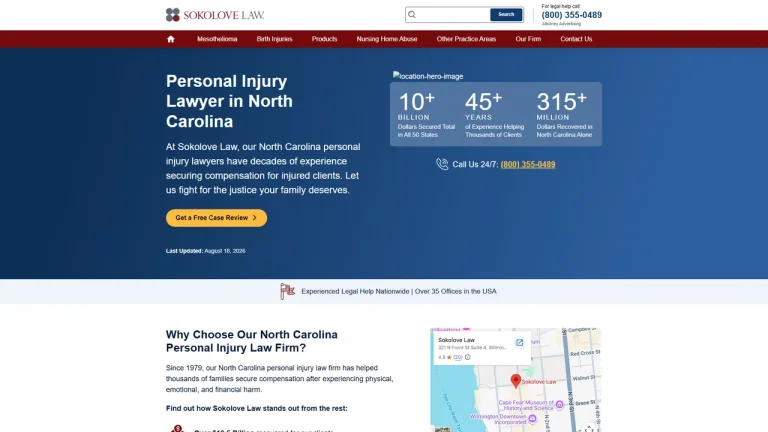
Sokolove Law - Wilmington, NC
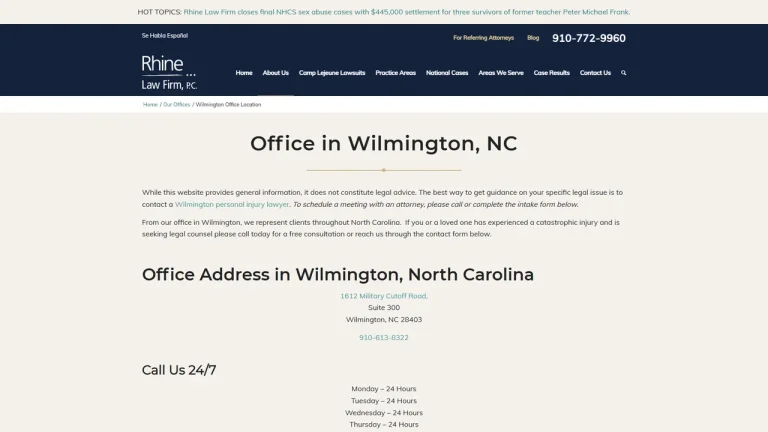
Rhine Law Firm - Wilmington, NC
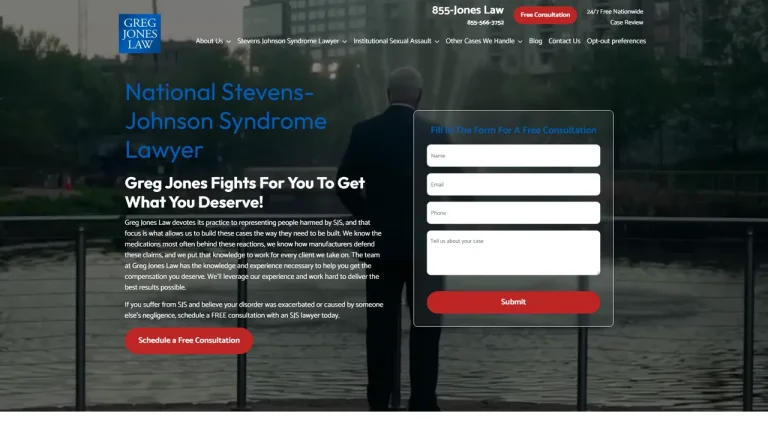
Greg Jones Law - Wilmington, NC
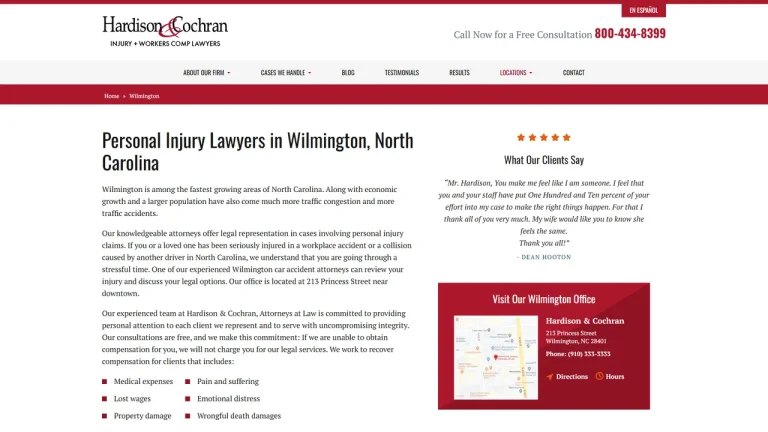
Hardison & Cochran - Injury & Workers Comp Lawyers - Wilmington, NC
Ennis Baynard Morton Medlin Brown P.L.L.C - Wilmington, NC

Navigating Products Liability Actions in Wilmington
Defective products cause catastrophic injuries and financial disruption to consumers and workers across Wilmington and New Hanover County. Serious product liability cases in the Cape Fear region stem from industrial machinery failures along the Port of Wilmington shipping terminals, marine equipment malfunctions, automotive component failures on Interstate 40, defective medical devices, contaminated consumer goods, and faulty lithium-ion battery fires. Holding corporate manufacturers accountable requires a deep understanding of state products liability law.
Under the North Carolina Products Liability Act, codified at N.C. Gen. Stat. § 99B-1 et seq., product defect claims operate under distinct statutory rules. Importantly, North Carolina does not recognize common-law strict liability in product defect cases pursuant to N.C. Gen. Stat. § 99B-1.1. To recover damages, an injured plaintiff must establish that the manufacturer or seller acted negligently in designing the product, failed to provide adequate warnings or instructions, or breached an implied warranty of merchantability.
Civil lawsuits involving defective products are filed in the New Hanover County Courthouse at 316 Princess Street in the 5th Judicial District, or are removed to the U.S. District Court for the Eastern District of North Carolina at the Alton Lennon Federal Courthouse on Princess Street due to corporate diversity. Retaining an experienced Wilmington product liability lawyer ensures that chain of custody over the product is secured and that independent engineering analyses are conducted.
Legal Fee Structures for Wilmington Product Liability Cases
| Case Scenario | Fee Structure | Estimated Cost (USD) | Key Cost Determinants |
|---|---|---|---|
| Defective Household Appliance or Power Tool Injury | Contingency Fee | 33.3% - 40% of net recovery ($0 upfront) | Product preservation status, electrical engineering testing, documented medical treatment records. |
| Automotive Defect (Airbag Failure, Seatback Collapse) | Contingency Fee | 33.3% - 40% of recovery ($0 upfront) | Vehicle storage fees, crash data retrieval analysis, biomechanical expert evaluations. |
| Industrial Machinery or Maritime Equipment Malfunction | Contingency Fee | 33.3% - 40% of recovery ($0 upfront) | OSHA inspection records, machine guarding standards, third-party maintenance contractor liability. |
| Defective Medical Implant or Pharmaceutical Litigation | Contingency Fee | 33.3% - 40% of recovery ($0 upfront) | Federal preemption defenses, Multidistrict Litigation (MDL) coordination, medical specialist reviews. |
Critical Legal Deadlines & Statutes in North Carolina
Product liability claims in North Carolina are governed by strict statutes of limitation and repose. Under N.C. Gen. Stat. § 1-52(16), a plaintiff must file a product liability personal injury lawsuit within three years from the date the bodily harm or damage becomes apparent. Waiting past this three-year window forfeits the right to recover damages.
In addition to the statute of limitations, North Carolina enforces a strict statute of repose. Under N.C. Gen. Stat. § 1-46.1(1), no action for personal injury or property damage arising out of an alleged product defect may be brought more than twelve years after the date of initial purchase for use or consumption. This twelve-year statute of repose serves as an absolute cutoff that can bar a lawsuit even if the injury occurred recently.
Substantive claims must satisfy specific statutory standards. Under N.C. Gen. Stat. § 99B-5, inadequate warning claims require proof that the manufacturer knew or should have known of the danger and failed to take reasonable precautions. For design defects, N.C. Gen. Stat. § 99B-6 mandates proof that the manufacturer acted unreasonably in designing the product and that a safer, practical, and economically feasible alternative design existed. Furthermore, under N.C. Gen. Stat. § 99B-3, manufacturers are shielded from liability if the product was subject to unauthorized alteration or modification.
Small Claims Limitations vs. Superior Court Products Liability Litigation
Under N.C. Gen. Stat. § 7A-210, the Small Claims Division of the New Hanover County District Court is restricted to monetary claims with a ceiling of $10,000. While small claims court can handle a modest dispute over a refund for a non-functional item, it is entirely inadequate for complex bodily injury product liability litigation.
Corporate manufacturers defend products liability lawsuits aggressively with national legal teams. Proving a design or manufacturing defect under N.C. Gen. Stat. § 99B-6 requires securing certified laboratory testing, retaining engineering expert witnesses, and conducting extensive corporate depositions. Retaining a dedicated Wilmington defective product attorney ensures that the product is safely stored under formal evidence preservation protocols and that litigation expenses are advanced to build a compelling claim in Superior Court or federal court.
Red Flags to Avoid When Hiring a Wilmington Defective Product Lawyer
- Failing to preserve the defective product: Discarding, repairing, or altering the product allows defense counsel to seek dismissal under spoliation of evidence rules.
- Overlooking the twelve-year statute of repose under N.C. Gen. Stat. § 1-46.1(1): An attorney must verify the original purchase date to ensure the claim is not time-barred.
- Demanding upfront out-of-pocket costs for expert witnesses: Reputable product liability law firms advance all expert, inspection, and deposition expenses on a contingency basis.
- Claiming strict liability applies in North Carolina: Lawyers must be familiar with N.C. Gen. Stat. § 99B-1.1 and plead negligence or breach of warranty rather than non-existent strict liability theories.
Frequently Asked Questions
Does North Carolina recognize strict liability for defective products?
No. Under N.C. Gen. Stat. § 99B-1.1, North Carolina does not recognize common-law strict liability in product defect claims; plaintiffs must prove negligence, breach of warranty, or failure to warn.
What is the 12-year statute of repose in North Carolina?
Under N.C. Gen. Stat. § 1-46.1(1), a product liability lawsuit cannot be brought more than 12 years after the date the product was first purchased for use, regardless of when the injury occurred.
What should I do with the defective product after an injury?
Keep the product in the exact condition it was in at the time of the incident, preserve all packaging, receipts, and manuals, and do not attempt to repair or alter the item.
How do I prove a design defect under North Carolina law?
Under N.C. Gen. Stat. § 99B-6, you must show that the manufacturer acted unreasonably and that a safer, practical, and economically feasible alternative design was available.
Can an injured worker sue a machinery manufacturer outside of workers comp?
Yes. While workers compensation is the exclusive remedy against an employer, an injured worker may file a third-party product liability lawsuit against the manufacturer of defective workplace equipment.