
Wills, Estate Planning & Probate Lawyers in Wilmington, NC
Retaining experienced wills, estate planning & probate lawyers in Wilmington, NC ensures your family assets are protected and estate administration runs smoothly. Dedicated counsel structures trusts, drafts healthcare directives, and guides executors through New Hanover County probate proceedings to prevent family disputes. Browse our directory below to consult with trusted estate planning and probate attorneys in the Cape Fear region.

Elder Law & Life Care Planning Center - Wilmington, NC

Boyles & Callihan, PLLC - Wilmington, NC

David E. Anderson, PLLC - Wilmington, NC
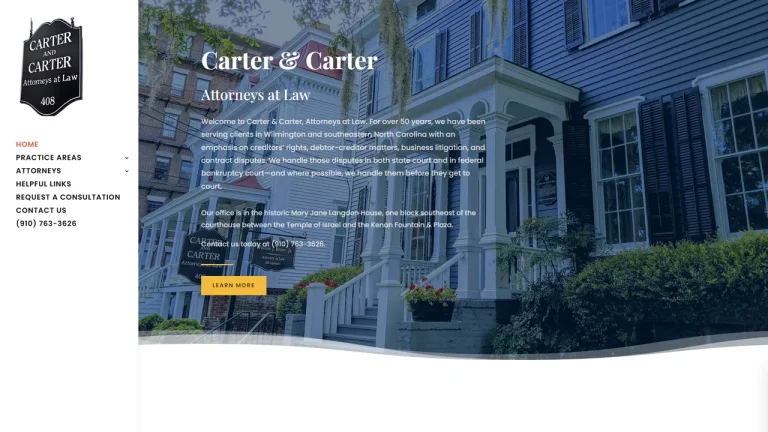
Carter & Carter, P.A., Attorneys at Law - Wilmington, NC
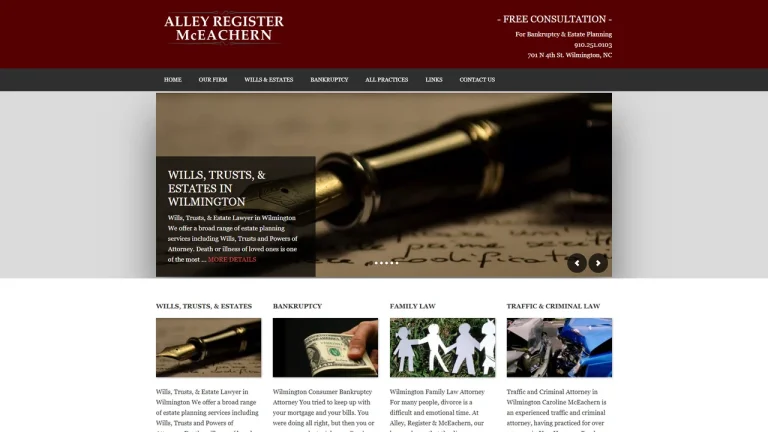
Alley, Register & McEachern Attorneys At Law - Wilmington, NC

Kohut, Adams and Randall, P.A. - Wilmington, NC

Equitas Law Partners LLP - Wilmington, NC

The Humphries Law Firm P.C. - Wilmington, NC
Robert H Hochuli Jr - Wilmington, NC
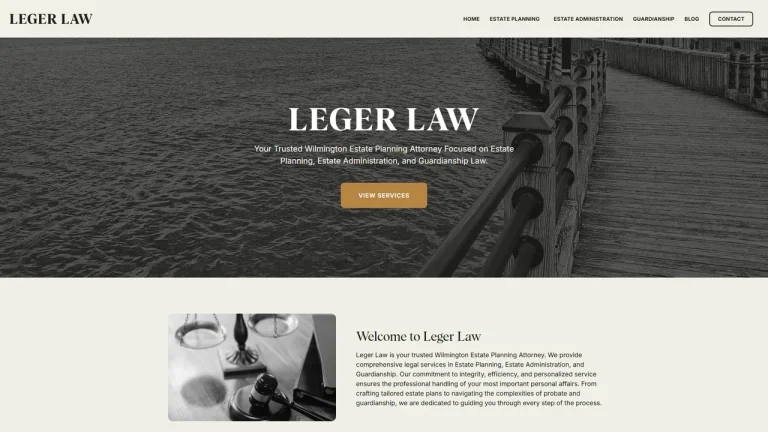
Leger Law, PLLC - Wilmington, NC

KEN NANCE LAW - Wilmington, NC
Maverick Law - Wilmington, NC
Coastal Legal Counsel - Wilmington, NC

Block Crouch Keeter Behm & Sayed, LLP - Wilmington, NC

Salines-Mondello Law Firm, PC - Wilmington, NC

Brooks Pierce - Wilmington, NC

Cline Donaldson PLLC - Wilmington, NC

Johnson Legal - Wilmington, NC
Ward and Smith, P.A. - Wilmington, NC

Kincaid & Associates, PLLC - Wilmington, NC

Donaldson Law PLLC - Wilmington, NC

Coble Law Firm PC - Wilmington, NC
Hutchens Law Firm - Wilmington, NC
Estate Planning and Probate Administration in New Hanover County
Planning for the future or settling the affairs of a deceased family member in Wilmington requires careful adherence to North Carolina probate and property statutes. From historic properties in Downtown Wilmington and family estates in Forest Hills to coastal residences across Wrightsville Beach, Carolina Beach, and Kure Beach, managing family wealth demands strategic legal structuring.
In North Carolina, probate matters are administered under the original and exclusive jurisdiction of the Clerk of Superior Court, who serves as the ex officio Judge of Probate. For Wilmington residents, estate filings, probate of wills, and executor qualifications occur at the New Hanover County Courthouse located on Princess Street within the 5th Judicial District. Local estate planning attorneys assist personal representatives in securing Letters Testamentary, auditing assets, and satisfying estate liabilities under local court oversight.
Developing an estate plan that incorporates revocable living trusts, durable financial powers of attorney, and healthcare advance directives protects individuals from court-supervised incompetency proceedings and allows assets to pass to heirs without the expense and delay of formal New Hanover County probate.
Legal Fee Structures for Estate Planning & Probate in Wilmington
| Case Scenario | Fee Structure | Estimated Cost (USD) | Key Cost Determinants |
|---|---|---|---|
| Basic Estate Plan (Will, Financial POA, Health Directive) | Flat Fee | $950 - $2,200 | Number of designated beneficiaries, specific property bequests, and minor guardianship designations. |
| Revocable Living Trust Estate Plan | Flat Fee | $2,500 - $5,500 | Real estate deed transfers to trust, coastal property titles, business succession terms, and tax planning. |
| Uncontested Formal Probate Administration | Flat Fee / Hourly ($275 - $475/hr) | $3,000 - $7,500 | Inventory verification, creditor claims, New Hanover County Clerk audit compliance, and accounting complexity. |
| Contested Probate Litigation & Will Caveat | Retainer + Hourly ($325 - $550/hr) | $10,000 - $30,000+ | Allegations of undue influence or lack of testamentary capacity, witness depositions, and Superior Court trial. |
Critical Legal Deadlines & Statutes in North Carolina
Estate administration in North Carolina is governed by mandatory statutory timetables. Under N.C. Gen. Stat. § 7A-241, the New Hanover County Clerk of Superior Court holds exclusive original jurisdiction over probate proceedings. Once an executor or administrator qualifies and receives Letters Testamentary under N.C. Gen. Stat. § 28A-6-1, they must publish a Notice to Creditors in a local newspaper once a week for four consecutive weeks pursuant to N.C. Gen. Stat. § 28A-14-1, providing creditors with a minimum 90-day window from the first publication date to present claims.
Personal representatives are also required to prepare and submit an itemized inventory of all estate personal and real property within 90 days of qualification as mandated by N.C. Gen. Stat. § 28A-20-1. A surviving spouse retains the statutory right to petition for a spousal year's allowance of $60,000 under N.C. Gen. Stat. § 30-15, which is exempt from general creditor claims. Furthermore, any party seeking to challenge the validity of a will probated in common form must file a caveat in the 5th Judicial District Superior Court within three years under N.C. Gen. Stat. § 31-32.
Small Claims Court vs. Formal Probate Proceedings
Small claims magistrate courts in New Hanover County operate under N.C. Gen. Stat. § 7A-210 with a jurisdictional ceiling of $10,000. However, small claims courts possess no subject-matter jurisdiction over estate settlements, trust administration, or executor oversight. For estates with personal property valued at $20,000 or less (or $30,000 if the surviving spouse is the sole heir), heirs may utilize a small estate affidavit pursuant to N.C. Gen. Stat. § 28A-25-1 directly through the Clerk of Superior Court.
When an estate exceeds these thresholds or involves real property, formal administration is required. Attempting to manage an estate pro se leaves personal representatives exposed to personal liability if debts are paid in the wrong statutory priority or funds are distributed prior to resolving creditor claims. A Wilmington probate lawyer ensures all accountings balance, titles are cleared through the New Hanover County Register of Deeds, and fiduciaries receive an official discharge of liability.
Red Flags to Avoid When Selecting an Estate Planning Lawyer
- Generic Online Templates: Boilerplate documents downloaded online often fail to comply with North Carolina execution rules, such as specific two-witness and notary requirements for wills and advance directives.
- Ignoring Coastal Real Estate Funding: Creating a trust without properly deeding Wilmington real estate to the trust leaves coastal property subject to formal New Hanover County probate.
- Opaque Fee Agreements: Avoid law firms that charge an arbitrary percentage of the total gross estate for routine probate administration instead of transparent flat or hourly rates.
- Missed Inventory Deadlines: Personal representatives face contempt citations and removal by the New Hanover County Clerk of Superior Court if statutory 90-day inventory deadlines are neglected.
Frequently Asked Questions
Where are probate documents filed in Wilmington, North Carolina?
Probate petitions and estate accountings are filed with the Estates Division of the New Hanover County Clerk of Superior Court at the New Hanover County Courthouse, located at 316 Princess Street in Wilmington.
What is the spousal year's allowance in North Carolina?
Under North Carolina law, a surviving spouse is entitled to an allowance of $60,000 from the decedent's personal property, which is prioritized over ordinary creditor claims and estate costs.
Does a will avoid probate in Wilmington, NC?
No. A last will and testament must be submitted to the New Hanover County Clerk of Superior Court for formal probate; avoiding probate generally requires a properly funded revocable living trust.
What qualifies for small estate administration in North Carolina?
An estate may be settled by affidavit if the total personal property value is $20,000 or less, or up to $30,000 if the surviving spouse inherits the entire estate and there are no other heirs.