
Wrongful Death Lawyers in North Carolina
Retaining a compassionate North Carolina wrongful death lawyer ensures your family's statutory rights are protected during estate administration and civil litigation. Experienced counsel navigates the state's strict contributory negligence defense, handles formal probate filings, and pursues full financial restitution. Browse our verified statewide directory below to consult with dedicated litigators today.

Burts Law, PLLC - Charlotte, NC

StephensonLaw, LLP - Cary, NC

Collier Law P.L.L.C - Charlotte, NC

The Doyle Law Offices, PA - Cary, NC

Edwards Kirby, LLP - Raleigh, NC

Mahoney Law, P.A. - Durham, NC

Benoit Law Firm, PLLC - Charlotte, NC

Hyland, Padilla and Fowler PLLC - Raleigh, NC

Attorney Mark M. Harris - Fayetteville, NC

Horton & Mendez, Injury & Car Accident Attorneys - Wilmington, NC
Gregory T. Whitley - Fayetteville, NC
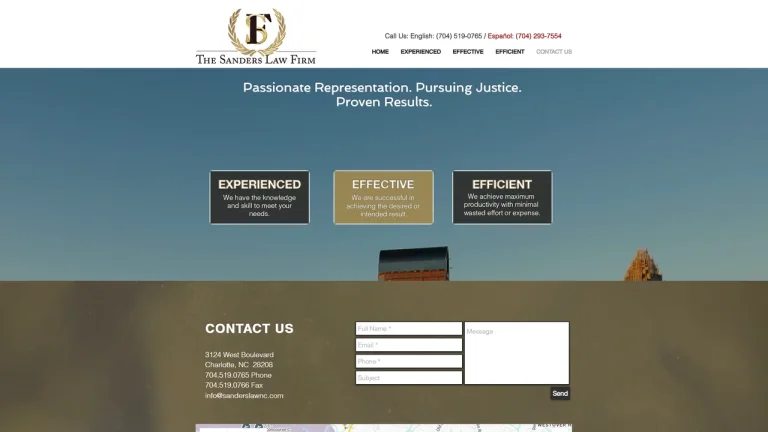
Sanders Law Firm - Charlotte, NC
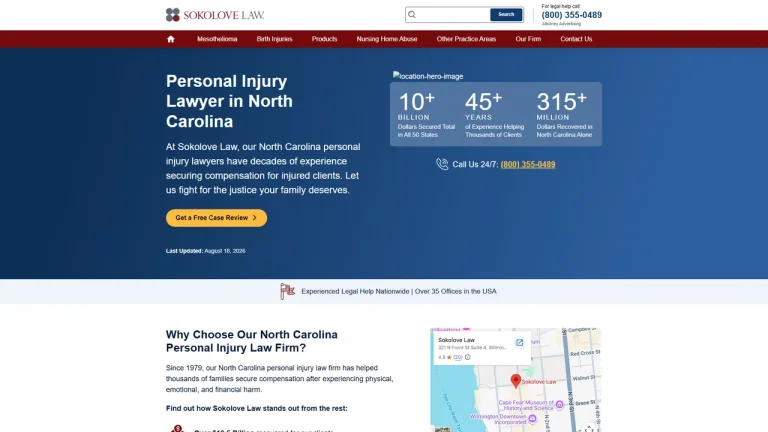
Sokolove Law - Wilmington, NC
Skager Law Firm: Philip Skager, J.D. - High Point, NC

Edwards Injury Law - Charlotte, NC

Burton Law Firm, PLLC - Raleigh, NC
Frasier & Griffin, PLLC - Durham, NC

The Law Offices of Harding and Andrade - Fayetteville, NC
MacRae & Whitley, LLP | Personal Injury Attorneys - Fayetteville, NC
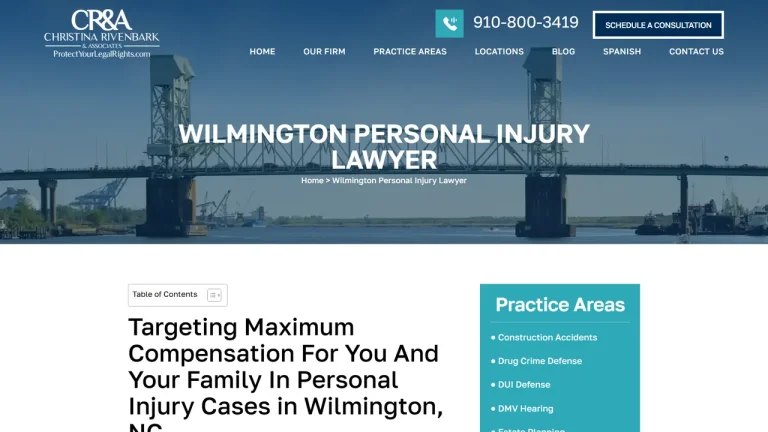
Christina Rivenbark & Associates - Wilmington, NC
Whitley Law Firm Injury Lawyers - Fayetteville, NC
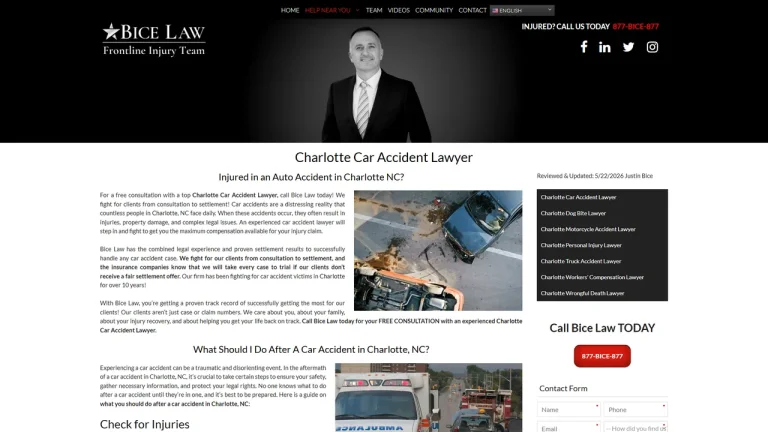
Bice Law LLC - Charlotte, NC

Kirkley & Stanley, PLLC - Charlotte, NC

Wrongful Death Litigation Across North Carolina Superior Courts
Pursuing accountability for a fatal incident in North Carolina requires strict adherence to statutory probate and civil trial procedures. Wrongful death lawsuits seeking significant monetary damages are litigated exclusively in the North Carolina Superior Court Division. Major regional centers-such as Mecklenburg County (Charlotte), Wake County (Raleigh), Guilford County (Greensboro), and Forsyth County (Winston-Salem)-maintain specialized civil case management procedures for high-stakes wrongful death dockets.
Under North Carolina law, a wrongful death claim cannot be brought directly by surviving family members in their individual capacities. The action must be filed solely by the formally appointed Personal Representative (administrator or executor) of the decedent's estate under the North Carolina Wrongful Death Act. The qualification and appointment process occurs before the Clerk of Superior Court in the county where the deceased resided, making coordinated probate and litigation representation essential.
Furthermore, North Carolina stands as one of the few jurisdictions upholding the pure contributory negligence doctrine. If the defense proves that the decedent was even one percent at fault for the underlying accident, financial recovery is completely barred under state law. Retaining an attorney admitted by the North Carolina State Bar ensures that accident reconstruction, electronic records, and eyewitness testimony are leveraged to defeat contributory negligence arguments and prove gross negligence or the Last Clear Chance doctrine.
Estimated Case Scenarios and Fee Structures for Wrongful Death
| Case Scenario | Fee Structure | Estimated Cost (USD) | Key Cost Determinants |
|---|---|---|---|
| Fatal Motor Vehicle & Commercial Trucking Crash | Contingency Fee | 33.3% - 40% of Recovery | Contributory negligence defense rebuttals, commercial policy limits, electronic logs. |
| Fatal Workplace Third-Party Liability Claim | Contingency Fee | 33.3% - 40% of Recovery | Coordination with NCIC death benefits, OSHA investigation reports, equipment defects. |
| Medical Malpractice Resulting in Fatal Injury | Contingency Fee | 35% - 45% of Recovery | Mandatory Rule 9(j) expert medical certifications, hospital corporate liability, trial length. |
| Premises Liability & Inadequate Security Fatality | Contingency Fee | 33.3% - 40% of Recovery | Prior criminal activity patterns, property ownership records, expert security modeling. |
Critical Legal Deadlines & Statutes in North Carolina
Wrongful death claims are governed by the North Carolina Wrongful Death Act, codified at N.C. Gen. Stat. § 28A-18-2. Crucially, while ordinary personal injury actions in the state allow a three-year window, N.C. Gen. Stat. § 1-53(4) establishes a strict two-year statute of limitations for wrongful death claims, running from the exact date of the decedent's death. Missing this two-year deadline completely bars the estate from pursuing recovery.
Defendants routinely assert the affirmative defense of contributory negligence under N.C. Gen. Stat. § 1-139, requiring the plaintiff's legal team to prove the defendant had the last clear chance to avoid the collision or acted with willful and wanton misconduct. When catastrophic actions merit exemplary damages, punitive damages are governed by N.C. Gen. Stat. § 1D-15 and capped under N.C. Gen. Stat. § 1D-25 at three times compensatory damages or $250,000, whichever is greater. Furthermore, under N.C. Gen. Stat. § 28A-18-2, proceeds recovered are distributed according to the Intestate Succession Act at N.C. Gen. Stat. § 29-1 and are protected from the claims of general creditors of the estate.
Superior Court Jurisdiction vs. Self-Representation Hazards
North Carolina Small Claims Courts are limited to $10,000 under N.C. Gen. Stat. § 7A-210, and they hold zero jurisdiction over fatal injury claims. Wrongful death litigation belongs exclusively in the Superior Court Division, where claims routinely involve substantial damages and complex procedural motions.
Self-representation is legally impossible without formal appointment as Personal Representative through the Clerk of Superior Court. Grieving family members who attempt to communicate directly with commercial liability insurers often fall victim to recorded interview traps designed to manufacture evidence of the decedent's contributory negligence. Professional legal counsel qualifies the estate, issues formal preservation letters for commercial black-box data and surveillance footage, retains forensic economists to quantify the present monetary value of the decedent, and presents a compelling liability case before a Superior Court jury.
Red Flags When Selecting a North Carolina Wrongful Death Attorney
- Failing to immediately open an estate with the Clerk of Superior Court to secure standing as Personal Representative before filing legal claims.
- Demanding upfront out-of-pocket litigation expenses or hourly retainers for a contingency wrongful death action.
- Lack of deep experience in defeating North Carolina's pure contributory negligence affirmative defense in trial courts.
- Inability to finance the substantial costs of expert accident reconstructionists, toxicologists, and economic loss professionals.
Frequently Asked Questions
Who is legally permitted to file a wrongful death lawsuit in North Carolina?
Under N.C. Gen. Stat. § 28A-18-2, only the formally appointed Personal Representative (executor or administrator) of the decedent's estate can bring a wrongful death lawsuit, not individual family members.
What is the statute of limitations for wrongful death in North Carolina?
Pursuant to N.C. Gen. Stat. § 1-53(4), a wrongful death lawsuit must be filed within two years from the date of the decedent's death, which is one year shorter than the standard personal injury deadline.
How does contributory negligence impact a wrongful death lawsuit in NC?
Under N.C. Gen. Stat. § 1-139, if the defendant proves the decedent was even one percent at fault, all recovery is barred unless the estate proves the defendant had the last clear chance or acted with gross negligence.
How are wrongful death proceeds distributed under North Carolina law?
Under N.C. Gen. Stat. § 28A-18-2, settlement proceeds pass to legal heirs according to the Intestate Succession Act under N.C. Gen. Stat. § 29-1, free from general creditor claims against the estate.
Can punitive damages be recovered in a North Carolina wrongful death action?
Yes. Punitive damages may be awarded for malice or willful and wanton conduct under N.C. Gen. Stat. § 1D-15, subject to the statutory cap under N.C. Gen. Stat. § 1D-25.