
Car Accident Lawyers in North Dakota
Retaining an experienced North Dakota car accident lawyer ensures your rights are protected under the state's modified no-fault and comparative fault statutes. Qualified local counsel navigates mandatory PIP insurance benefits, establishes the serious injury threshold, and negotiates directly with insurers to avoid prolonged trial litigation. Explore our verified statewide directory below to consult with trusted auto injury attorneys.
Pagel Hager Law Firm - Bismarck, ND
McCabe Law Firm Bismarck, ND
Ruth Law Firm - Fargo, ND

Robins Kaplan LLP - Bismarck, ND
O'Keeffe O'Brien Lyson Attorneys - Fargo, ND

David Bossart Law Firm - Fargo, ND
Maring Williams Law Office - Bismarck, ND
Vogel Law Firm - BISMARCK, ND
King Law PC - Bismarck, ND

Goldberg & Loren - Fargo, ND
Vogel Law Firm - Fargo, ND
Herbel Law Firm - Bismarck, ND
Penn Kestner & McEwen - ND Truck Accident Lawyers - Fargo, ND
Larson Law Injury & Accident Lawyers - Fargo, ND
Lowe Law Group - Bismarck, ND
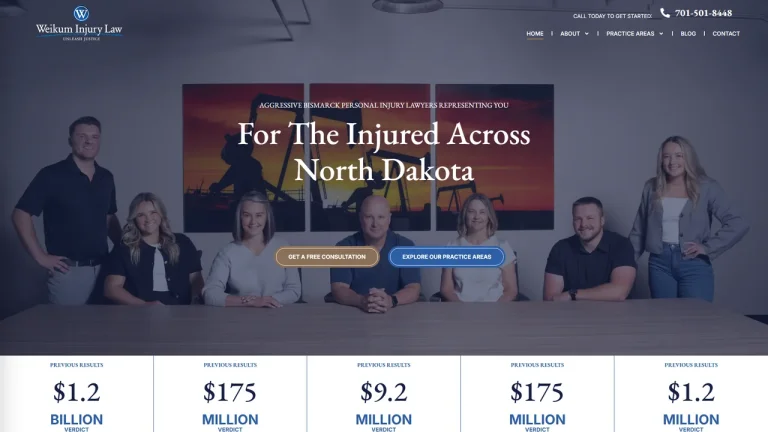
Weikum Injury Law, Bismarck, ND
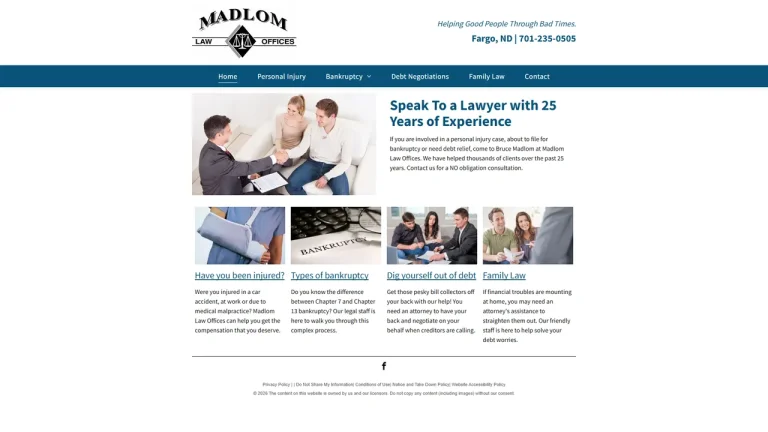
Madlom Law Office - Fargo, ND
Robert Quick Law - Bismarck, ND
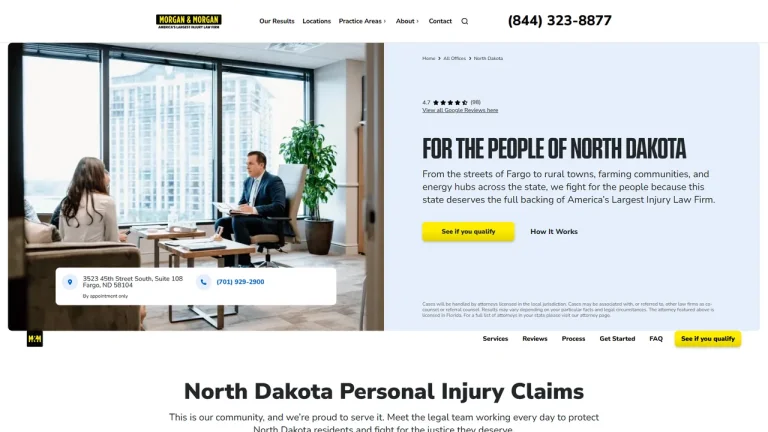
Morgan & Morgan - Fargo, ND
Severin Ringsak & Morrow - Bismarck, ND
Maring Williams Law Office - Fargo, ND
Nicolet Law Accident and Injury Lawyers - Fargo, ND
Schweigert, Klemin & McBride, P.C. - BISMARCK, ND

Navigating Motor Vehicle Collision Claims in North Dakota Courts
Motor vehicle accident claims in North Dakota require navigating a distinct hybrid system of no-fault insurance coverage and civil tort litigation. When collisions result in serious injuries or contested liability, claims are litigated across the North Dakota District Courts, organized into eight judicial districts. From bustling commercial intersections in Fargo (East Central Judicial District) and Grand Forks (Northeast Central Judicial District) to state transit corridors in Bismarck (South Central Judicial District) and Minot (North Central Judicial District), local court procedures dictate litigation progression.
North Dakota operates under the Auto Accident Reparations Act, requiring motor vehicle owners to carry basic no-fault Personal Injury Protection (PIP) coverage. This mandatory coverage pays for initial medical bills and lost wages regardless of who caused the collision. However, when accident trauma results in substantial medical treatment or permanent impairment, injured parties must satisfy statutory thresholds to pursue non-economic damages, such as physical pain and mental suffering, against the at-fault driver.
Engaging a personal injury attorney admitted by the State Bar Association of North Dakota provides crucial protection against aggressive insurance carriers. Local practitioners understand winter highway hazards, multi-vehicle pileups on Interstate 94 and Interstate 29, and rural road conditions. Experienced counsel obtains collision reports from the North Dakota Highway Patrol (NDHP), coordinates with treating physicians, and manages complex insurance subrogation liens.
Estimated Car Accident Fee Structures and Litigation Scenarios
| Case Scenario | Fee Structure | Estimated Cost (USD) | Key Cost Determinants |
|---|---|---|---|
| Basic PIP Benefit Settlement & Uncontested Claim | Contingency / Hourly | 33.3% of Recovery | Exhaustion of mandatory $30,000 PIP limits, medical record reviews, clear policy coverage. |
| Serious Injury Threshold Third-Party Claim | Contingency Fee | 33.3% of Recovery | Documenting $2,500 in medical bills or 60 days disability, proving at-fault driver liability. |
| Disputed Liability & Comparative Fault Negotiation | Contingency Fee | 33.3% - 40% of Recovery | Accident reconstruction, witness depositions, keeping plaintiff fault below 50% bar. |
| Multi-Party Crash & District Court Jury Trial | Contingency Fee | 35% - 40% of Recovery | Multi-vehicle collisions, expert economic loss modeling, several liability defense cross-exams. |
Critical Legal Deadlines & Statutes in North Dakota
Personal injury lawsuits arising from motor vehicle collisions are subject to clear statutory filing windows. Under N.D.C.C. § 28-01-16(5), North Dakota enforces a six-year statute of limitations for personal injury lawsuits grounded in negligence, representing one of the most generous filing periods in the country. However, if a car accident results in a fatality, a much shorter limitations period applies under N.D.C.C. § 28-01-18(4), requiring wrongful death lawsuits to be commenced within two years from the date of death.
North Dakota adheres to a modified comparative fault rule with a 50 percent bar, codified under N.D.C.C. § 32-03.2-02. Under this statute, an injured plaintiff cannot recover any damages if their percentage of fault is equal to or greater than the combined fault of all other parties involved. If the plaintiff is 49 percent or less at fault, their financial recovery is diminished in direct proportion to their allocated fault. Furthermore, under the North Dakota Auto Accident Reparations Act at N.D.C.C. § 26.1-41-08, an injured party cannot maintain a tort claim for non-economic loss unless they meet the serious injury threshold defined in N.D.C.C. § 26.1-41-01(21), which requires medical expenses exceeding $2,500, disability exceeding 60 days, serious permanent disfigurement, or death.
Small Claims Limitations vs. Professional Representation
Under North Dakota law, Small Claims Court handles disputes up to a statutory ceiling of $15,000 under N.D.C.C. § 27-08.1-01. While an individual seeking reimbursement for isolated vehicle bumper damage might consider small claims court, bodily injury claims belong in the District Court.
Proceeding pro se in an auto collision claim presents significant financial risks. Auto insurers routinely leverage North Dakota's modified comparative fault rule under N.D.C.C. § 32-03.2-02 to assign 50 percent or more of the blame to self-represented claimants, extinguishing all financial recovery. In addition, unrepresented individuals often fail to understand statutory PIP subrogation rules or miss opportunities to claim non-economic damages under serious injury exceptions. Retaining experienced legal counsel ensures that crash reconstruction evidence is preserved, medical records establish the statutory tort threshold, and maximum compensation is recovered.
Red Flags When Selecting a North Dakota Car Accident Attorney
- Demanding upfront retainer fees or out-of-pocket litigation expenses on standard motor vehicle contingency claims.
- Failing to explain the mandatory serious injury threshold requirements under N.D.C.C. § 26.1-41-08 before accepting a case.
- Advising an injured person to sign a quick release before medical treatment is concluded and PIP benefits are exhausted.
- Lack of jury trial experience in the specific North Dakota District Court where the lawsuit must be docketed.
Frequently Asked Questions
Is North Dakota a no-fault car insurance state?
Yes. Under N.D.C.C. § 26.1-41-01, North Dakota utilizes a modified no-fault insurance system where your own auto insurer pays Personal Injury Protection (PIP) benefits for medical care and lost earnings up to policy limits regardless of fault.
What is the serious injury threshold required to sue an at-fault driver?
Under N.D.C.C. § 26.1-41-01(21) and N.D.C.C. § 26.1-41-08, you can sue for pain and suffering if your medical expenses exceed $2,500, your disability exceeds 60 days, or you suffer serious disfigurement, dismemberment, or death.
What is the statute of limitations for a car accident lawsuit in North Dakota?
Pursuant to N.D.C.C. § 28-01-16(5), you have six years from the date of the accident to file a personal injury lawsuit, while wrongful death lawsuits must be filed within two years under N.D.C.C. § 28-01-18(4).
How does modified comparative fault affect my settlement in North Dakota?
Under N.D.C.C. § 32-03.2-02, you can recover damages as long as your fault is 49 percent or less, with your compensation reduced by your percentage of fault. If you are found 50 percent or more at fault, you recover nothing.
What minimum PIP coverage is required on North Dakota auto policies?
North Dakota law mandates basic Personal Injury Protection (PIP) limits of at least $30,000 per person to cover medical treatment, loss of income, and essential services following a collision.