
Patent Attorneys in North Dakota
Retaining a licensed North Dakota patent attorney ensures your inventions and proprietary technologies receive rigorous protection under federal patent law. Registered patent counsel conducts prior art clearance searches, prepares defensible patent applications, and protects inventions against infringement. Explore our directory below to connect with qualified patent practitioners across the Peace Garden State.
Fredrikson & Byron, P.A. - Bismarck, ND
FireCastle - Fargo, ND
Danielson Legal LLC - Fargo, ND
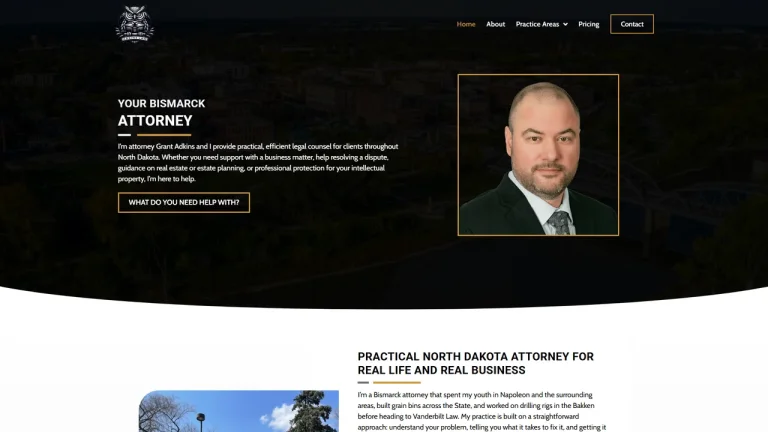
Adkins Law - Bismarck, ND

Neustel Law Offices - Fargo, ND
Federal Patent Jurisdiction and Intellectual Property Practice in North Dakota
Patent law is exclusively governed by federal statute under Title 35 of the United States Code. Under 28 U.S. Code § 1338(a), federal courts possess exclusive jurisdiction over civil actions arising under federal patent laws, completely barring state courts from deciding patent validity or infringement.
Practitioners must be registered with the United States Patent and Trademark Office (USPTO) under 37 C.F.R. § 11.7, requiring technical and scientific degrees alongside legal qualifications. In North Dakota, patent attorneys serve vital innovation hubs-including agricultural technology (AgTech) research clusters at North Dakota State University in Fargo, unmanned aerial systems (UAS) and aerospace initiatives in Grand Forks, and heavy industrial and oilfield extraction technologies across the Williston Basin and Bismarck.
Patent litigation in North Dakota proceeds before the U.S. District Court for the District of North Dakota, with divisions in Fargo and Bismarck, or before the Patent Trial and Appeal Board (PTAB). Related state-law claims-such as trade secret misappropriation under the North Dakota Uniform Trade Secrets Act, N.D. Cent. Code § 47-25.1-01-proceed through the North Dakota District Courts.
Estimated Fee Schedules and Service Costs for Patent Representation
| Case Scenario | Fee Structure | Estimated Cost (USD) | Key Cost Determinants |
|---|---|---|---|
| Patentability Search & Prior Art Opinion | Flat Fee ($1,200 - $2,500) | $1,200 - $2,500 | Multi-database USPTO/WIPO searches, claim clearance review, novel feature evaluation. |
| Provisional Patent Application Filing | Flat Fee ($2,000 - $4,500) | $2,000 - $4,500 | Technical blueprint drafting, comprehensive enabling disclosures, filing fee compliance. |
| Non-Provisional Utility Patent (AgTech / Mechanical / Energy) | Flat Fee or Hourly ($325 - $550/hr) | $7,000 - $15,000 | Technical complexity, independent and dependent claim drafting, formal patent drawing preparation. |
| USPTO Office Action Response & Prosecution | Hourly Retainer ($350 - $550/hr) | $2,500 - $6,000 | Overcoming Section 102 prior art and Section 103 obviousness rejections, examiner interviews. |
Critical Legal Deadlines & Statutes in North Dakota
Protecting patentable assets in North Carolina or North Dakota requires strict observation of statutory filing timelines:
- One-Year On-Sale Bar & Grace Period: Under 35 U.S. Code § 102(b) of the America Invents Act (AIA), an inventor has a strict one-year grace period to file a patent application following the first public disclosure, sale, or commercial offer of the invention.
- 12-Month Provisional Application Deadline: Pursuant to 35 U.S. Code § 119(e), an applicant must file a corresponding non-provisional utility patent application within exactly 12 months of filing a provisional application to preserve the earlier priority date.
- Patent Damages Limitation Window: Under 35 U.S. Code § 286, no recovery of damages can be obtained for any patent infringement committed more than six years prior to the filing of the complaint.
- Trade Secret Statute of Limitations: Under the North Dakota Uniform Trade Secrets Act, codified at N.D. Cent. Code § 47-25.1-06, an action for misappropriation of a trade secret must be brought within three years after the misappropriation is discovered or reasonably should have been discovered.
Small Claims Court Jurisdictional Bar vs. Hiring a Registered Patent Attorney
In North Dakota, Small Claims Courts are limited to recovery of up to $15,000 under N.D. Cent. Code § 27-08.1-01. However, state small claims courts and North Dakota District Courts have zero authority to grant patents, decide infringement claims, or determine patent validity due to exclusive federal jurisdiction under 28 U.S. Code § 1338(a).
Patent drafting requires specialized technical precision: a poorly drafted claim can result in total forfeiture of rights or render a patent vulnerable to immediate invalidation. Only attorneys admitted to the USPTO patent bar under 37 C.F.R. § 11.7 are legally authorized to prosecute patents before the federal patent office. Engaging registered patent counsel ensures your proprietary technology is protected with enforceable claim scope.
Red Flags to Avoid When Selecting a North Dakota Patent Attorney
- Non-USPTO Registered "Invention Promotion" Companies: Beware of unlicensed marketing firms that promise to evaluate and commercialize your invention for thousands in upfront fees without providing registered USPTO patent attorneys.
- Guarantees of Patent Issuance: Ethical patent practitioners licensed by the USPTO and the State Bar of North Dakota cannot guarantee that a patent will issue; patentability is determined by federal patent examiners.
- Lack of Relevant Technical or Scientific Background: Patent law requires scientific aptitude; ensure your patent attorney possesses relevant training in mechanical engineering, agricultural biology, software, or chemical extraction.
- Inadequate Prior Art Searches: Filing non-provisional patent applications without a thorough prior art search risks wasted investments and immediate rejections based on existing patents.
Frequently Asked Questions
What qualifications are required to practice patent law in North Dakota?
To practice patent prosecution before the USPTO, a lawyer must hold a recognized degree in engineering, physical sciences, or computer science, pass the USPTO patent registration examination, and be registered under 37 C.F.R. § 11.7.
What is the difference between a provisional and non-provisional patent application?
A provisional application under 35 U.S. Code § 111(b) establishes an early filing priority date without formal patent claims and is never examined. A non-provisional application under 35 U.S. Code § 111(a) includes formal claims, is examined by the USPTO, and can mature into an enforceable utility patent.
How long does patent protection last in the United States?
Under 35 U.S. Code § 154(a)(2), a utility patent term lasts for 20 years from the earliest effective non-provisional filing date, subject to timely payment of maintenance fees.
What is the America Invents Act (AIA) first-to-file rule?
Under 35 U.S. Code § 102, patent priority is awarded to the first inventor to file a patent application with the USPTO rather than the first person to conceive the invention, making early filing vital.
Can software and agricultural technology algorithms be patented?
Yes, provided the application demonstrates a practical, technological improvement or technical transformation under the patent eligibility framework of 35 U.S. Code § 101, rather than merely an abstract mathematical formula.