
Accident & Injury Lawyers in Ohio
Securing representation from a qualified Ohio accident and injury attorney safeguards your financial recovery under state civil statutes. Dedicated legal counsel manages insurer negotiations, gathers essential evidence, and pursues optimal settlements without unnecessary court delays. Review our verified directory to connect with trusted Ohio injury lawyers today.

Oscar E. Rodriguez Attorney - Cleveland, OH

Maurice M. Henderson III Co. LPA - Columbus, OH

Slater & Zurz LLP - Canton, OH

Brenner Law Personal Injury and Accident Attorney - Columbus, OH

Croskery Law Office - Cincinnati, OH

Eric A Firestone Law Offices - Canton, OH

Gordon Rees Scully Mansukhani, LLP - Cleveland, OH
William A. Posey - Cincinnati, OH
Scanlon & Company - Akron, OH
James R. Willis Attorney at Law - Cleveland, OH
Clements, Taylor, Butkovich & Cohen LPA, Co. Attorneys at Law - Cincinnati, OH

Fortress Law Group, LLC - Cleveland, OH
Thomas J. Silk, Attorney at Law - Cleveland, OH
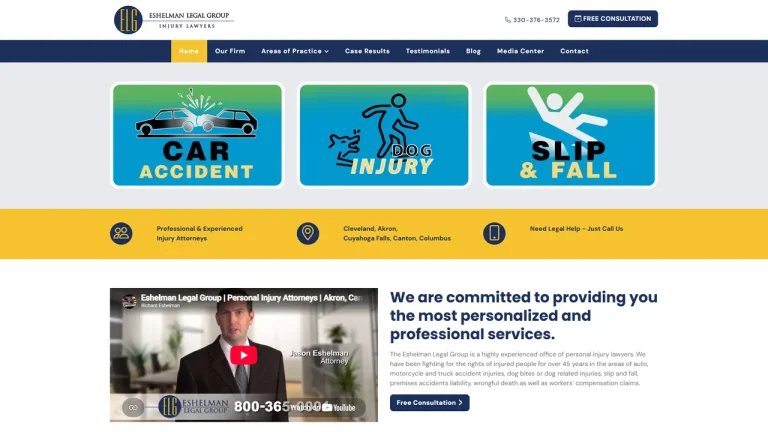
Eshelman Legal Group - Columbus, OH
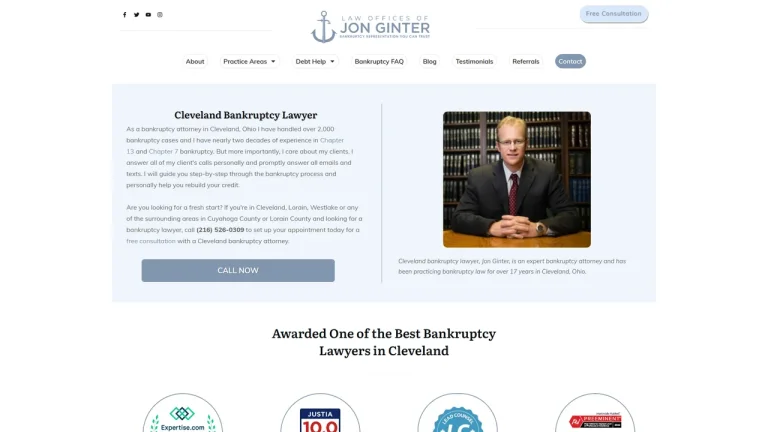
Attorney Nathan Cemenska - Cleveland, OH

Abramson & O'Connell, LLC - Columbus, OH

Margolius, Margolius & Associates - Columbus, OH

Jones Law Group - Columbus, OH

Law Offices of Charles W. Kranstuber, LPA - Columbus, OH

R. Brian Moriarty, L.L.C. - Cleveland, OH

The Law Office of Craig Scott and Company, LPA - Columbus, OH
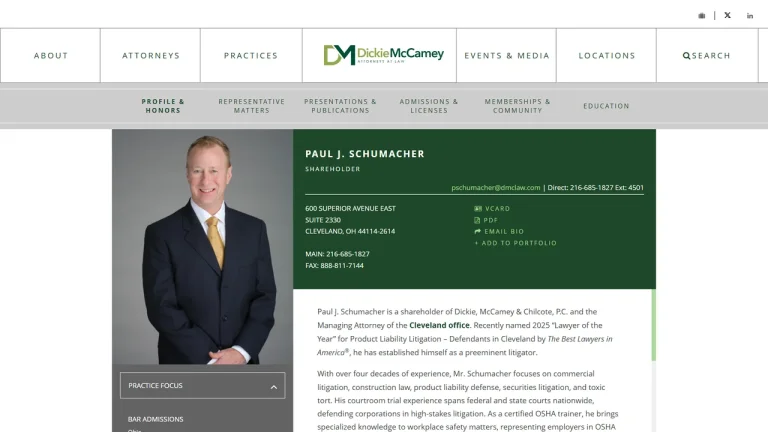
Paul J. Schumacher - Cleveland, OH

Brenden Kelley Law - Cleveland, OH

Navigating Ohio Personal Injury Jurisdictions and Civil Litigation
Resolving an injury claim in Ohio requires navigating a structured civil court system anchored by county Courts of Common Pleas. Whether your collision occurred along the Interstate 71 corridor in Columbus, on Interstate 90 in Cleveland, or across Hamilton County in Cincinnati, claims exceeding municipal limits fall under the jurisdiction of these regional trial courts.
The Ohio Rules of Civil Procedure govern all formal complaint filings, written discovery, and pretrial settlement conferences. Seasoned Ohio personal injury attorneys routinely engage insurance carriers in rigorous alternative dispute resolution (ADR) or mediation sessions, frequently securing equitable financial recoveries before reaching a trial jury.
For claims involving state government entities, such as state-operated transit or highway maintenance vehicles, proceedings must be filed directly in the Ohio Court of Claims in Franklin County. Retaining legal counsel familiar with local judicial standing orders across Ohio courts ensures strict adherence to filing protocols.
Ohio Personal Injury Fee Structures & Representation Costs
| Case Scenario | Fee Structure | Estimated Cost (USD) | Key Cost Determinants |
|---|---|---|---|
| Minor Motor Vehicle Collision (Soft Tissue) | Standard Contingency Fee | 33.3% of settlement ($3,000 - $12,000) | Policy limit clarity, chiropractic records, medical lien resolutions |
| Commercial Trucking Collision or Premises Liability | Contingency Fee (Pre-suit vs. Trial) | 33.3% to 40% ($25,000 - $150,000+) | Accident reconstruction experts, electronic log audits, multiple commercial policies |
| Catastrophic Injury or Medical Malpractice | Graduated Contingency Fee | 33.3% to 40% ($100,000 - $750,000+) | Life care planning assessments, vocational economic testimony, affidavit of merit |
| Disputed Uninsured / Underinsured Motorist Claim | Contingency / Hourly Hybrid Option | 33.3% or $250 - $400/hr ($4,000 - $20,000) | First-party insurance arbitration clauses, medical payment subrogation waivers |
Critical Legal Deadlines & Statutes in Ohio
Adhering to statutory deadlines is essential for protecting your right to civil recovery in Ohio. Under Ohio Rev. Code § 2305.10, the statute of limitations for personal injury actions based on bodily injury or damage to personal property is strictly two years from the date the cause of action accrues.
For fatal incidents, surviving family members must initiate a wrongful death action within two years from the date of the decedent's passing under Ohio Rev. Code § 2125.02. Failing to file within this window permanently extinguishes your claim, regardless of liability.
Ohio adheres to a modified comparative fault rule codified under Ohio Rev. Code § 2315.33. A plaintiff may recover damages only if their contributory fault is 50 percent or less. If your share of fault is determined to be 51 percent or higher, state law bars any financial recovery entirely.
Furthermore, noneconomic damages-such as pain, suffering, and mental anguish-are governed by statutory caps established in Ohio Rev. Code § 2315.18. In standard injury claims, noneconomic awards cannot exceed the greater of $250,000 or three times the economic damages, up to an absolute maximum of $350,000 per plaintiff ($500,000 per occurrence). These statutory caps do not apply if the injury involves catastrophic physical trauma, permanent functional loss of a limb, or substantial physical deformity.
Small Claims Limits vs. Professional Legal Representation
The Small Claims Division of Ohio Municipal and County Courts provides an accessible venue for resolving minor monetary disputes. Under Ohio Rev. Code § 1925.02, the monetary jurisdiction of an Ohio small claims court is strictly capped at $6,000, exclusive of court costs and statutory interest.
If you are pursuing minor vehicle property damage or isolated out-of-pocket medical expenses under $6,000, filing pro se in your local Municipal Court-such as the Franklin County Municipal Court, Cleveland Municipal Court, or Hamilton County Municipal Court-can be an efficient option. Hearings are informal, evidentiary rules are relaxed, and magistrates oversee proceedings directly.
However, when personal injuries involve bodily trauma, ongoing physical therapy, lost earnings, or disputed liability, filing in small claims court forces you to forfeit any damages exceeding the $6,000 statutory limit. In these circumstances, retaining an experienced injury attorney to file in the Court of Common Pleas protects your full claim value and positions you to recover comprehensive noneconomic and economic compensation.
Red Flags When Hiring an Ohio Injury Attorney
- Unlawful Solicitation: Be vigilant against unsolicited phone calls, direct messaging, or hospital visits from representatives seeking your business after an accident, which directly violates Supreme Court of Ohio disciplinary and ethics rules.
- Guaranteed Settlement Amounts: Ethical attorneys cannot guarantee a specific financial settlement before obtaining complete medical records, examining crash reports, and verifying available insurance coverage limits.
- Unclear Fee Agreements: Avoid firms that obscure litigation case expenses. Your written contingency agreement should clearly explain whether expert witness fees, medical record costs, and court filing fees are deducted before or after the attorney fee calculation.
- Lack of Trial Readiness: Inquire whether your prospective counsel actively litigates cases in Ohio Courts of Common Pleas. Insurance adjusters readily recognize law firms that settle prematurely for discounted payouts rather than proceeding to formal trial.
Frequently Asked Questions
What is the personal injury statute of limitations in Ohio?
Under Ohio Rev. Code § 2305.10, you generally have two years from the date of the accident to file a personal injury lawsuit in the appropriate Ohio Court of Common Pleas. Wrongful death actions must also be filed within two years of the date of death under Ohio Rev. Code § 2125.02.
Can I recover damages if I was partially at fault for an accident in Ohio?
Yes, provided your proportion of fault does not exceed 50 percent. Under Ohio's modified comparative negligence statute, Ohio Rev. Code § 2315.33, your recovery is reduced in direct proportion to your percentage of fault. If you are determined to be 51 percent or more at fault, you are legally barred from recovering any damages.
How do contingency fees work for Ohio personal injury claims?
Most Ohio injury attorneys operate on a contingency fee basis, meaning you pay zero upfront legal retainers. The attorney receives an agreed-upon percentage-typically 33.3% for pre-trial settlements and up to 40% if formal litigation or trial occurs-deducted solely from the proceeds recovered from the liable party or insurer.
Does Ohio place caps on personal injury pain and suffering damages?
Yes. Under Ohio Rev. Code § 2315.18, noneconomic damages are generally capped at the greater of $250,000 or three times the plaintiff's economic damages, up to an absolute ceiling of $350,000 per person. However, these limits are lifted for catastrophic injuries causing permanent, severe physical functional loss or severe deformity.
What court has jurisdiction over injury lawsuits exceeding $6,000 in Ohio?
Injury claims seeking damages above the $6,000 municipal small claims threshold must be filed in the General Division of the Court of Common Pleas in the county where the accident occurred or where the defendant resides, such as the Franklin County or Cuyahoga County Court of Common Pleas.