
Tax Lawyers in Cleveland
Retaining an experienced tax lawyer in Cleveland protects your finances from aggressive IRS audits, federal tax liens, and municipal tax assessments. Skilled local counsel negotiates Offers in Compromise, defends collection due process hearings, and resolves complex state tax controversies. Explore our verified directory below to schedule a confidential review with trusted Cuyahoga County tax attorneys.

Tax Workout Group - Cleveland, OH

Ronald L Kahn Law Office - Cleveland, OH

Kenneth J. Fisher Co., L.P.A. | Cleveland Real Estate Attorneys - Cleveland, OH
Griffin Levy, Attorney at Law - Cleveland, OH

Hawkins & Company, LLC - Cleveland, OH
Sheldon Stein Attorney at Law - Cleveland, OH

Freeman Tax Law - Cleveland, OH

Partners Tax Defense - Cleveland, OH

Rabin & Rabin Co., L.P.A. - Cleveland, OH

Walter Haverfield - Cleveland, OH

BakerHostetler - Cleveland, OH
Tax Assistance Group - Cleveland, OH
O'Neill and O'Neill Attorneys - Cleveland, OH

James A. Goldsmith - UB Greensfelder - Cleveland, OH

McCarthy, Lebit, Crystal & Liffman Co, LPA - Cleveland, OH

The W Tax Group - Cleveland, OH
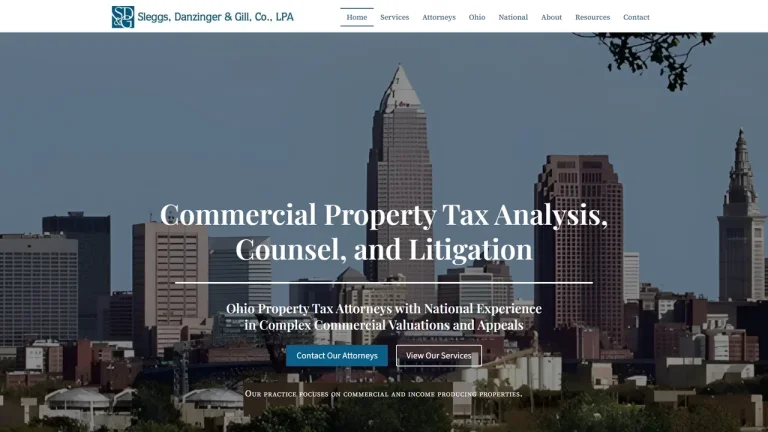
Tax Controversy & IRS Representation in Cuyahoga County
Confronting tax controversy in Cleveland requires an assertive defense against aggressive federal, state, and local taxing authorities. Individual taxpayers and businesses in Cleveland, Beachwood, and Westlake face severe enforcement actions for unpaid taxes, including federal tax liens, bank levies, and business closure threats. Engaging seasoned legal counsel ensures that complex tax codes are leveraged to safeguard your business and personal assets.
Federal tax disputes in Northeast Ohio involve the Internal Revenue Service Cleveland Office located inside the Anthony J. Celebrezze Federal Building on East 9th Street. Substantive tax disputes not resolved administratively proceed to the United States Tax Court or the U.S. District Court for the Northern District of Ohio. At the municipal level, controversies are handled by the City of Cleveland Division of Taxation, the Central Collection Agency (CCA), or the Regional Income Tax Agency (RITA).
An experienced Cleveland tax attorney delivers critical advantages over standard accountants. Attorney-client privilege protects your confidential disclosures, while legal counsel conducts forensic accounting, negotiates structured settlement agreements, and represents you in formal Collection Due Process hearings to halt enforcement actions.
Estimated Legal Costs & Fee Structures for Cleveland Tax Resolution
| Case Scenario | Fee Structure | Estimated Cost (USD) | Key Cost Determinants |
|---|---|---|---|
| IRS Offer in Compromise (OIC) | Flat Fee / Retainer | $3,000 - $6,500 | Doubt as to collectibility analysis, asset valuation complexity, Form 433-A disclosure compilation |
| IRS Audit Defense & CDP Hearing | Hourly Rate ($350 - $600/hr) | $2,500 - $7,500 | Business deduction substantiation, bank deposit reconstructions, formal appeal filing to stop levies |
| Ohio Dept of Taxation & RITA/CCA Dispute | Flat Fee / Hourly | $1,800 - $4,500 | Municipal withholding discrepancies, Commercial Activity Tax (CAT) audits, sales tax exposure |
| Criminal Tax Evasion Defense | Retainer / Hourly ($450 - $800/hr) | $15,000 - $45,000+ | IRS Criminal Investigation target letters, grand jury proceedings, willful failure to file charges |
Critical Legal Deadlines & Statutes in Ohio
Tax disputes operate under strict administrative statutes of limitations. For federal income taxes, the IRS generally has three years from the date a return is filed to assess additional taxes under 26 U.S. Code § 6501. However, once a tax assessment is finalized, the government has ten years to collect the debt pursuant to 26 U.S. Code § 6502. When the IRS issues a Final Notice of Intent to Levy, taxpayers have exactly thirty days to request a Collection Due Process (CDP) hearing under 26 U.S. Code § 6330 to halt enforcement.
Taxpayers seeking compromise for severe financial distress can submit an Offer in Compromise pursuant to 26 U.S. Code § 7122. At the state and municipal levels, Ohio income tax is assessed under Ohio Rev. Code § 5747.02, and local municipal income taxes are governed by uniform rules under Ohio Rev. Code § 718.01. Appealing an Ohio tax assessment requires filing a petition for reassessment within sixty days of receiving the final determination.
Small Claims Court Limits vs. Professional Legal Representation
Under Ohio Rev. Code § 1925.02, the Cleveland Municipal Court Small Claims Division is capped at $6,000. However, small claims courts possess zero jurisdiction over federal IRS controversies, state Department of Taxation assessments, or municipal tax appeals. Tax controversies must be adjudicated through administrative appellate divisions or dedicated tax courts.
Attempting to negotiate directly with IRS revenue officers without legal counsel can expose taxpayers to severe financial penalties and unintended criminal admissions. An experienced Cleveland tax lawyer protects you under attorney-client privilege, prepares thorough financial disclosures, and negotiates enforceable agreements that resolve liabilities permanently.
Red Flags to Avoid When Selecting a Cleveland Tax Lawyer
- National television advertising companies promising to settle debts for "pennies on the dollar" without reviewing IRS transcripts.
- Non-lawyer tax preparers offering to handle criminal tax fraud inquiries where attorney-client privilege does not apply.
- Firms that fail to address local municipal tax liabilities through the Central Collection Agency (CCA) or RITA.
- Practitioners lacking courtroom trial experience before the U.S. Tax Court or federal district courts in Ohio.
Frequently Asked Questions
What is an IRS Offer in Compromise (OIC)?
An Offer in Compromise allows eligible taxpayers to resolve their tax liability for less than the full amount owed based on doubt as to collectibility, liability, or effective tax administration.
Why is attorney-client privilege important during a tax audit?
Communications with an attorney are strictly confidential and privileged. Unlike accountants or CPAs, an attorney cannot be forced to testify against you in criminal tax proceedings.
What should I do if the IRS issues a Final Notice of Intent to Levy?
You must file a request for a Collection Due Process (CDP) hearing within thirty days of the notice date. This immediately halts IRS wage garnishments and bank levies while your case is reviewed.
How are municipal taxes collected in the Cleveland area?
Municipal income taxes in Northeast Ohio are administered either by individual city tax departments, the Central Collection Agency (CCA), or the Regional Income Tax Agency (RITA), depending on the municipality.
Can back taxes be eliminated in bankruptcy in Ohio?
Certain older income taxes may be dischargeable in bankruptcy if they meet strict statutory conditions, including being at least three years old, assessed for at least 240 days, and filed on time without fraud.