
Divorce Lawyers in Ohio
Consulting an experienced Ohio divorce lawyer protects your financial assets, parental rights, and peace of mind during marital dissolution proceedings. Whether pursuing an amicable dissolution or navigating high-conflict litigation, dedicated legal counsel helps resolve disputes through structured negotiation. Explore our directory below to schedule an initial consultation with trusted Ohio counsel.

Rasoul Law Office - Columbus, OH

Kordalis Law Office - Dayton, OH

Hans C Kuenzi - Cleveland, OH

Morgan Law Offices, LLC - Columbus, OH

Mesaros Law Office - Dayton, OH
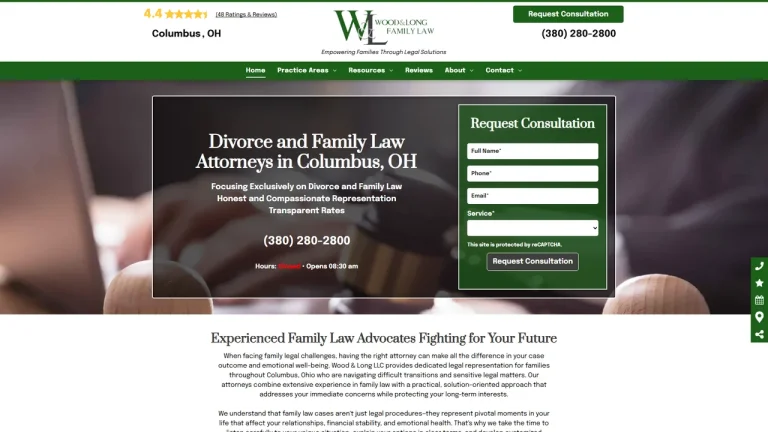
Wood and Long LLC - Columbus, OH

LMH Law Office, LLC - Cincinnati, OH
Tony Dalayanis Co - Akron, OH

The Honerlaw Firm, LLC - Cincinnati, OH
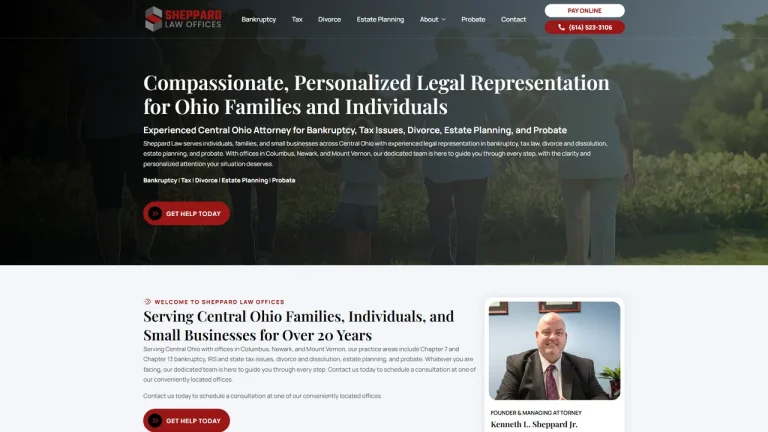
Sheppard Law Offices, Co., L.P.A. - Columbus, OH

The Wiltshire Law Firm, LLC - Cleveland, OH
Rion, Rion & Rion - Dayton, OH

Behal Duvall Law Group - Columbus, OH

Fitrakis & Gadell-Newton, LLC Attorneys at Law - Columbus, OH

Jenny Namanworth Smith Law Office - Cincinnati, OH

Petroff Law Offices, LLC - Columbus, OH
Goldberg Evans LLC - Cincinnati, OH
Fogt Law Office - Dayton, OH
Richard Lamping Attorney at Law - Cincinnati, OH
Mark C. Eppley, Eppley Legal Group - Cincinnati, OH

Kronenberg + Belovich Law, LLC - Cleveland, OH

Ken Karlock (Cutter Hall Karlock LLC) - Columbus, OH
David Rowthorn LLC - Cleveland, OH

Navigating Divorce and Marital Dissolution in Ohio
Terminating a marriage requires navigating complex statutory procedures, financial disclosures, and parental responsibility allocations. Ohio provides two distinct procedural pathways for ending a marriage: a mutual dissolution of marriage, which requires complete advance consensus on all issues, and a traditional contested divorce, initiated by one spouse upon statutory grounds or incompatibility.
Marital termination proceedings are handled exclusively by the Domestic Relations Divisions of County Courts of Common Pleas across the state. Prominent tribunals include the Franklin County Domestic Relations Court in Columbus, the Cuyahoga County Domestic Relations Court in Cleveland, and the Hamilton County Domestic Relations Court in Cincinnati. Each county court enforces distinct local rules, specialized mediation procedures, and standing financial restraining orders upon the initial filing.
Retaining an experienced Ohio divorce attorney ensures that your separate property is guarded, marital assets and business holdings are accurately valued, and fair spousal support awards are calculated. Skilled domestic relations attorneys across Columbus, Cleveland, Cincinnati, Dayton, and Akron provide structured guidance to resolve disputes outside the courtroom while standing prepared to litigate complex disputes before common pleas judges.
Ohio Divorce & Dissolution Cost Benchmarks
| Case Scenario | Fee Structure | Estimated Cost (USD) | Key Cost Determinants |
|---|---|---|---|
| Uncontested Dissolution of Marriage | Fixed Flat Fee | $1,500 - $3,500 | Complete settlement consensus, drafted separation agreement, shared parenting plan alignment, single court hearing |
| Contested Divorce with Moderate Assets | Retainer + Hourly ($250 - $425/hr) | $4,500 - $12,000 | Temporary spousal support hearings, marital residence appraisal, formal written discovery, deposition counts |
| High-Net-Worth & Business Owner Divorce | Retainer + Hourly ($350 - $550/hr) | $12,500 - $35,000+ | Closely held business valuations, forensic asset tracing, executive stock options, complex tax liability modeling |
| Post-Decree Spousal Support Modification | Hourly / Retainer | $3,000 - $8,500 | Proof of substantial involuntary change in economic circumstances, retirement status, court reservation of jurisdiction |
Critical Legal Deadlines & Statutes in Ohio Divorce
To file for divorce or dissolution, state jurisdictional criteria must be satisfied under Ohio Rev. Code § 3105.03, requiring the filing party to be a resident of the state for at least six continuous months immediately prior to filing. Furthermore, the petitioner must generally reside in the specific filing county for ninety days preceding the action.
Statutory grounds for contested divorce are set forth in Ohio Rev. Code § 3105.01, including incompatibility, gross neglect of duty, adultery, and extreme cruelty. For amicable dissolutions, Ohio Rev. Code § 3105.64 mandates that both parties appear in court for a mandatory hearing between thirty and ninety days after filing their joint petition and separation agreement to confirm their voluntary assent.
Marital assets and debts are subject to equitable division pursuant to Ohio Rev. Code § 3105.171, which establishes a statutory presumption that all marital property should be divided equally unless an equal division would be inequitable. Spousal support determinations are evaluated under fourteen statutory criteria established in Ohio Rev. Code § 3105.18. In litigated disputes, parties have a strict fourteen-day window under Ohio Civ. R. 53(D)(3)(b) to file formal objections to a magistrate's proposed decision.
Small Claims Limitations vs. Domestic Relations Representation in Ohio
Ohio Small Claims Divisions in municipal and county courts are limited to civil claims up to $6,000 under Ohio Rev. Code § 1925.02. Small claims courts have zero legal jurisdiction over marital dissolutions, divorce decrees, property divisions, or spousal support orders. These matters belong exclusively in County Courts of Common Pleas.
Attempting to handle marital termination without legal representation often creates devastating financial consequences. Common self-representation mistakes include failing to prepare Qualified Domestic Relations Orders (QDROs) to divide private 401(k)s or state pensions like OPERS and STRS, misunderstanding tax implications on real estate transfers, or executing unmodifiable spousal support clauses. Retaining a qualified Ohio divorce attorney protects your long-term financial security and guarantees legally binding decree enforcement.
Red Flags & Consumer Protection in Ohio Family Law Practice
- Attorneys guaranteeing specific financial outcomes, property splits, or exact spousal support figures during the initial intake consultation.
- Firms that churn billable hours by initiating contentious motion practice over minor household items rather than negotiating major financial assets.
- Lawyers who fail to inform clients about court-mandated county mediation or the lower-cost statutory dissolution process when spouses are in agreement.
- Attorneys lacking focused trial experience in your specific county Domestic Relations Court, where local judges and magistrates maintain distinct local rules.
Frequently Asked Questions
What is the fundamental difference between divorce and dissolution in Ohio?
A dissolution is a mutual, non-adversarial proceeding where both spouses negotiate and sign a complete separation agreement covering property division, support, and custody before filing anything in court. A divorce is an adversarial lawsuit filed by one spouse when the parties cannot agree on all terms, requiring judicial intervention to resolve contested matters.
How does Ohio divide marital property and debt?
Under Ohio equitable distribution law, courts presume marital property and marital debts acquired during the marriage should be divided equally. If equal division is inequitable, the judge will divide assets equitably after evaluating factors including marriage duration, asset liquidity, tax consequences, and retirement benefits.
Can an Ohio court divide public retirement pensions like OPERS or STRS?
Yes, retirement benefits earned during the marriage under the Ohio Public Employees Retirement System (OPERS) or State Teachers Retirement System (STRS) are considered marital assets. They are formally divided using a specialized Ohio statutory court document called a Division of Property Order (DOPO).
How does an Ohio court determine spousal support?
Ohio does not use a rigid mathematical formula for spousal support. Judges evaluate statutory factors under state law, including each spouse's earning capacity, education, retirement benefits, duration of the marriage, standard of living established during the marriage, and child-rearing responsibilities.
Can spousal support be modified after an Ohio divorce is finalized?
Spousal support can only be modified if the original divorce decree or separation agreement expressly reserves the court's continuing jurisdiction to modify the amount or duration. The requesting party must also prove a substantial, unforeseen change in economic circumstances, such as involuntary job loss or health impairment.