
Patent Attorneys in Ohio
Finding an experienced Ohio patent attorney ensures your technological inventions are rigorously protected under federal patent statutes and USPTO deadlines. Qualified patent counsel conducts exhaustive prior art searches, drafts robust utility or design patent claims, and defends against infringement disputes. Explore our directory below to schedule an initial consultation with trusted intellectual property practitioners across Ohio.
Bold Patents Law Firm - Columbus, OH

Squire Patton Boggs - Cincinnati, OH

Porter Wright Morris & Arthur LLP - Cincinnati, OH
Jones Day - Cleveland, OH

Ronald J. Koch, Attorney at Law - Columbus, OH

Turocy & Watson LLP - Cleveland, OH

Thompson Hine LLP - Cincinnati, OH
Jenei LLC - Cincinnati, OH

Renner & Kenner LPA - Akron, OH

Tucker Ellis LLP - Columbus, OH

Frost Brown Todd - Columbus, OH

Dorton & Willis LLP - Cincinnati, OH

Dinsmore & Shohl LLP - Columbus, OH
Schaefer Jeffrey R - Cincinnati, OH
Michael J. Nieberding, Attorney at Law - Cincinnati, OH
McDonald Hopkins LLC - Columbus, OH

Howard M. Cohn and Associates - Columbus, OH
Wood Herron & Evans LLP - Cincinnati, OH
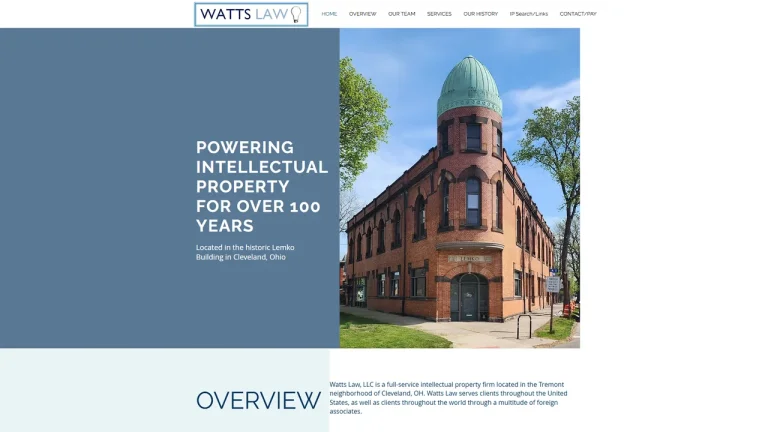
Watts Law, LLC - Cleveland, OH
Vorys, Sater, Seymour and Pease LLP - Columbus, OH

Rooney IP - Cincinnati, OH

Roger Bora - Dayton, OH

Squire Patton Boggs - Columbus, OH
Protecting Inventions Across Ohio's Research and Industrial Hubs
Ohio's extensive innovation landscape-spanning the biomedical and advanced manufacturing clusters in Cleveland and Akron to research institutions and technology incubators in Columbus, Cincinnati, Dayton, and Toledo-generates significant intellectual property. Securing enforceable patent protection demands technical comprehension alongside meticulous adherence to federal patent statutes and administrative practice before the United States Patent and Trademark Office (USPTO).
Patent legal practice requires specialized professional accreditation. Patent attorneys must be admitted to practice law by the Supreme Court of Ohio (or another state supreme court) and registered with the USPTO under federal regulations after passing the Patent Bar examination. Ohio patent practitioners represent solo inventors, emerging university spin-offs, and established commercial enterprises before the USPTO and the Patent Trial and Appeal Board (PTAB).
When patent disputes or infringement allegations arise, federal courts retain exclusive subject-matter jurisdiction. Ohio patent litigators practice before the U.S. District Court for the Northern District of Ohio and the U.S. District Court for the Southern District of Ohio, with federal appeals directed to the U.S. Court of Appeals for the Federal Circuit. Engaging an Ohio patent lawyer ensures patent claims are drafted defensibly to withstand inter partes reviews and federal court invalidation challenges.
Typical Costs and Fee Structures for Ohio Patent Attorneys
| Case Scenario | Fee Structure | Estimated Cost (USD) | Key Cost Determinants |
|---|---|---|---|
| Provisional Patent Application | Flat Fee | $1,500 - $3,500 | Technical complexity, clarity of inventor disclosures, drawing requirements, and prior art documentation. |
| Non-Provisional Utility Patent | Flat Fee or Hourly | $6,000 - $12,500+ | Claim scope, mechanical or chemical complexity, prior art density, and USPTO entity filing tiers. |
| USPTO Office Action Response | Hourly or Flat Fee | $1,800 - $4,500 | Substantive rejection basis (novelty under 102 vs. obviousness under 103), claim amendments, and examiner interviews. |
| Patent Infringement Litigation | Retainer + Hourly | $25,000 - $100,000+ | Markman claim construction hearings, technical expert depositions, preliminary injunctions, and discovery volume. |
Critical Legal Deadlines & Statutes in Ohio
Patent prosecution and enforcement adhere to rigid statutory deadlines. Under federal patent law, missing a filing deadline can result in the irrevocable loss of patent rights or immediate abandonment of a pending patent application.
Under 35 U.S. Code § 102, the America Invents Act establishes a strict first-inventor-to-file framework. In the United States, inventors have a limited one-year statutory grace period to file a patent application after disclosing, offering for sale, or publicly using the invention. Failure to file an application within this 12-month period permanently bars patent eligibility. When an inventor files a provisional application under 35 U.S. Code § 111, a corresponding non-provisional application must be filed within exactly 12 months to claim priority to the provisional filing date.
During administrative patent prosecution, applicants receiving an Office Action from the USPTO generally face a three-month statutory deadline to respond, extendable up to six months upon payment of statutory extension fees. In patent infringement disputes governed by 35 U.S. Code § 271, the recovery of monetary damages is limited by 35 U.S. Code § 284 to infringements occurring within six years prior to filing the complaint. When trade secret misappropriation occurs prior to patent issuance, legal claims in Ohio must be brought within four years under Ohio Rev. Code § 1333.66 pursuant to the Ohio Uniform Trade Secrets Act codified in Ohio Rev. Code § 1333.61.
Small Claims Court Limitations vs. Professional Patent Counsel
In Ohio, small claims courts operating under Ohio Rev. Code § 1925.02 are limited to minor monetary disputes up to $6,000. However, Ohio small claims divisions and Ohio common pleas courts have no subject-matter jurisdiction over patent disputes. Under 28 U.S. Code § 1338, federal district courts hold exclusive jurisdiction over civil actions arising under federal patent law.
While an individual inventor may prepare a preliminary disclosure or file an informal provisional application independently, navigating non-provisional utility patent prosecution without a registered patent attorney presents severe legal risks. Patent claims define the boundary of legal protection; poorly constructed claims can result in prompt USPTO rejections or leave an issued patent unenforceable against competitors. A registered Ohio patent attorney ensures rigorous claim crafting, conducts examiner interviews, and represents client interests before federal tribunals.
Red Flags to Avoid When Choosing an Ohio Patent Attorney
- Invention promotion companies or marketing agencies that demand substantial upfront fees while lacking registered patent attorneys licensed by the USPTO.
- Attorneys who guarantee patent issuance from the USPTO without first conducting an exhaustive prior art novelty assessment.
- Practitioners claiming to handle patent prosecution who lack formal registration with the USPTO Office of Enrollment and Discipline.
- Fee agreements that fail to distinguish between initial drafting costs, administrative USPTO filing fees, and future office action response retainers.
Frequently Asked Questions
What is the difference between a patent attorney and a patent agent in Ohio?
Both patent attorneys and patent agents must pass the USPTO Patent Bar examination. However, a patent attorney is also admitted to practice law by the Supreme Court of Ohio, enabling them to draft licensing contracts, negotiate disputes, and litigate infringement claims in federal court.
Can an Ohio state court hear a patent infringement lawsuit?
No. Under 28 U.S. Code § 1338, federal courts possess exclusive jurisdiction over patent infringement actions. Patent lawsuits originating in Ohio must be filed in the U.S. District Court for the Northern District of Ohio or the Southern District of Ohio.
How long does it take to obtain a utility patent through the USPTO?
Obtaining a utility patent generally requires two to four years, depending on the technological classification and the volume of prior art rejections. Applicants can utilize USPTO Track One prioritized examination to receive a final disposition within approximately twelve months.
What is the one-year grace period for patent filings?
Under 35 U.S. Code § 102, an inventor has up to one year from the date of their first public disclosure, commercial sale, or public use of the invention to file a U.S. patent application. Disclosures made after that one-year window destroy patentability.
Are maintenance fees required to keep an issued utility patent active?
Yes. The USPTO requires maintenance fees to be paid at 3.5, 7.5, and 11.5 years following the grant of a utility patent. Failure to pay these statutory fees within the designated window results in the expiration of the patent.