
Employment & Labor Lawyers in Oklahoma
Retaining an Oklahoma employment lawyer protects your rights against wrongful termination, unpaid wages, and discrimination. Seasoned legal counsel resolves claims through negotiation or state administrative filings. Explore our verified statewide directory below to consult an attorney.

Flynn Law Firm PLLC - Tulsa, OK

Eller & Detrich - Tulsa, OK

Legal Aid Services of Oklahoma, Inc., Oklahoma City, OK

Hall Estill - Tulsa, OK

Conner & Winters, LLP - Tulsa, OK

The Battle Law Firm - Oklahoma City, OK
Drummond Law, PLLC - Tulsa, OK
Justice First Legal, PLLC - Tulsa, OK

Workers' Compensation Law Office; Scott A Hendren - Tulsa, OK

The Jones Firm | The Brilliant Brawler Oklahoma City, OK

Brandon J. Burton - Oklahoma City, OK

Wallace Law Firm PC - Oklahoma City, OK

Tulsa Construction Lawyer - Tulsa, OK
Crowe Dunlevy, Oklahoma City, OK
Erica Dorwart Law, PLLC - Tulsa, OK

Titus Hillis Reynolds Love - Tulsa, OK
Shook & Johnson - Tulsa, OK

Helms Law Firm - Oklahoma City, OK
McAfee & Taft, Oklahoma City, OK

BDIW Law - Tulsa, OK
Patricia A. Podolec - Oklahoma City, OK

Smolen Law - Tulsa, OK
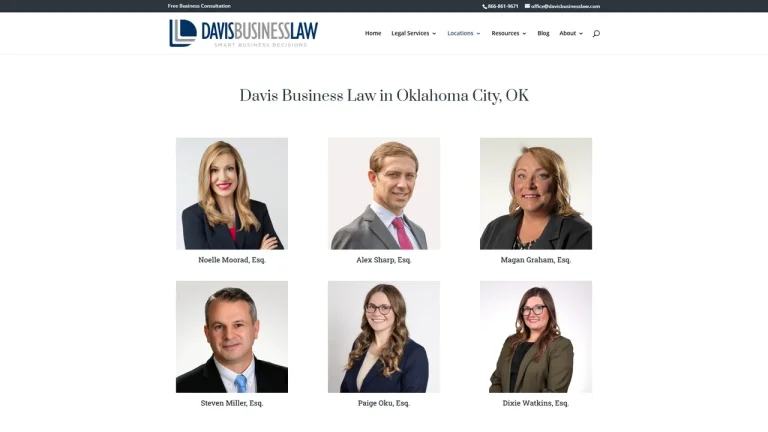
Davis Business Law - Oklahoma City, OK

Oklahoma Employment Law and Administrative Jurisdictions
Employment relationships in Oklahoma are primarily governed by the at-will employment doctrine, yet state and federal statutory frameworks establish crucial worker protections and corporate compliance standards. When workplace disputes arise-ranging from wrongful discharge and hostile work environment claims to wage theft-matters are addressed through specialized administrative agencies and court systems across the state.
At the state administrative level, workplace discrimination claims are investigated by the Office of Civil Rights Enforcement within the Oklahoma Attorney General's Office, which administers the Oklahoma Anti-Discrimination Act. Unemployment compensation disputes and wage enforcement matters proceed through the Oklahoma Employment Security Commission and the Oklahoma Department of Labor in Oklahoma City. Federal statutory claims are frequently filed in the U.S. District Courts for the Western, Northern, or Eastern Districts of Oklahoma.
From corporate energy and aviation corridors in Greater Oklahoma City and Tulsa to healthcare, manufacturing, and agricultural hubs in Norman, Edmond, Lawton, and Broken Arrow, employment attorneys provide essential representation. Retaining an Oklahoma labor lawyer ensures statutory filing prerequisites are fulfilled and evidence of retaliatory or discriminatory treatment is rigorously documented.
Oklahoma Employment & Labor Legal Fees and Representation Costs
Fee structures in Oklahoma employment law depend heavily on the nature of the claim, ranging from contingency models for employee discrimination to hourly retainers for employer compliance defense.
| Case Scenario | Fee Structure | Estimated Cost (USD) | Key Cost Determinants |
|---|---|---|---|
| Wage & Hour / Unpaid Overtime Violations (FLSA / State Labor Law) | Contingency (30% - 40%) or Statutory Fee | $0 upfront ($3,500 - $15,000+ recovered) | Off-the-clock hours, independent contractor misclassification, liquid damages awards, and employer payroll record transparency. |
| Workplace Discrimination & Retaliation (OADA / Title VII) | Contingency / Partial Retainer | $0 - $3,000 retainer + 33% - 40% contingency | OCRE and EEOC right-to-sue findings, back pay damages, emotional distress evidence, and employer settlement posture. |
| Severance Package Review & Non-Compete Negotiation | Flat Fee or Hourly ($275 - $500/hr) | $750 - $2,500 | Executive compensation structures, non-compete enforceability under state law, release of claims waivers, and bonus vesting. |
| Employer Defense & Corporate Policy Compliance Audits | Hourly Retainer ($300 - $600/hr) | $5,000 - $25,000+ | Employee handbook overhaul, workplace drug testing compliance, formal EEOC charge responses, and federal trial preparation. |
Critical Legal Deadlines & Statutes in Oklahoma
Employment disputes in Oklahoma feature uncompromising administrative deadlines. Under the Oklahoma Anti-Discrimination Act, codified in Okla. Stat. tit. 25, § 1502, an aggrieved individual must file a formal charge of discrimination with the Office of Civil Rights Enforcement or cross-file with the Equal Employment Opportunity Commission within one hundred eighty days of the alleged discriminatory act (or three hundred days for federal Title VII claims under 42 U.S. Code § 2000e-5).
Once the administrative agency issues a Notice of Right to Sue, an employee has strictly ninety calendar days to initiate a formal lawsuit in an Oklahoma District Court or federal district court. Missing this ninety-day window permanently extinguishes your statutory discrimination cause of action.
For wage and hour violations under the Oklahoma Protection of Labor Act, codified in Okla. Stat. tit. 40, § 165.7, wage claims must be filed with the Oklahoma Department of Labor within one year of accrual. Private civil actions for unpaid minimum wages or overtime under the Fair Labor Standards Act pursuant to 29 U.S. Code § 255 must be commenced within two years of the violation, or three years if the employer's conduct is determined to be willful.
Small Claims Limitations vs. Professional Employment Representation
Oklahoma Small Claims Courts, governed by Okla. Stat. tit. 12, § 1751, operate under a strict jurisdictional limit of $10,000. These courts lack the equitable power to issue injunctions, order reinstatement, or resolve complex statutory retaliation and civil rights complaints.
Attempting to represent oneself against a well-resourced corporate employer in an employment lawsuit is fraught with disadvantage. Corporate defense counsel routinely files dispositive motions to dismiss or motions for summary judgment based on technical pleading errors or failure to exhaust administrative remedies.
Retaining a licensed Oklahoma labor attorney ensures that all mandatory administrative prerequisites before the OCRE, OESC, or EEOC are strictly satisfied. Furthermore, counsel evaluates complex state-specific nuances, such as Oklahoma's strict prohibition on employer non-compete covenants under Okla. Stat. tit. 15, § 219A, protecting workers from unenforceable restraint-of-trade restrictions.
Red Flags When Hiring Oklahoma Employment Counsel
Protect your workplace legal claims by avoiding attorneys displaying these cautionary practices:
- Guaranteed Settlement Values: No ethical attorney can guarantee a specific monetary recovery or financial settlement, as damage calculations depend on judicial evidentiary rulings and jury verdicts.
- Failure to Explain Administrative Exhaustion: Be wary of practitioners who attempt to bypass the Office of Civil Rights Enforcement or EEOC without explaining that exhaustion of administrative remedies is legally required for discrimination suits.
- Unfamiliarity with Oklahoma Restrictive Covenant Laws: Under Okla. Stat. tit. 15, § 219A, traditional employee non-compete agreements are largely void against public policy; your counsel must understand this specific state statutory protection.
- Vague Contingency Retainer Agreements: Ensure your legal agreement explicitly details how case expenses, deposition transcript fees, and expert witness costs are handled if no recovery is achieved.
Frequently Asked Questions
What does at-will employment mean in Oklahoma?
At-will employment means that either an employer or employee can terminate the employment relationship at any time, with or without cause, and without advance notice. However, an employer cannot discharge an employee for unlawful discriminatory reasons or in violation of clear public policy (known in Oklahoma as a Burk tort claim).
Are non-compete agreements enforceable against employees in Oklahoma?
Generally no. Under Okla. Stat. tit. 15, § 219A, contracts in restraint of lawful profession, trade, or business are void. While employers may prohibit former employees from soliciting established customers, broad non-compete covenants preventing an individual from working for a competitor are strictly prohibited by state statute.
How long do I have to file a discrimination charge in Oklahoma?
Under Okla. Stat. tit. 25, § 1502, you must file a discrimination charge with the Office of Civil Rights Enforcement within one hundred eighty days of the alleged unlawful employment action, or within three hundred days when cross-filing with the EEOC under federal law.
Can an employer retaliate against an employee for reporting safety violations or wage theft?
No. Both state and federal laws prohibit employer retaliation. Terminating, demoting, or penalizing an employee for filing a wage complaint under Okla. Stat. tit. 40, § 165.7 or reporting statutory civil rights violations provides the basis for a wrongful termination lawsuit.
What remedies can I recover in an Oklahoma wrongful termination lawsuit?
Successful claimants in Oklahoma employment actions may recover back pay (lost past wages), front pay (future wage loss), reinstatement, compensatory damages for emotional distress, statutory attorney fees, and punitive damages in cases involving malicious conduct.