
Wage & Hour Lawyers in Tulsa
Partnering with a knowledgeable wage and hour lawyer in Tulsa ensures unpaid overtime, illegal deductions, and employee misclassifications are swiftly remedied. Skilled labor attorneys leverage statutory fee-shifting to recover double damages and back pay while insulating workers from employer retaliation. Explore our directory below to discuss your claim with trusted Tulsa County practitioners.
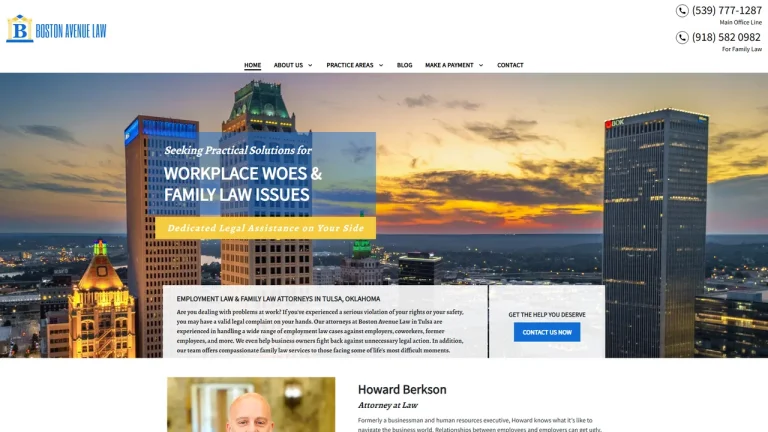
Boston Avenue Law PLLC - Tulsa, OK
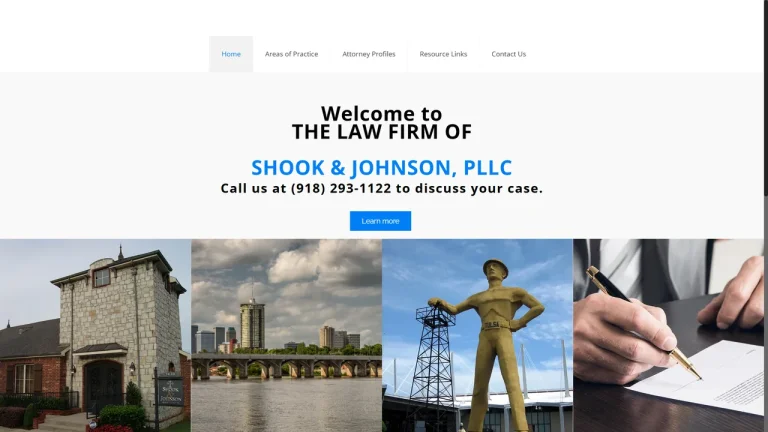
Shook & Johnson - Tulsa, OK
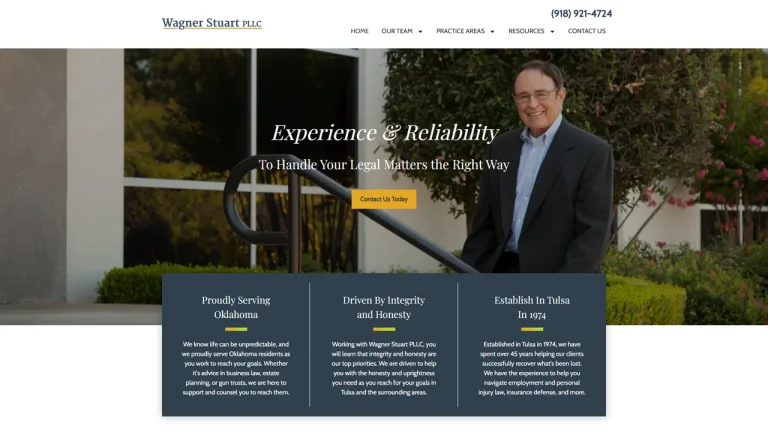
Wagner Stuart PLLC - Tulsa, OK
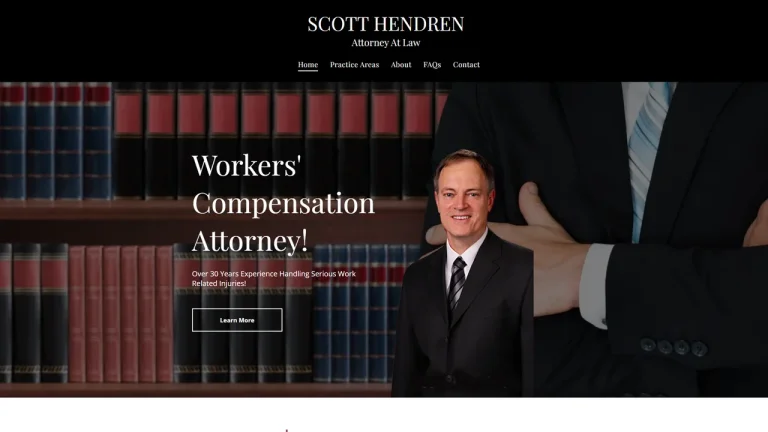
Workers' Compensation Law Office; Scott A Hendren - Tulsa, OK
Enforcing Fair Compensation in Tulsa County
Securing the full compensation guaranteed by state and federal law is essential for Tulsa workers and their families. Wage theft, unlawful salary misclassifications, and unpaid overtime remain widespread across dynamic regional industries, including energy exploration, fabrication facilities, logistics corridors, healthcare organizations, and hospitality clusters across Tulsa, Broken Arrow, Sapulpa, and Owasso. Wage and hour litigation in this region is heard primarily in the Tulsa County District Court at 500 South Denver Avenue or the U.S. District Court for the Northern District of Oklahoma in downtown Tulsa.
Under both state labor enactments and federal standards, non-exempt employees must receive prompt payment of all earned wages and statutory overtime pay for all hours worked over forty in a single workweek. Employers frequently utilize improper employee exemptions, mandate off-the-clock work, or make unauthorized paycheck deductions to suppress operational labor expenses. Seasoned Tulsa wage attorneys intervene to audit payroll records, secure electronic time-card data, and enforce statutory remedies.
Labor claims may also proceed administratively through the Oklahoma Department of Labor (ODOL) or the federal Wage and Hour Division (WHD). Whether asserting individual claims for unpaid bonuses or initiating collective actions representing dozens of coworkers, working with dedicated local counsel ensures that statutory penalties and mandatory fee-shifting provisions are maximized to your benefit.
Wage & Hour Case Classifications & Representation Costs in Tulsa
Federal and state labor statutes contain mandatory attorney fee-shifting provisions that minimize out-of-pocket costs for wronged workers. The table below outlines customary fee arrangements and representation tiers across Tulsa County.
| Case Scenario | Fee Structure | Estimated Cost (USD) | Key Cost Determinants |
|---|---|---|---|
| Individual Unpaid Overtime / Off-the-Clock Work Claim | Contingency Basis (Statutory Fee-Shifting) | $0 upfront (Recovered from Defendant) | Timekeeping audit accuracy, badge swipe records, uncompensated pre-shift duties. |
| Independent Contractor (1099) Misclassification | Contingency (33.3% - 40%) | $0 upfront (No Win, No Fee) | Degree of employer behavioral control, tax liability offsets, economic reality test. |
| FLSA Collective Action / Multi-Employee Pay Practice | Contingency (Court-Approved Fee Award) | $0 upfront (Fee-Shifting) | Class size, preliminary conditional certification, systemic company-wide payroll software. |
| Administrative Oklahoma Department of Labor (ODOL) Filing | Flat Fee or Contingency Percentage | $750 - $2,500 | Final paycheck disputes, undisputed commissions, statutory administrative thresholds. |
Critical Legal Deadlines & Statutes in Oklahoma
Wage and hour claims are governed by enforceable statutory deadlines under federal and state law. The federal Fair Labor Standards Act (FLSA), codified at 29 U.S. Code § 201 et seq., mandates that non-exempt workers receive one and one-half times their regular rate of pay for hours exceeding forty per week under 29 U.S. Code § 207.
Under the FLSA's statute of limitations, set forth in 29 U.S. Code § 255(a), a worker must file a legal action within two years of the date the unpaid wages accrued. However, if the employer's violation was 'willful'-meaning they knew or showed reckless disregard for wage requirements-the statute of limitations extends to three years. At the state level, the Oklahoma Protection of Labor Act governs wage payment timing under 40 O.S. § 165.1. Under 40 O.S. § 165.3, employers failing to pay earned wages upon termination face statutory liquidated damages of up to 100% of the unpaid balance. Administrative wage complaints with the Oklahoma Department of Labor must typically be submitted within one year of accrual under 40 O.S. § 165.7, while general civil breach of contract actions carry limits under 12 O.S. § 95.
Small Claims Limitations vs. District Court Representation
Oklahoma's Small Claims Court, limited to claims of $10,000 or less under 12 O.S. § 1751, is ill-equipped for wage disputes. While a worker can theoretically file for small unpaid final wages in small claims, doing so often causes workers to forfeit substantial statutory remedies available in higher courts.
Under 29 U.S. Code § 216(b), federal law mandates that prevailing employees recover an additional 100% of their unpaid wages as statutory liquidated damages, plus mandatory reimbursement of all attorney fees. Small claims procedures do not provide the discovery mechanisms required to force employers to turn over electronic time-stamps, internal communication logs, and point-of-sale records. Retaining an attorney to litigate in the Tulsa County District Court or Northern District of Oklahoma ensures that the full value of liquidated damages, collective relief, and statutory fees are captured.
Red Flags to Avoid When Selecting a Wage & Hour Lawyer
Selecting the right attorney ensures your earned compensation is fully recovered. Watch for these red flags during attorney evaluations:
- Charging Substantial Upfront Hourly Fees to Employees: The FLSA contains a mandatory fee-shifting statute under 29 U.S. Code § 216(b) requiring non-compliant employers to pay your attorney fees. Reputable employee wage lawyers handle these claims on contingency without charging out-of-pocket hourly rates.
- Failing to Seek Mandatory Liquidated Damages: Under state and federal law, you are often entitled to double your unpaid wages. Be wary of attorneys who focus solely on baseline back pay without asserting claims for statutory penalties under 40 O.S. § 165.3 or the FLSA.
- Overlooking Collective Action Potential: If your employer withheld overtime from you through an improper policy, they likely did the same to your coworkers. Counsel should examine collective action viability to maximize settlement leverage.
- Unfamiliarity with Tulsa Federal Court Practice: Employers routinely remove wage lawsuits to federal court. Your lawyer must have verified trial experience before the federal judges of the Northern District of Oklahoma.
Frequently Asked Questions
What is the overtime rate for hourly workers in Tulsa?
Under 29 U.S. Code § 207, non-exempt employees must receive one and one-half times their regular hourly rate for all hours worked beyond forty hours in a single workweek. Averaging hours across two weeks is strictly prohibited under federal regulations.
Can my employer dock my pay for register shortages or damaged equipment?
Under the Oklahoma Protection of Labor Act, codified at 40 O.S. § 165.3, employers cannot make deductions from an employee's wages without written authorization, and deductions cannot reduce gross earnings below the federal minimum wage.
What constitutes independent contractor misclassification in Oklahoma?
Misclassification occurs when an employer labels an employee as a 1099 contractor to avoid paying overtime and payroll taxes, despite directing their work hours, providing tools, and exercising economic control over their daily duties.
How far back can I recover unpaid overtime in Oklahoma?
Under 29 U.S. Code § 255(a), workers can recover back pay going back two years for standard violations, or up to three years if the employer acted willfully or with reckless disregard for statutory overtime requirements.
Can an employer fire me for filing a wage claim in Tulsa?
No. Both 29 U.S. Code § 215(a)(3) and Oklahoma public policy strictly prohibit employers from terminating, demoting, or retaliating against any worker who files a wage complaint or asserts statutory rights.