
Workplace Discrimination Lawyers in Oregon
Consulting an experienced Oregon workplace discrimination lawyer safeguards your civil rights and holds unlawful employers accountable under state and federal law. Dedicated employment attorneys negotiate favorable severance terms, navigate BOLI proceedings, and secure financial compensation for unlawful bias. Explore our directory below to partner with verified legal counsel across Oregon.

Sudano Law Firm - Salem, OR

Erin E. Gould Attorney at Law - Eugene, OR
Benjamin Rosenthal, Attorney at Law - Portland, OR
Ogletree Deakins - Portland, OR

Law Office of Emily S. Hill, P.C. - Eugene, OR

Law Offices of Sue-Del McCulloch - Portland, OR

JJH Law - Portland, OR

Matthew C. Ellis, PC - Portland, OR
Harrang Long P.C. - Eugene, OR

Gault Disability Law - Hillsboro, OR

Stevens & Legal - Hillsboro, OR

Watkinson Laird Rubenstein, PC - Eugene, OR

Littler Mendelson P.C. - Portland, OR
Johnson Johnson Lucas & Middleton - Eugene, OR
The Law Office of Elizabeth J. Inayoshi, LLC - Hillsboro, OR

LAFKY & LAFKY - Salem, OR
Diane S. Sykes - Portland, OR
Aldrich & Brunot, LLC - Portland, OR
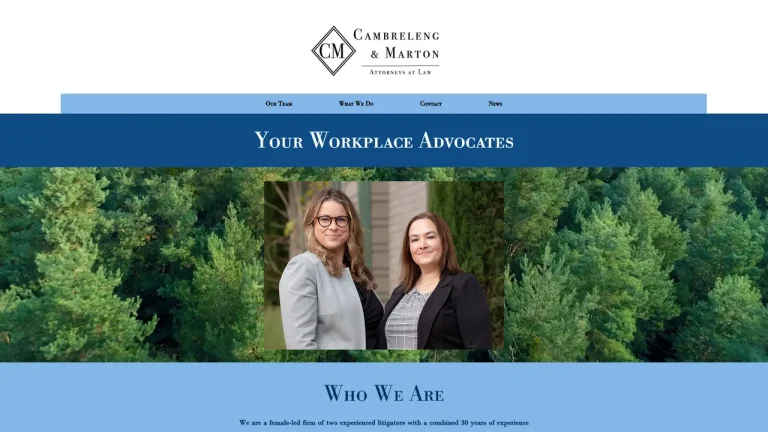
Cambreleng & Marton, LLC - Portland, OR

Albies & Stark LLC - Portland, OR

Access the Law - Eugene, OR

Gunderson Employment Law - Portland, OR

Law Offices of Daniel Snyder - Portland, OR

Enforcing Civil Rights Across Oregon Workplaces
Every employee deserves to earn a living free from unlawful bias, discriminatory barriers, and hostile workplace treatment. Oregon maintains strong statutory protections for workers across all employment sectors, spanning the corporate, healthcare, retail, and tech hubs of Portland, Salem, Eugene, Gresham, Hillsboro, and Bend. When hiring, compensation, job assignments, or promotional opportunities are compromised by discriminatory conduct, state law provides powerful legal remedies.
Workplace discrimination claims are handled by state and federal enforcement agencies. At the state level, the Civil Rights Division of the Oregon Bureau of Labor and Industries (BOLI) oversees administrative investigations. At the federal level, claims are coordinated through the Equal Employment Opportunity Commission (EEOC). Complainants may choose to exhaust administrative remedies with BOLI or pursue civil litigation directly in Oregon Circuit Courts, such as the Multnomah County Circuit Court or the Marion County Circuit Court in Salem.
Proving discrimination requires demonstrating that an adverse employment decision was motivated by protected status rather than legitimate business criteria. Skilled Oregon workplace discrimination lawyers analyze personnel files, identify comparator employee treatment, navigate complex administrative procedures, and seek full financial recovery in both state and federal courts.
Oregon Discrimination Claims & Representative Representation Fees
| Case Scenario | Fee Structure | Estimated Cost (USD) | Key Cost Determinants |
|---|---|---|---|
| Protected Class Discrimination (Race, Gender, Age) | Contingency Fee (33.3% - 40%) | $0 Upfront / % of Recovery | Direct vs. circumstantial bias evidence, comparator employee discipline records, corporate employer size |
| Disability Bias & Reasonable Accommodation Failure | Contingency / Hybrid | $0 Upfront / % of Recovery | Documented interactive process records, medical necessity notes, feasibility of requested workplace modifications |
| Sexual Orientation & Gender Identity Discrimination | Contingency Fee (33.3% - 40%) | $0 Upfront / % of Recovery | Hostile communication records, management inaction, discriminatory denial of promotions or benefits |
| Severe Hostile Work Environment & Retaliation | Contingency Fee (33.3% - 40%) | $0 Upfront / % of Recovery | Frequency and severity of conduct, internal HR complaint paper trail, failure of employer remedial measures |
Critical Legal Deadlines & Statutes in Oregon Discrimination Claims
State employment civil rights are codified under ORS 659A.030, which makes it unlawful for an employer to refuse to hire, discharge, or discriminate against an individual in compensation or employment conditions because of race, color, religion, sex, sexual orientation, gender identity, national origin, marital status, or age. Disability protections and accommodation mandates are established under ORS 659A.112.
Oregon also enforces the CROWN Act, integrated into ORS 659A.001, explicitly prohibiting discrimination based on physical characteristics historically associated with race, including hair textures and protective styles such as braids, locs, and twists. Worker protections are further reinforced by the Oregon Workplace Fairness Act under ORS 659A.370, which voids non-disclosure provisions related to workplace discrimination.
Procedural deadlines in Oregon provide considerable flexibility compared to other jurisdictions. Under ORS 659A.820, an administrative complaint must be filed with BOLI within one year of the alleged discriminatory act. However, under ORS 659A.875, an employee has up to five years to file a civil lawsuit directly in Oregon Circuit Court for unlawful employment practices under ORS 659A.030. For federal claims, a charge must be submitted to the EEOC within 300 days pursuant to 42 U.S. Code § 2000e-5, with a 90-day window to file suit after receiving an EEOC Right to Sue notice.
Small Claims Limitations vs. Circuit Court Representation in Oregon
Under ORS 55.011, the Oregon Small Claims Department is restricted to disputes not exceeding $10,000. Attorneys are generally barred from appearing in small claims hearings without leave of court, and small claims courts have no power to award emotional distress damages, mandate workplace policy reforms, or award statutory attorney fees under civil rights laws.
Litigating workplace discrimination requires navigating complex evidentiary rules and taking depositions of corporate leadership and human resources personnel. Prevailing employees can recover compensatory damages, back wages, and statutory attorney fees pursuant to ORS 659A.885. Dedicated Oregon employment discrimination lawyers operate on a contingency fee basis with zero out-of-pocket costs, ensuring injured workers can access experienced legal counsel to take on large employers.
Red Flags & Consumer Protection in Oregon Civil Rights Practice
- Attorneys demanding high non-refundable retainers to handle statutory discrimination claims that qualified practitioners review on contingency.
- Lawyers who encourage clients to sign severance agreements containing non-disclosure clauses that violate the Oregon Workplace Fairness Act (ORS 659A.370).
- Failure to properly calculate administrative deadlines when dual-filing claims between BOLI and the federal EEOC.
- Practitioners unfamiliar with the five-year civil litigation statute of limitations under ORS 659A.875 who prematurely dismiss viable legal claims.
Frequently Asked Questions
What protected classes are covered under Oregon employment law?
Under Oregon law, protected classes include race, color, religion, sex, sexual orientation, gender identity, national origin, marital status, age (eighteen and older), disability, expunged juvenile records, and genetic information. Oregon law also explicitly protects employees from discrimination based on natural hairstyles associated with race.
How long do I have to file a workplace discrimination lawsuit in Oregon?
In Oregon, you have up to five years from the date of the unlawful employment practice to file a civil lawsuit in court under ORS Chapter 659A. If you choose to file an administrative complaint with BOLI, that complaint must be submitted within one year of the discriminatory conduct.
Do I have to file a complaint with BOLI before filing a lawsuit in court?
No. In Oregon, you are not required to exhaust administrative remedies through BOLI before filing a civil lawsuit in state Circuit Court for violations of ORS Chapter 659A. You can proceed directly to court within the five-year statute of limitations.
What is the interactive process for disability accommodations in Oregon?
When an employee requests a reasonable accommodation for a disability, the employer is legally required to participate in an interactive dialogue to determine appropriate accommodations. Employers cannot deny requests without demonstrating that the accommodation would create an undue hardship on business operations.
What damages can I recover in an Oregon discrimination case?
Plaintiffs can recover economic damages for lost past and future wages and benefits, non-economic damages for emotional distress and mental anguish, and reasonable attorney fees. In cases involving egregious employer conduct, punitive damages may also be awarded by the court or jury.