
Medical Malpractice Lawyers in Pennsylvania
Retaining an experienced Pennsylvania medical malpractice lawyer protects your legal rights and holds negligent healthcare providers accountable under state law. Skilled legal counsel collaborates with board-certified medical experts to investigate diagnostic failures, surgical errors, and hospital negligence. Explore our verified directory below to schedule a comprehensive case review with an attorney licensed in Pennsylvania.

Metzger Wickersham - Harrisburg, PA

Larry Pitt & Associates, P.C. - Philadelphia, PA

Karl Schwartz Law - Philadelphia, PA

The Pearce Law Firm, P.C. - Philadelphia, PA

McCann Dillon Jaffe & Lamb, LLC - Philadelphia, PA

Bishop Dorfman Kroupa & Bishop P.C. - Philadelphia, PA

Adams Renzi Law - Philadelphia, PA

Haggerty, Goldberg, Schleifer & Kupersmith, P.C. - Allentown, PA

DeFino Law Associates, P.C. - Philadelphia, PA

Dallas W. Hartman P.C., Attorneys at Law - Pittsburgh, PA

Todd S. Miller & Associates - Allentown, PA

Rosen Schafer & DiMeo, LLP - Philadelphia, PA
Brandt Milnes & Rea, P.C. - Pittsburgh, PA

Brownstein, Pearlman, Wiezer, Newman & Cook, P.C. - Philadelphia, PA

Rand Spear: The Accident Lawyer - Philadelphia, PA

Reiff Law Firm - Philadelphia, PA

Robert J. Amelio & Associates, LLC - Pittsburgh, PA

Edelstein Law - Philadelphia, PA
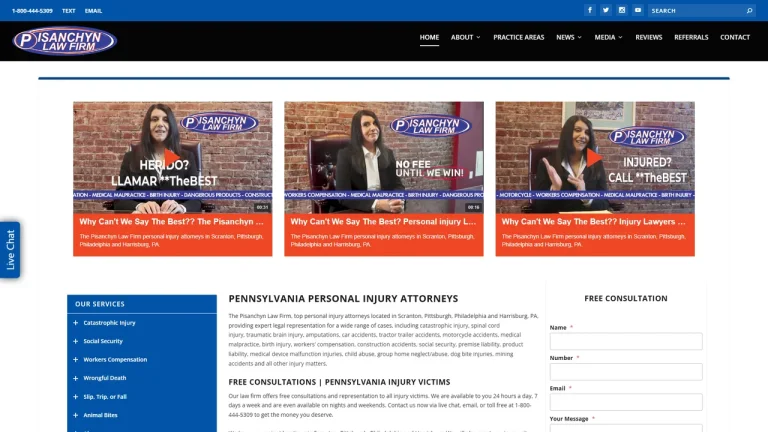
Pisanchyn Law Firm - Harrisburg, PA

Shein Law Center - Philadelphia, PA

The Levin Firm Personal Injury and Car Accident Lawyers - Philadelphia, PA

Law Office of Michael F. Niznik - Philadelphia, PA

Lowenthal & Abrams, Injury Attorneys - Erie, PA

Monheit Law - Philadelphia, PA
The Jurisdictional and Venue Framework for Pennsylvania Medical Negligence Claims
Pursuing a medical malpractice claim in the Commonwealth of Pennsylvania involves navigating some of the state's most rigorous statutory requirements and court rules. From academic medical systems in Philadelphia and Pittsburgh to regional healthcare centers in Allentown, Erie, and Scranton, patients who suffer catastrophic injuries due to medical negligence require skilled legal representation admitted by the Disciplinary Board of the Supreme Court of Pennsylvania.
Medical liability actions are filed in the County Courts of Common Pleas across Pennsylvania's 67 counties. High-exposure malpractice litigations are frequently handled in major trial dockets such as the Complex Litigation Center in the Philadelphia Court of Common Pleas or the Civil Division of the Allegheny County Court of Common Pleas. Pennsylvania venue rules permit plaintiffs to file suit in any county where healthcare defendants regularly transact business or furnish healthcare services, providing strategic flexibility in choosing an appropriate judicial forum.
Litigating clinical negligence requires adherence to the Medical Care Availability and Reduction of Error Act, which establishes strict standards for expert witness qualifications and liability limits. Experienced Pennsylvania trial attorneys manage hospital records discovery, cross-examine defense experts, and present cases before juries across the Commonwealth.
Typical Fee Structures and Recovery Scenarios in Pennsylvania Medical Malpractice
| Case Scenario | Fee Structure | Estimated Cost (USD) | Key Cost Determinants |
|---|---|---|---|
| Diagnostic Error / Cancer Delay Case | Contingency Fee (33.3% - 40%) | $0 Upfront (Standard contingency) | Medical specialty review complexity, oncology expert witness retainers, loss of life expectancy. |
| Surgical Error & Hospital Facility Negligence | Contingency Fee (33.3% - 40%) | $0 Upfront (Deducted from settlement) | Operating room telemetry audits, revision surgical expenses, permanent impairment severity. |
| Birth Trauma & Pediatric Brain Injury | Contingency Fee (Court-Approved) | $0 Upfront (Contingency basis) | Lifetime life care planning costs, pediatric neurology analysis, structured annuity terms. |
| Medication Error / Anesthesia Complication | Contingency Fee (33.3% - 40%) | $0 Upfront (Plus litigation expenses) | Pharmacological causation models, electronic medical record metadata, long-term disability. |
Critical Legal Deadlines & Statutes in Pennsylvania
Medical malpractice claims in Pennsylvania are subject to strict statutory limitation periods. Under 42 Pa. C.S. § 5524, an action to recover damages for personal injury caused by medical malpractice must be commenced within two years of the date the injury occurred or two years from when the patient knew or reasonably should have known of the injury and its cause under the discovery rule.
Special protections apply to pediatric patients. Pursuant to the Pennsylvania Minors Tolling Statute codified at 42 Pa. C.S. § 5533, the two-year statute of limitations for an injury sustained by a minor does not begin to run until the child reaches eighteen years of age, giving the patient until their twentieth birthday to initiate formal litigation.
Pennsylvania enforces a strict preliminary pleading gatekeeper under Pennsylvania Rule of Civil Procedure 1042.3. A plaintiff must file an official Certificate of Merit within 60 days of filing the initial complaint, signed by counsel certifying that an appropriate licensed expert has confirmed in writing that a reasonable probability exists that the care fell outside accepted professional standards.
Expert qualification standards are governed by the Medical Care Availability and Reduction of Error (MCARE) Act under 40 P.S. § 1303.512, which mandates that testifying medical experts must possess an active medical license, practice in the same or similar subspecialty as the defendant, and be board certified if the defendant physician is board certified.
Small Claims in Magisterial Courts vs. Common Pleas Malpractice Litigation
Magisterial District Courts across Pennsylvania and the Philadelphia Municipal Court handle small civil actions up to $12,000. However, medical malpractice actions are virtually impossible to pursue in summary courts due to the prohibitive expense of specialized medical expert reviews, extensive deposition practice, and mandatory statutory filings.
Every medical negligence lawsuit must proceed through the Pennsylvania Courts of Common Pleas. Self-representation in malpractice matters routinely leads to case dismissal due to the technical requirements of the Certificate of Merit rule and strict expert disclosure deadlines under the Pennsylvania Rules of Civil Procedure. Retaining experienced malpractice counsel ensures that medical records are audited, qualified medical experts are retained, and procedural mandates are meticulously satisfied.
Red Flags When Selecting a Pennsylvania Medical Malpractice Lawyer
- Firms that lack the financial resources to advance high expert witness retainers and deposition fees necessary to develop complex clinical evidence.
- Attorneys who do not routinely practice in Pennsylvania Courts of Common Pleas or who lack a documented track record of taking complex cases to jury verdict.
- Failure to explain how the Certificate of Merit requirement will be met within the mandatory 60-day window following the filing of the complaint.
- Guaranteed promises of swift financial outcomes before independent board-certified medical experts have reviewed all relevant diagnostic charts and treatment logs.
Frequently Asked Questions
What is a Certificate of Merit in Pennsylvania medical malpractice litigation?
A Certificate of Merit is a mandatory filing under Pennsylvania court rules where the plaintiff's attorney must certify within 60 days of filing suit that a qualified medical expert has provided a written statement confirming that the medical care fell below acceptable clinical standards.
What is the statute of limitations for a medical malpractice lawsuit in Pennsylvania?
The statute of limitations is two years from the date of the injury or from the date the injured patient discovered or reasonably should have discovered the injury and its negligent cause.
How does the Pennsylvania MCARE Act regulate medical expert witnesses?
The MCARE Act requires expert witnesses testifying on the standard of care to be licensed physicians practicing in the same or similar clinical specialty as the defendant and to hold appropriate board certifications.
Can parents file a medical malpractice claim for a minor child in Pennsylvania?
Yes. Parents can file a claim on behalf of a minor child, and under the Pennsylvania Minors Tolling Statute, the injured minor has until their twentieth birthday to bring an action independently.
How do contingency fees work in Pennsylvania medical malpractice cases?
Medical malpractice lawyers in Pennsylvania operate on a contingency fee basis, meaning the client pays no upfront attorney fees or litigation costs. Legal fees and advanced expenses are deducted from the final settlement or jury award only if the claim is successful.