
Divorce Lawyers in Rhode Island
Navigating a divorce in Rhode Island requires strategic legal counsel to safeguard your marital assets and parental rights. Experienced family law attorneys resolve complex property and support disputes through negotiation and mediation, avoiding prolonged courtroom litigation. Explore our verified statewide directory below to consult a reputable Rhode Island divorce lawyer.

Pederzani Law Offices PC - Warwick, RI

Nappa Law LLC - Warwick, RI

McEntee & McEntee, Attorneys at Law - Warwick, RI

Richard Jessup Jr, Esq - Providence, RI

Macktaz Law, Inc. - Providence, RI

401 ABOGADO - Providence, RI
The Law Office of Daniel Calabro - Providence, RI

The Law Offices of Tanya M. Gravel Esq., Inc. - Providence, RI

Elisha L. Morris, Attorney at Law - Providence, RI

Law Office of Steven J. Hart - Warwick, RI
Furtado Legal Services - Warwick, RI

Rhode Island Legal Services - Providence, RI

Timothy J. Dodd, Attorney at Law - Providence, RI

Steven G. Wright, Attorney at Law - Providence, RI
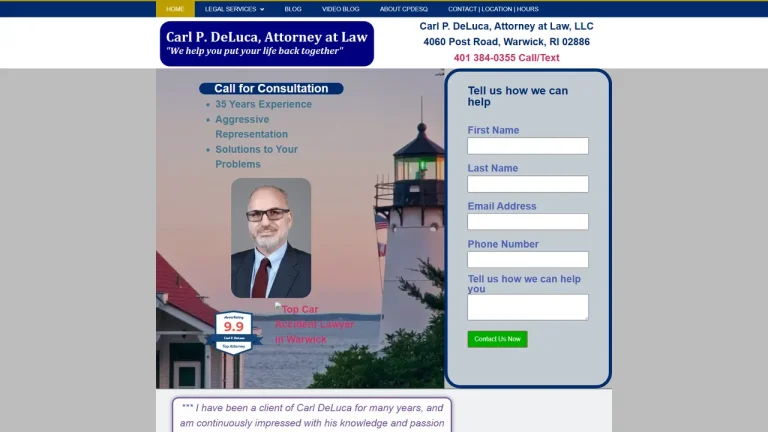
Carl P. DeLuca, Attorney at Law, LLC - Warwick, RI

Robyn A. Sisti Attorney At Law - Providence, RI

Rui P. Alves - Providence, RI

D'Amico.Burchfield LLP - Providence, RI

Wise Way to Divorce LLC - Providence, RI

Law Office of Attorney Christopher A. Pearsall - Warwick, RI

Christopher E. Friel, Attorney at Law - Warwick, RI
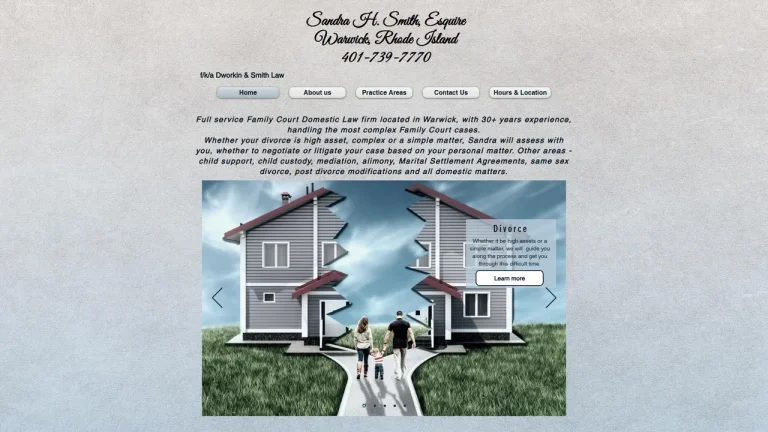
Sandra H. Smith Ltd - Warwick, RI

The Law Office of Walter J Manning - Warwick, RI
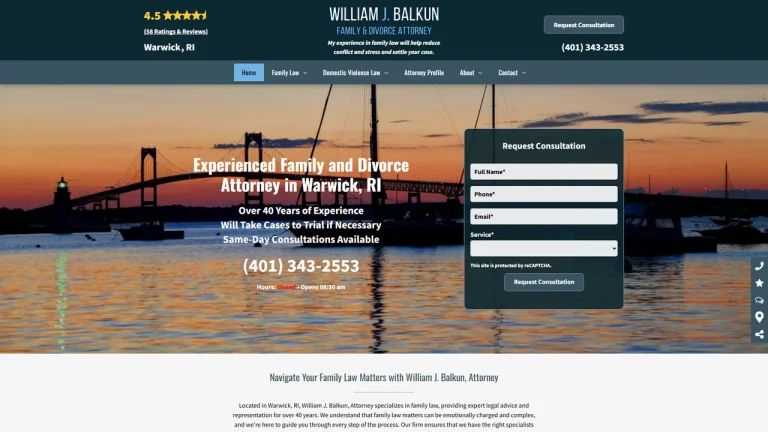
Navigating Rhode Island Divorce Law and Family Court Jurisdiction
Dissolving a marriage in Rhode Island involves critical determinations regarding marital property division, spousal maintenance, and debt allocation. Securing skilled legal representation protects your economic future and minimizes emotional turmoil throughout proceedings.
Domestic relations and marital dissolutions fall under the exclusive jurisdiction of the Rhode Island Family Court, with primary judicial complexes in Providence (Garrahy Judicial Complex), Warwick (Noel Judicial Complex), Wakefield (McGrath Judicial Complex), and Newport (Murray Judicial Complex). Filings are submitted through the Rhode Island Judiciary Electronic Filing System.
Family law attorneys regulated by the Rhode Island Bar Association guide spouses through mandatory financial disclosures and settlement conferences. Seasoned advocates prioritize out-of-court resolutions while standing prepared to litigate contested hearings before family court judges.
Typical Fee Structures for Rhode Island Divorce Representation
| Case Scenario | Fee Structure | Estimated Cost (USD) | Key Cost Determinants |
|---|---|---|---|
| Uncontested Nominal Divorce Settlement | Flat Fee / Low Retainer | $1,500 to $3,500 | Property settlement agreement execution, waiver of alimony, nominal track scheduling. |
| Contested Divorce with Moderate Assets | Hourly Retainer | $300 to $500 per hour | Real estate valuations, retirement division (QDROs), disputed marital debt allocations. |
| High-Net-Worth Matrimonial Litigation | Hourly Retainer | $400 to $700 per hour | Forensic business appraisals, hidden asset discovery, executive compensation analysis. |
| Post-Final Judgment Modification & Enforcement | Hourly Retainer | $325 to $550 per hour | Substantial change in circumstances, alimony termination, enforcement contempt motions. |
Critical Legal Deadlines & Divorce Statutes in Rhode Island
To file for divorce in the state, petitioners must satisfy residency requirements under R.I. Gen. Laws § 15-5-12, which mandates that the filing party has been a domiciled inhabitant and resident of Rhode Island for at least one continuous year preceding the filing of the complaint.
Rhode Island allows no-fault divorces based on irreconcilable differences under R.I. Gen. Laws § 15-5-3.1, as well as living separate and apart for three continuous years pursuant to R.I. Gen. Laws § 15-5-3. Property distribution is governed by the equitable distribution framework codified at R.I. Gen. Laws § 15-5-16.1, which directs the court to divide marital property fairly based on length of the marriage, contribution of each party, and economic circumstances.
Spousal support determinations follow statutory guidelines under R.I. Gen. Laws § 15-5-16, which focuses on rehabilitative alimony to facilitate economic self-sufficiency. Procedurally, once an uncontested nominal hearing concludes or a contested trial resolves, the court enters an interlocutory decision pending final judgment. Under R.I. Gen. Laws § 15-5-23, parties must observe a mandatory three-month waiting period before the court can sign and enter the final judgment of divorce.
Small Claims Court Inapplicability vs. Rhode Island Family Court Jurisdiction
Under R.I. Gen. Laws § 10-16-1, the Small Claims Division of the Rhode Island District Court is strictly restricted to civil claims for money damages of $5,000 or less. Small claims courts have zero legal jurisdiction over marital dissolution, domestic relations, or marital property.
Pursuant to R.I. Gen. Laws § 8-10-3, exclusive subject-matter jurisdiction over divorce, legal separation, and equitable division of marital assets belongs solely to the Rhode Island Family Court. Attempting to handle marital property division without formal family court filings leaves titles clouded and claims unresolved.
Divorce proceedings involve complex legal instruments, including Qualified Domestic Relations Orders (QDROs) to divide pensions and automatic domestic relations injunctions under R.I. Gen. Laws § 15-5-14.1 that freeze marital assets upon service. Retaining experienced family law counsel protects your financial rights, prevents concealment of assets, and ensures enforceable separation agreements.
Red Flags to Avoid When Selecting a Rhode Island Divorce Attorney
- Attorneys promising guaranteed spousal support awards or specific asset divisions prior to completing formal financial discovery.
- Over-litigating minor issues or churning billable hours rather than engaging in productive settlement negotiations through Family Court mediation.
- Failing to explain the statutory three-month interlocutory waiting period required under R.I. Gen. Laws § 15-5-23 prior to obtaining a final decree.
- Lack of regular trial experience before family court judges across the Garrahy, Noel, McGrath, and Murray judicial complexes.
Frequently Asked Questions
What is the residency requirement to file for divorce in Rhode Island?
Under R.I. Gen. Laws § 15-5-12, the filing spouse must have been a bona fide domiciled inhabitant and resident of Rhode Island for at least one full continuous year immediately prior to filing the divorce complaint.
How does Rhode Island divide marital property during a divorce?
Under R.I. Gen. Laws § 15-5-16.1, Rhode Island is an equitable distribution state. The Family Court divides property fairly-though not necessarily fifty-fifty-based on factors including marital length, each party contributions, and conduct during the marriage.
How long does an uncontested divorce take in Rhode Island Family Court?
An uncontested nominal divorce typically reaches a hearing within 60 to 90 days of filing. Once granted, R.I. Gen. Laws § 15-5-23 imposes a mandatory three-month waiting period from the interlocutory decision before the final decree can enter.
How is alimony determined under Rhode Island family law?
Pursuant to R.I. Gen. Laws § 15-5-16, alimony is generally rehabilitative and intended to support a spouse until they attain self-sufficiency, evaluated against marital duration, standard of living, and health.
Can marital asset disputes be filed in Rhode Island Small Claims Court?
No. Small claims courts in Rhode Island are limited to money damages up to $5,000 under R.I. Gen. Laws § 10-16-1. All marital property division falls under the exclusive jurisdiction of the Rhode Island Family Court pursuant to R.I. Gen. Laws § 8-10-3.