
Business & Real Estate Lawyers in South Carolina
Retaining a South Carolina business and real estate lawyer protects your transactions, title conveyances, and corporate interests under state law. Because South Carolina strictly requires licensed attorney supervision for real estate closings, legal counsel is indispensable to avoiding title defects and resolving commercial disputes through early negotiation. Review verified profiles in our directory below to consult an established South Carolina attorney for your transactional and corporate needs.

Pflug Trial Lawyers - Charleston, SC

Finkel Law Firm LLC - North Charleston, SC

The Eddy Law Firm - Columbia, SC
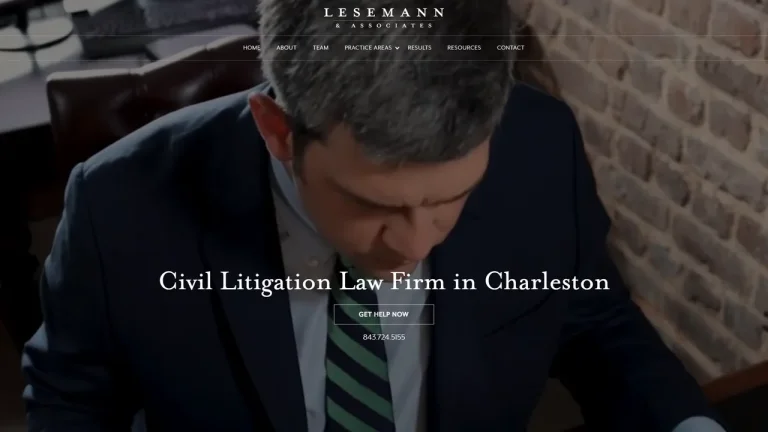
Lesemann and Associates LLC - Charleston, SC
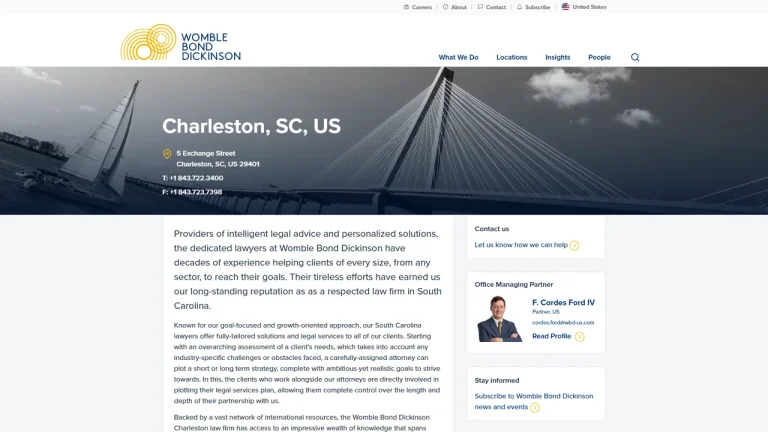
Womble Bond Dickinson (US) LLP - Charleston, SC
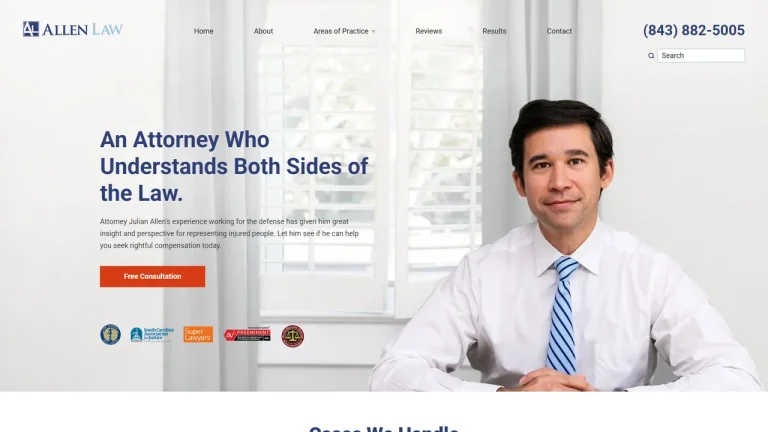
Allen Law - Charleston, SC

Hewett Diamaduros Law Firm - Columbia, SC
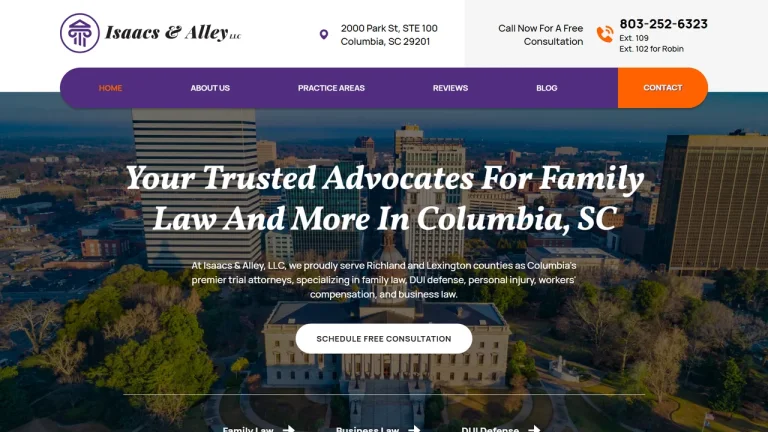
Isaacs & Alley - Columbia, SC
Law Office of Sean M. Wilson, LLC - Charleston, SC

Howser, Newman and Besley, LLC - Columbia, SC
Clore Law - Charleston, SC

Styles & Dingle, LLC - North Charleston, SC
Grimball & Cabaniss, LLC - Charleston, SC
Strom Law Firm - Columbia, SC
Garner, Corbett and Gilchrist - Columbia, SC

Thad L. Myers, P.A. & Associates - Columbia, SC
Ellis Roberts Law, LLC - Charleston, SC

Yarborough Applegate Law Firm - Charleston, SC
Law Offices of Donald H. Howe, LLC - Charleston, SC
Sweetgrass Law Group - Charleston, SC
Romeo Deters - Charleston, SC

Gause Law Firm - North Charleston, SC

Rogers, Patrick, Westbrook & Brickman, LLC - Columbia, SC
Navigating South Carolina Commercial Law and Real Estate Mandates
Commercial transactions and real property conveyances in South Carolina are subject to distinct statutory frameworks and state supreme court mandates. Under South Carolina law, real estate closings are legally classified as the practice of law, requiring the direct involvement and supervision of an attorney licensed by the South Carolina Bar. Whether you are purchasing commercial property along the Grand Strand, closing an industrial site in the Upstate, or acquiring residential parcels in the Lowcountry, retaining independent legal counsel is essential to conducting title examinations, reviewing loan packages, and supervising execution.
Business litigation and commercial contracts fall within the jurisdiction of the South Carolina Circuit Court, specifically the Court of Common Pleas. For major commercial disputes, South Carolina maintains a specialized Business Court pilot program in key judicial circuits, including Richland, Charleston, and Greenville counties. This specialized docket ensures that complex corporate disputes, shareholder derivative claims, and trade secret actions are managed efficiently by experienced business judges familiar with commercial realities.
Entity formation, merger agreements, and corporate governance are regulated through the South Carolina Secretary of State under state statutory guidelines. Experienced local counsel ensures that operating agreements, partnership covenants, and commercial lease contracts are tailored to mitigate liability, establish clear buy-sell mechanisms, and comply with state-specific administrative requirements across all forty-six counties.
Typical South Carolina Business & Real Estate Legal Fee Structures
| Case Scenario | Fee Structure | Estimated Cost (USD) | Key Cost Determinants |
|---|---|---|---|
| Residential Real Estate Closing Supervision | Flat Closing Fee | $850 - $1,850 | Chain of title complexity, municipal tax certifications, lender coordination requirements, and county recording fees. |
| Commercial Acquisition & Closing Due Diligence | Hourly or Tiered Flat Fee | $3,500 - $14,000+ | Environmental phase review, municipal zoning verifications, commercial lease assignments, and title defect cure proceedings. |
| LLC Formation & Operating Agreement Drafting | Flat Fee Package | $950 - $2,800 | Multi-member ownership structuring, South Carolina Secretary of State filing fees, buy-sell covenants, and equity allocations. |
| Commercial Contract & Lease Litigation | Hourly Retainer ($285 - $525/hr) | $8,500 - $35,000+ | Document discovery volume, depositions, pre-trial motions in the Court of Common Pleas, and mandatory alternative dispute resolution. |
Critical Legal Deadlines & Statutes in South Carolina Commercial Practice
Commercial enterprises and property owners in South Carolina must adhere to statutory deadlines to protect legal remedies and enforce contractual rights. Under S.C. Code Ann. § 15-3-530, the statute of limitations for actions founded upon a contract, obligation, or liability-including breach of commercial agreements and real property damage-is three years from the date the breach or injury was discovered or should have been discovered through reasonable diligence.
Mechanic's lien deadlines require strict adherence by contractors, subcontractors, and material suppliers. Pursuant to S.C. Code Ann. § 29-5-90, a party seeking to preserve a mechanic's lien must file and serve a verified statement of account within ninety days after ceasing to labor or furnish materials. To enforce the lien, a foreclosure lawsuit must be commenced within six months after the person ceased labor or materials delivery pursuant to S.C. Code Ann. § 29-5-120; missing either statutory window invalidates the lien encumbrance.
Limited liability companies are established and governed under S.C. Code Ann. § 33-44-101, the South Carolina Uniform Limited Liability Company Act. Commercial contracts frequently incorporate mandatory arbitration clauses enforceable under the South Carolina Uniform Arbitration Act, codified at S.C. Code Ann. § 15-48-10, which requires specific statutory notice language on the first page of the contract to ensure enforceability.
Small Claims Limits vs. Circuit Court in South Carolina Property Matters
South Carolina Magistrate Courts maintain jurisdiction over minor debt collections and small claims matters where the amount in controversy does not exceed $7,500 pursuant to S.C. Code Ann. § 22-3-10. Small business owners can resolve straightforward unpaid invoices, vendor defaults, or residential landlord-tenant security deposit disagreements within the magistrate court system without mandatory legal representation.
However, magistrates are explicitly prohibited from deciding matters where title to real property is called into question. Under state law, all actions involving quiet title, property boundary disputes, commercial partition actions, specific performance of real estate contracts, and commercial lease forfeitures must be adjudicated in the Circuit Court (Court of Common Pleas) under S.C. Code Ann. § 14-7-1010. Engaging a South Carolina business and real estate lawyer ensures that complex property titles are protected and that high-stakes commercial claims are properly preserved under the South Carolina Rules of Civil Procedure.
Red Flags When Selecting a South Carolina Business or Real Estate Attorney
- Non-Attorney Closing Practices: South Carolina Supreme Court precedent strictly forbids out-of-state title mills or non-attorney settlement agents from conducting closings without direct oversight by an active member of the South Carolina Bar.
- Template Commercial Contracts: Relying on boilerplate agreements purchased online often fails to account for South Carolina statutory default rules, arbitration disclosure requirements, and state-specific mechanic's lien liabilities.
- Opaque Title Search Disclosures: Reputable real estate attorneys provide comprehensive title commitments that disclose all municipal easements, rights-of-way, and restrictive covenants affecting the property prior to closing.
- Lack of Common Pleas Litigation Experience: Transactional attorneys without courtroom experience may draft agreements that lack enforceable remedies if a business partnership or property transaction breaks down into formal litigation.
Frequently Asked Questions
Why is an attorney required for real estate closings in South Carolina?
The South Carolina Supreme Court has ruled that real estate closings constitute the practice of law. A licensed South Carolina attorney must supervise the title search, review closing documents, ensure clear marketable title, and oversee the execution and recordation of closing instruments.
What is the statute of limitations for breach of contract in South Carolina?
Under S.C. Code Ann. § 15-3-530, actions arising from a breach of contract or commercial obligation must be initiated within three years from the date the breach occurred or should have been discovered through reasonable diligence.
What is the monetary limit for business claims in South Carolina Magistrate Court?
The small claims jurisdictional limit in South Carolina Magistrate Court is $7,500 under S.C. Code Ann. § 22-3-10. Claims exceeding this amount must be filed in the South Carolina Court of Common Pleas.
How quickly must a mechanic's lien be filed in South Carolina?
Under S.C. Code Ann. § 29-5-90, a mechanic's lien must be served and filed with the county register of deeds within ninety days of the last date labor or materials were furnished. A foreclosure lawsuit must be filed within six months under S.C. Code Ann. § 29-5-120.
Does South Carolina maintain a dedicated Business Court?
Yes. South Carolina operates a specialized Business Court program within its Circuit Court system to handle complex commercial cases, corporate governance disputes, and significant commercial litigation in designated judicial circuits.