
Business Litigation Lawyers in Charleston, SC
Retaining an experienced business litigation lawyer in Charleston ensures your commercial enterprise and contractual rights are vigorously defended in court. Dedicated legal counsel navigates shareholder disputes, contract breaches, and commercial torts, resolving complex conflicts through strategic mediation. Explore our directory below to connect with top-rated Charleston County business litigators for an authoritative case evaluation.

Rogers Townsend - Charleston, SC
Williams & Walsh Attorneys at Law - Charleston, SC
Barnwell Whaley Patterson & Helms - Charleston, SC
Henderson & Henderson, LLC - Charleston, SC
Leffew Law Firm, LLC - Charleston, SC

Elloree A. Ganes - Charleston, SC
Ellis Roberts Law, LLC - Charleston, SC
Grimball & Cabaniss, LLC - Charleston, SC
Romeo Deters - Charleston, SC

Rosen Hagood - Charleston, SC
Law Office of Sean M. Wilson, LLC - Charleston, SC

DeAntonio Law Firm, LLC - Charleston, SC
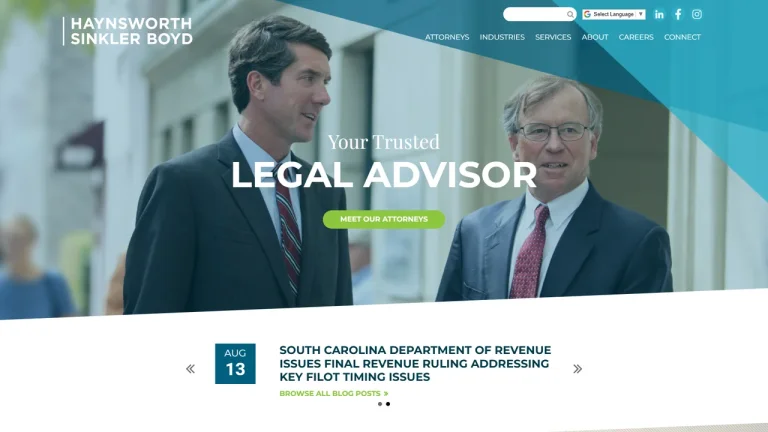
Haynsworth Sinkler Boyd PA - Charleston, SC
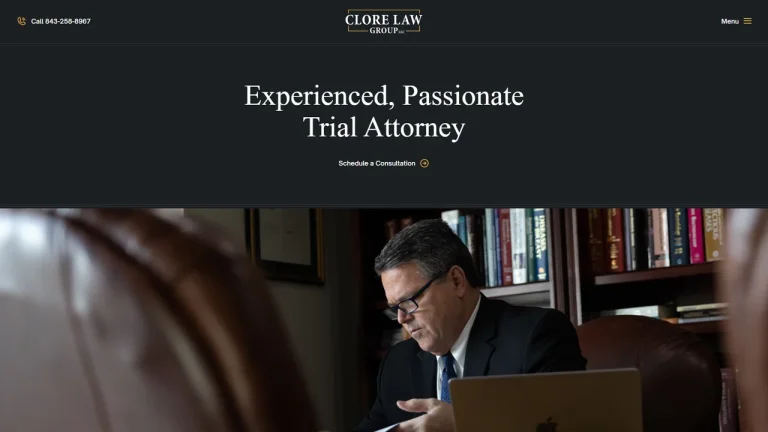
Clore Law - Charleston, SC
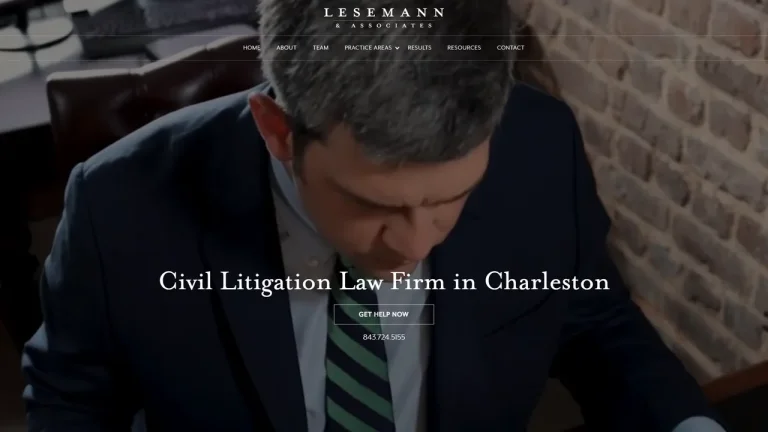
Lesemann and Associates LLC - Charleston, SC

Pritchard Law Group, LLC - Charleston, SC
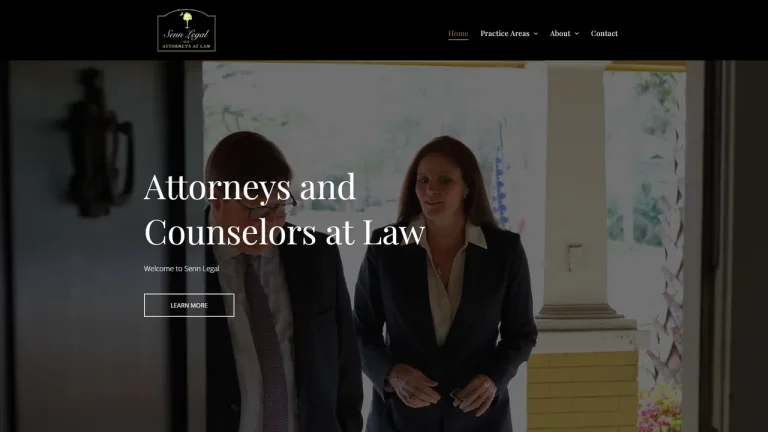
Senn Legal, LLC - Charleston, SC
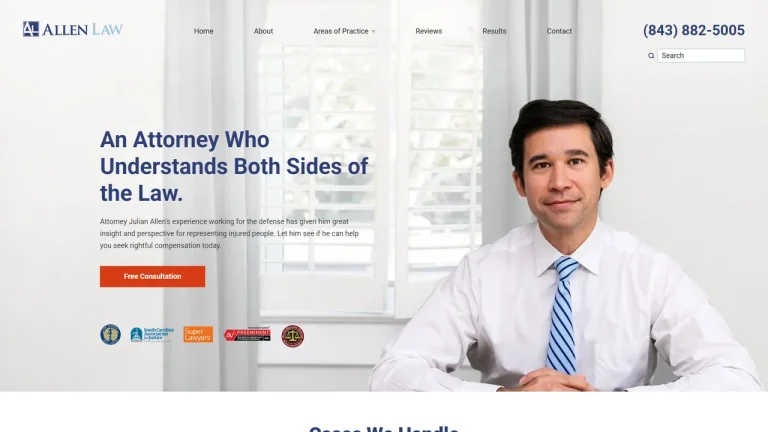
Allen Law - Charleston, SC
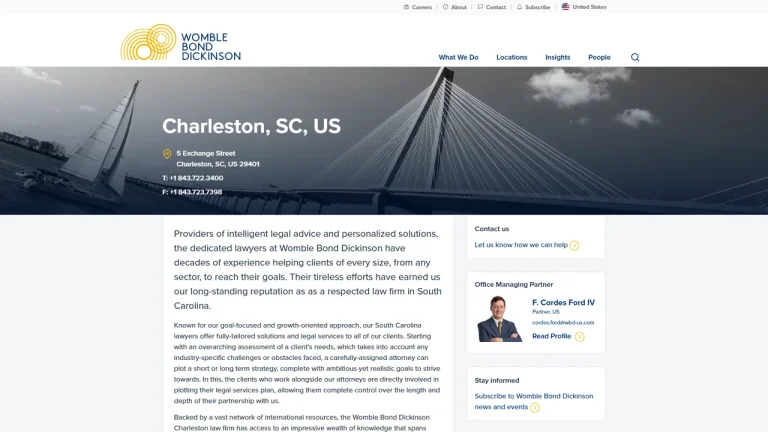
Womble Bond Dickinson (US) LLP - Charleston, SC

Turner, Padget, Graham & Laney, P.A. - Charleston, SC
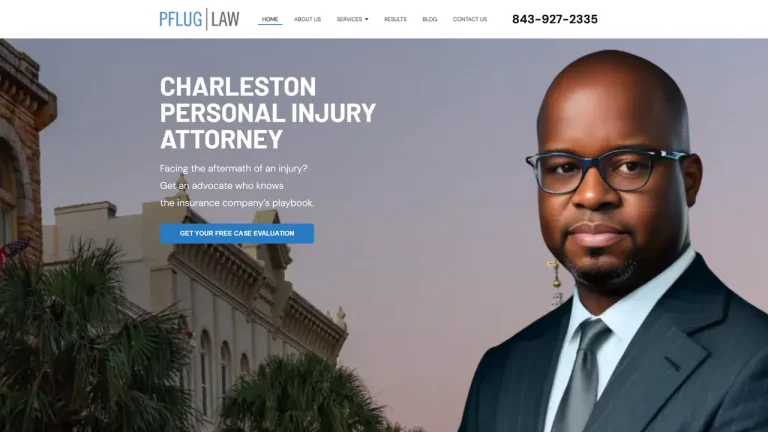
Pflug Trial Lawyers - Charleston, SC

Copeland, Stair Valz & Lovell, LLP - Charleston, SC
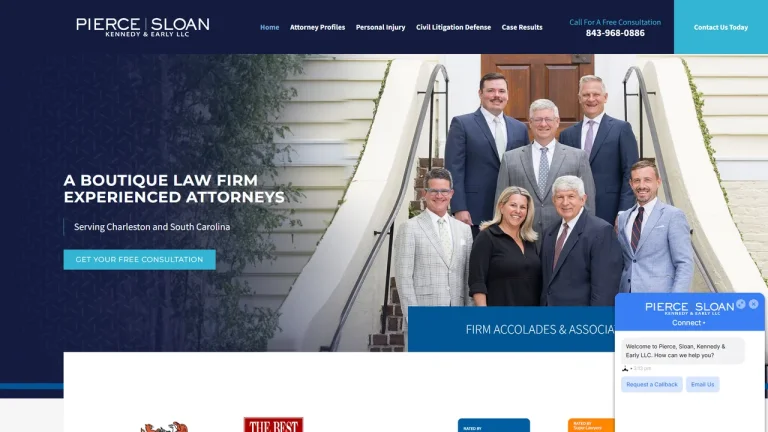
Pierce, Sloan, Kennedy and Early LLC - Charleston, SC

Commercial Dispute Resolution in Charleston, South Carolina
Operating a successful commercial venture in the Lowcountry involves navigating dynamic maritime commerce, tourism, tech expansion, and commercial real estate. When contractual arrangements break down or fiduciary partnerships collapse, high-stakes corporate disputes require decisive litigation counsel. Charleston businesses face intricate financial exposure that demands experienced advocacy in regional trial forums.
In Charleston County, corporate and contract litigation is primarily adjudicated in the Court of Common Pleas, located inside the historic Charleston County Judicial Center at 100 Broad Street. Non-jury equitable disputes, corporate accountings, and shareholder dissolution proceedings are routinely referred to the Charleston County Master-in-Equity. High-value diversity actions and federal statutory disputes proceed across the street at the J. Waties Waring Judicial Center on Meeting Street.
Retaining a skilled Charleston business litigation attorney allows corporate leaders to pursue preliminary injunctions, enforce non-solicitation covenants, and litigate claims under the South Carolina Unfair Trade Practices Act (SCUTPA). Dedicated counsel serves enterprises across Downtown Charleston, Mount Pleasant, Daniel Island, and North Charleston, aiming for favorable out-of-court settlements while maintaining full trial readiness.
Business Litigation Legal Costs in Charleston, SC
| Case Scenario | Fee Structure | Estimated Cost (USD) | Key Cost Determinants |
|---|---|---|---|
| Commercial Contract Breach & Debt Recovery | Hourly ($325 - $550/hr) or Contingency | $5,000 - $15,000+ | Clear contract language, liquidated damages clauses, pre-judgment asset attachments. |
| Shareholder Freeze-Out & Partnership Dissolution | Hourly Rate ($350 - $600/hr) | $12,000 - $40,000+ | Master-in-Equity accounting, forensic business valuation, LLC operating agreement interpretation. |
| South Carolina Unfair Trade Practices Act (SCUTPA) Claim | Hourly Rate ($375 - $650/hr) | $15,000 - $50,000+ | Public impact evidence requirement, willful conduct proofs, statutory treble damages. |
| Federal Commercial Litigation & Injunction at Meeting Street | Hourly Rate ($400 - $700/hr) | $25,000 - $85,000+ | Temporary restraining orders (TRO), extensive electronic discovery, federal jury trial proceedings. |
Critical Legal Deadlines & Statutes in South Carolina
Corporate litigation in Charleston operates under uncompromising statutory timetables governed by the South Carolina Code of Laws:
- Breach of Contract Statute of Limitations: Pursuant to S.C. Code Ann. § 15-3-530(1), a commercial action for breach of contract must be commenced within 3 years of the breach or date of discovery.
- SCUTPA Litigation Window & Treble Damages: Claims brought under the South Carolina Unfair Trade Practices Act must be filed within 3 years under S.C. Code Ann. § 39-5-150. Willful violations authorize mandatory treble damages under S.C. Code Ann. § 39-5-140.
- Fiduciary Duties in Commercial Entities: Fiduciary standards for managers and members of limited liability companies are codified under S.C. Code Ann. § 33-44-409, governing loyalty and care.
- Commercial Arbitration Enforcement: Under the South Carolina Uniform Arbitration Act (S.C. Code Ann. § 15-48-10), arbitration clauses must strictly satisfy statutory notice requirements to compel out-of-court dispute resolution.
- Judicial Dissolution Petitions: Deadlocked corporate shareholders must petition the court under S.C. Code Ann. § 33-14-300 to establish illegal, fraudulent, or oppressive director conduct.
Magistrate Court Limits vs. Common Pleas Commercial Litigation
Summary Courts across Charleston County hold jurisdiction limited to claims of $7,500 or less under S.C. Code Ann. § 22-3-10. While a small vendor invoice dispute under $7,500 can be resolved in a Magistrate Court, complex corporate litigation-involving restrictive covenants, trademark violations, complex commercial leases, and minority shareholder oppression-exceeds summary jurisdiction. Furthermore, Magistrate Courts cannot grant equitable relief, issue preliminary injunctions, or order judicial dissolutions. Corporate claims must be filed in the Charleston County Court of Common Pleas or transferred to the Master-in-Equity at 100 Broad Street. Retaining an experienced Charleston commercial litigator ensures your assets and company viability are defended in the proper legal forum.
Red Flags When Hiring a Charleston Business Litigator
- Ignoring the SCUTPA Public Impact Mandate: Beware of lawyers who plead unfair trade practices without proving adverse public impact, resulting in swift judicial dismissal under South Carolina precedent.
- Lack of Emergency Injunction Capability: Ensure your legal counsel has experience rapidly securing temporary restraining orders (TROs) to halt competitor trade secret theft or freeze company bank accounts.
- Opaque Billing Schedules: Avoid litigation firms that fail to provide detailed cost budgets for discovery and forensic accounting early in commercial disputes.
- No Federal Court Experience: Corporate disputes often trigger federal diversity jurisdiction; ensure your counsel is admitted before the U.S. District Court on Meeting Street.
Frequently Asked Questions
What court handles commercial business disputes in Charleston?
Business litigation claims in Charleston are heard in the Court of Common Pleas at the Charleston County Judicial Center at 100 Broad Street, with non-jury and complex accounting matters often assigned to the Master-in-Equity. Federal disputes proceed before the U.S. District Court at 83 Meeting Street.
What is the role of the Master-in-Equity in Charleston business litigation?
The Master-in-Equity is a specialized judicial officer who hears non-jury civil matters, including complex partnership accountings, foreclosures, and corporate dissolutions, providing efficient trial resolutions without jury delays.
Can I recover treble damages and attorney fees under SCUTPA?
Yes. Under S.C. Code Ann. § 39-5-140, if the court finds that the defendant willfully used unfair or deceptive trade practices that affected the public interest, the court must award three times actual damages plus reasonable attorney fees.
What is the deadline to sue for breach of contract in South Carolina?
Under S.C. Code Ann. § 15-3-530(1), the statute of limitations for bringing a commercial breach of contract lawsuit in South Carolina is 3 years from the date the breach occurred or was discovered.
Are mandatory arbitration clauses enforceable in South Carolina commercial contracts?
Yes, but under S.C. Code Ann. § 15-48-10, arbitration provisions in commercial contracts governed solely by South Carolina law must include a conspicuous notice typed in underlined capital letters on the first page of the contract.